
Taking a booking is the easy part. This is the other four days: who loads the trailer, which physical unit went out, what came back, what it now needs, who gets paid for the work, and whether the deposit is returned or kept. One 6×10 enclosed cargo trailer, followed the whole way.
Sarah Miller books a 6×10 enclosed cargo trailer for a three day job in Austin and asks for it to be delivered. She never picks a particular trailer — she books the product. Somewhere behind that listing sit three real units, and by Friday morning one of them has her name on it.
Every screen below is the running system doing the work, in the order a yard would actually touch it.
Dates, a price, a deposit and a signature — settled before anybody in the yard has done anything.
Red days are days this trailer cannot be had. That comes from live reservations across all three units, so it moves on its own when a booking lands, when a unit goes out of service, or when the workshop is holding one.
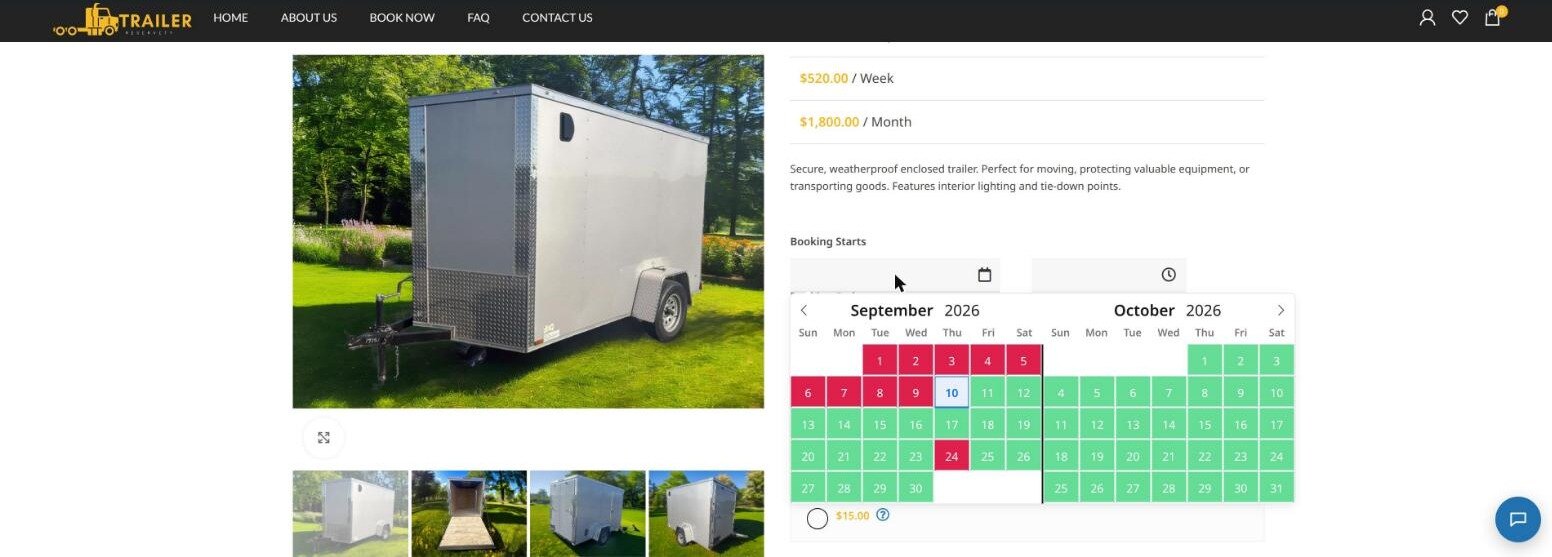
Four hours, a day, three days, a week, a month. She picks dates and the right band applies. A GPS tracker goes on the hire as well.
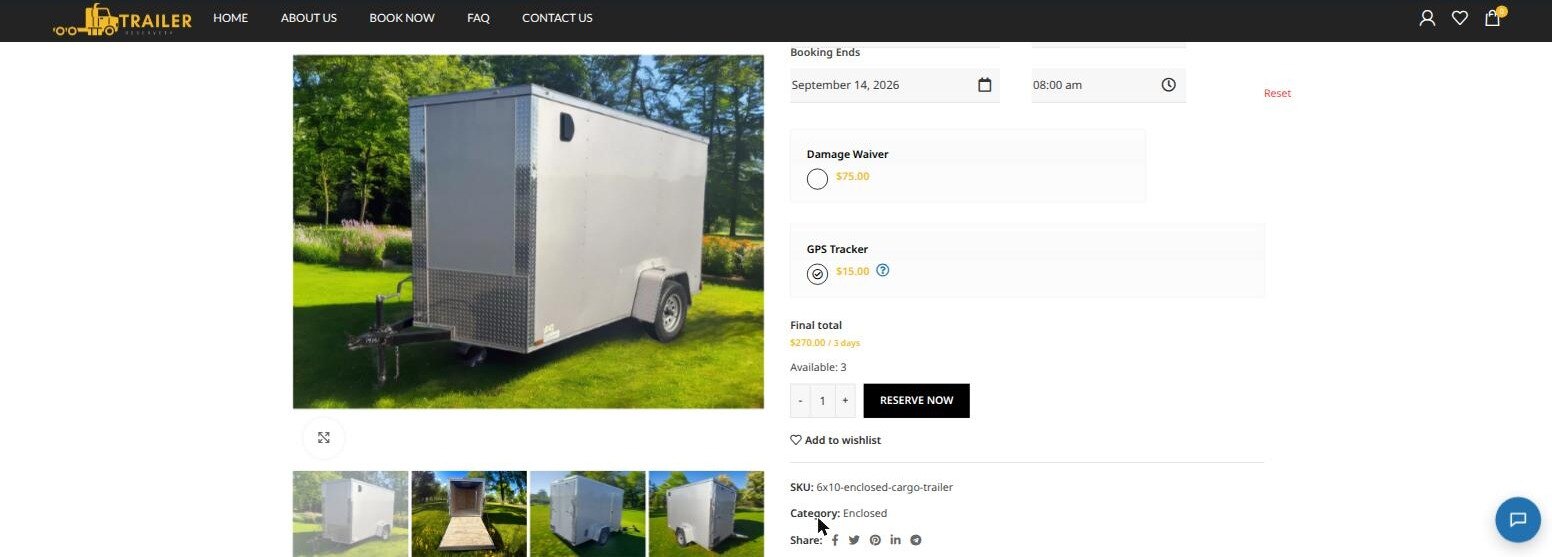
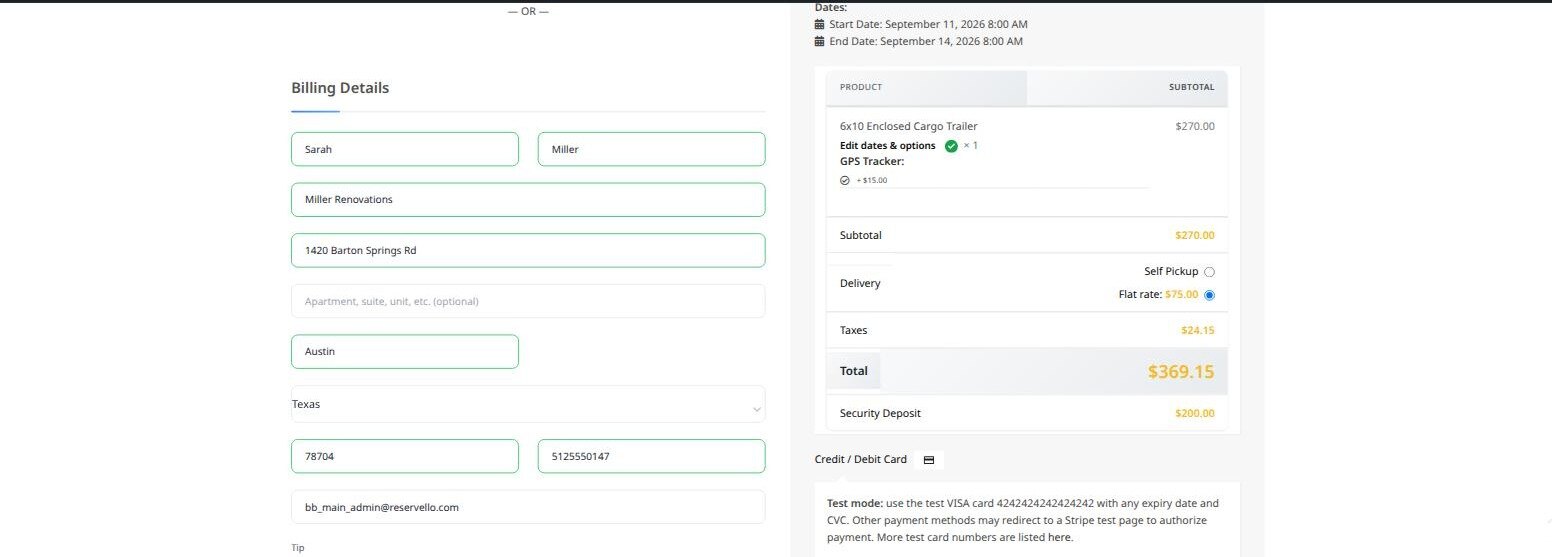
She takes delivery to an Austin address rather than collecting. The refundable deposit appears as its own line, separate from the amount actually being charged, so there is no argument about it later.
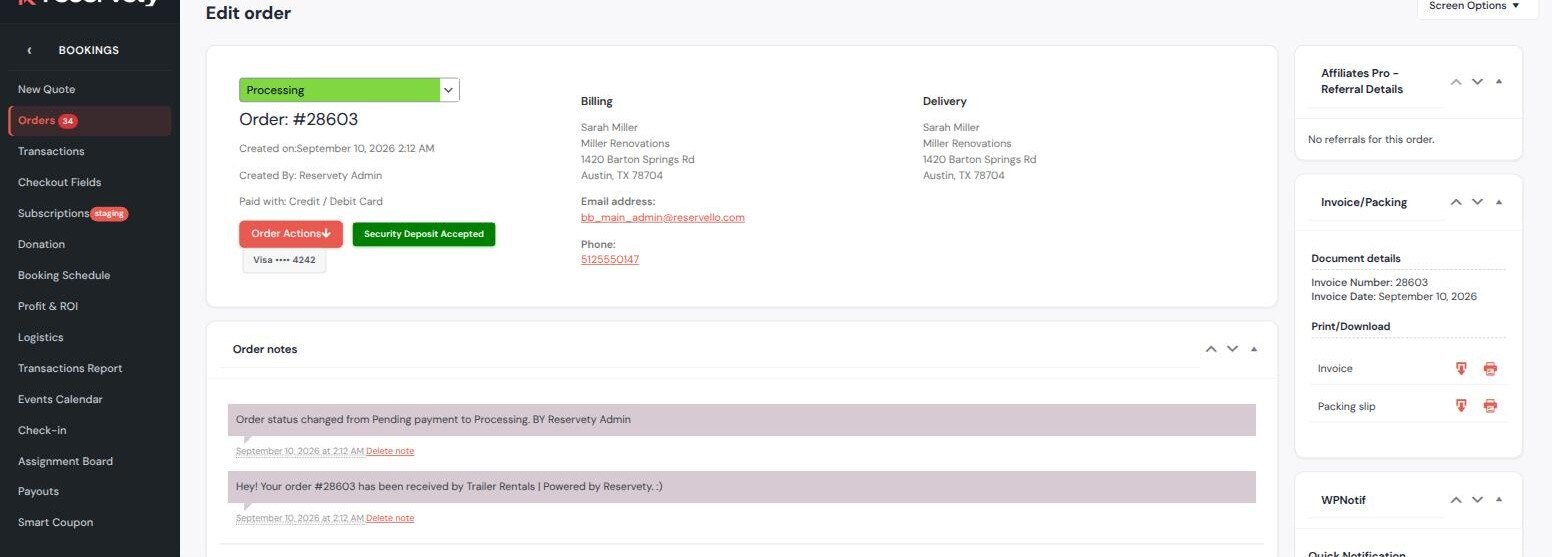
Nobody in the office pressed anything. The payment landed, the order moved to processing, and the $200 was authorised against the card on file — a hold, not a charge.
Staff do not open a list of orders. They open the day.
What is out right now, what needs a person, what moves today, and how the next seven days look. The run sheet has a line at the current hour, so the next job is the one under the line.
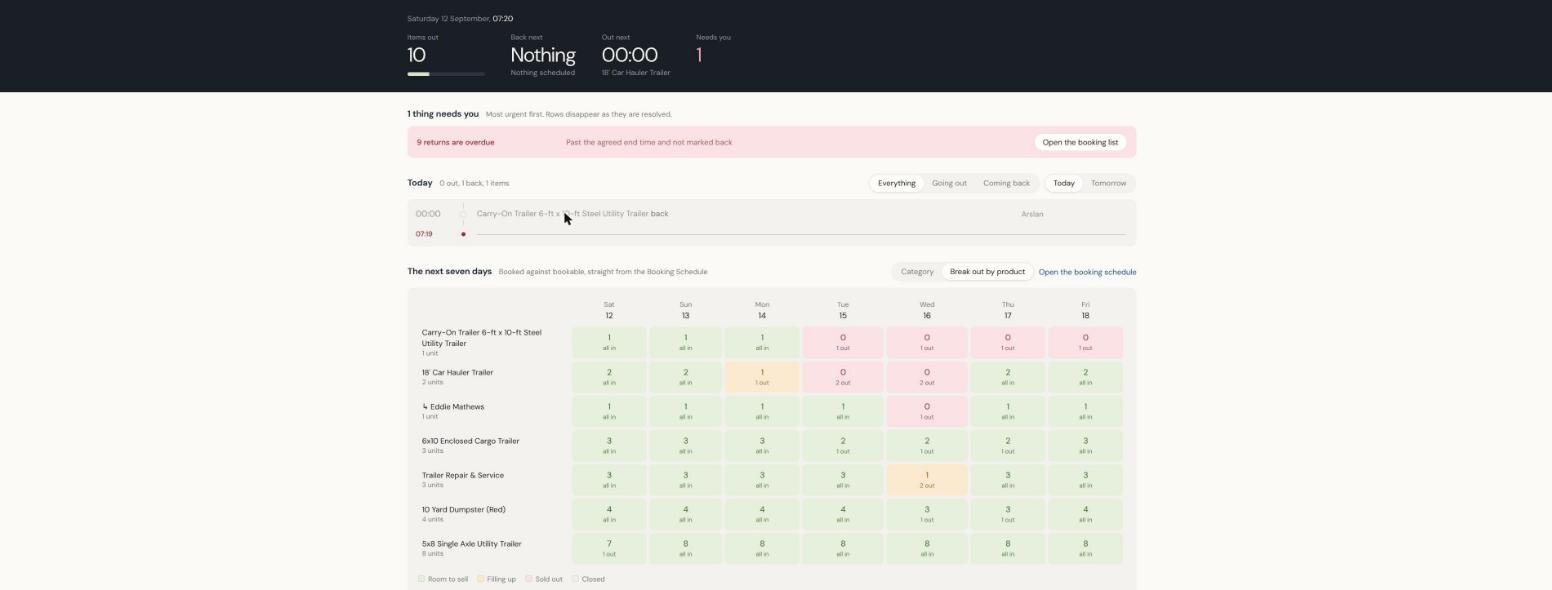
One booking is not interesting on its own. What matters is what it does to the picture the yard runs on — and that picture is the same reservations read a different way, not a spreadsheet somebody keeps up to date.
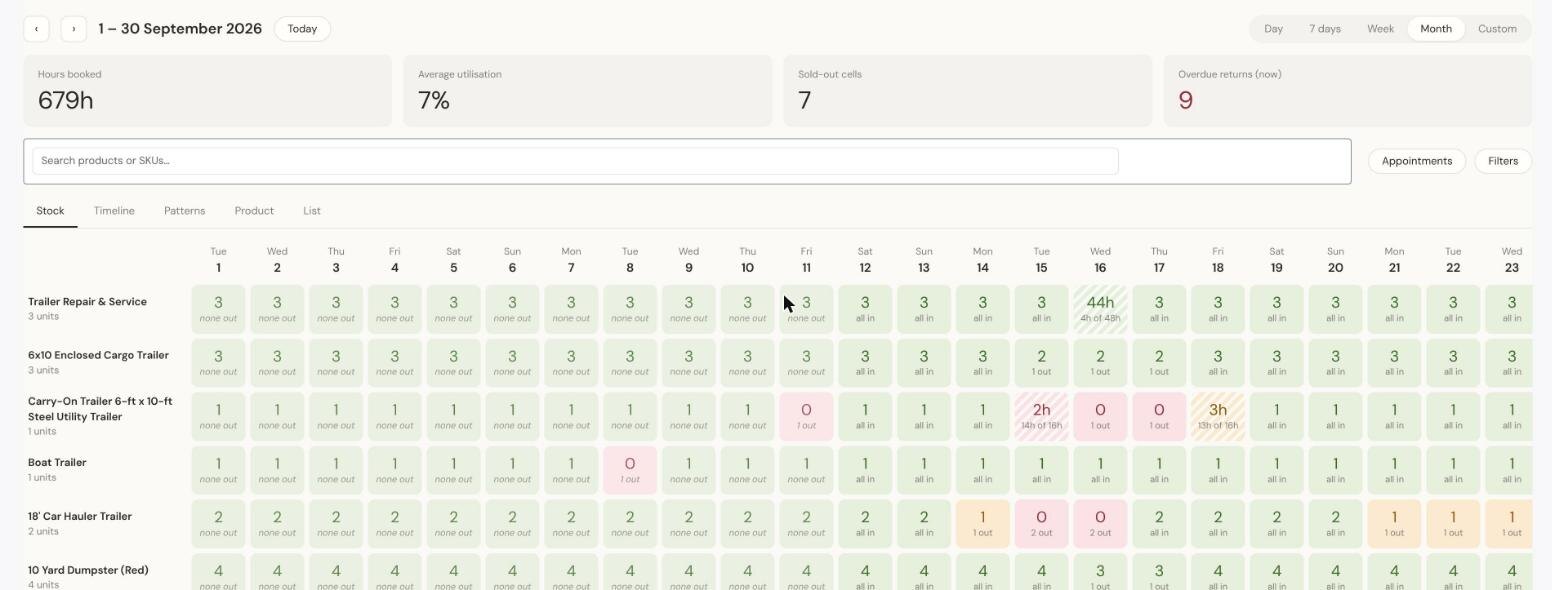
This is where an abstract booking becomes a specific object with a serial number on it.
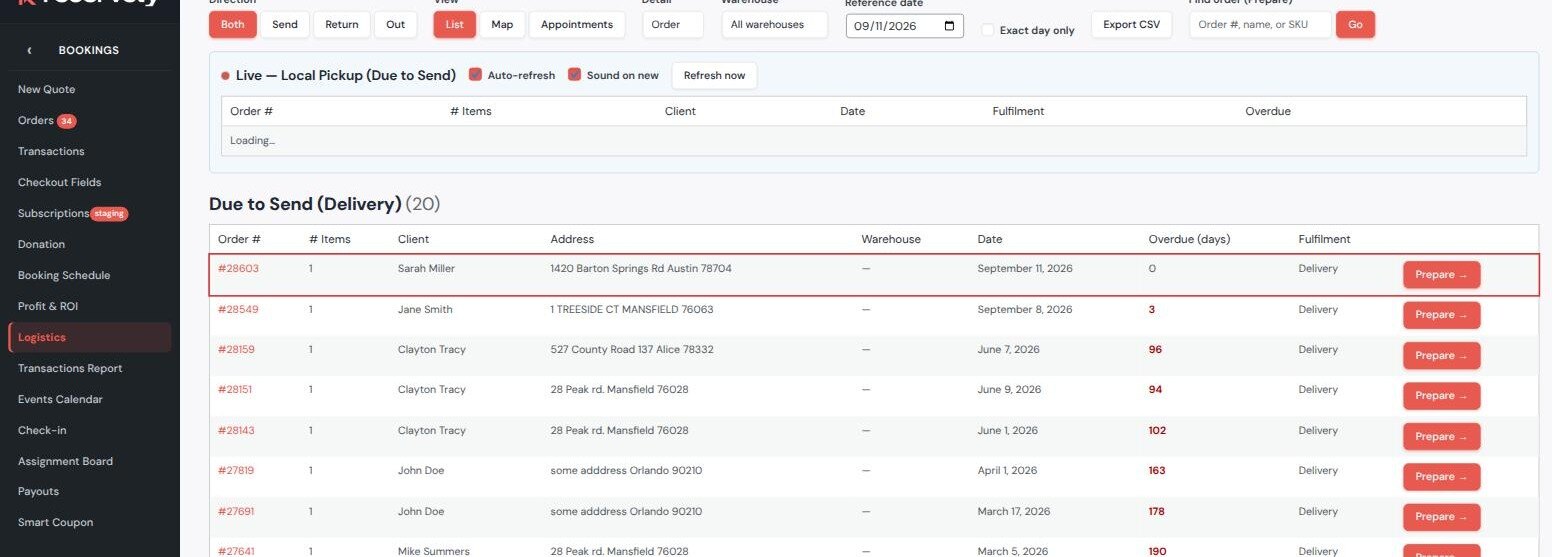
The dispatch list for the 11th has the new order at the top: nothing overdue, the delivery address attached, and a direct route into the job itself. The rest of the list is other work, ranked by how late it is.
Customer and phone number, the dates, what has been paid, what still needs signing, the state of the deposit, the invoice, and the item to pick. No walking back to the office to check any of it. That screen is the staff app; the same phone carries every email, SMS and WhatsApp exchange with this customer on one thread, which is a use case of its own.
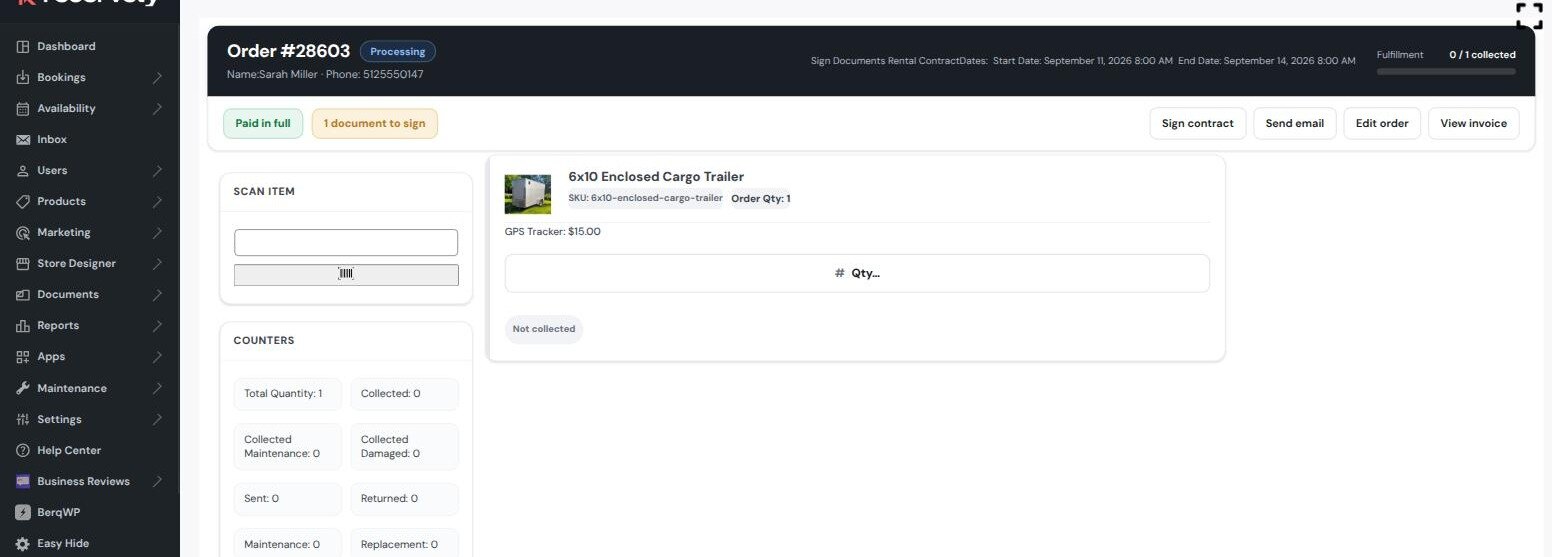
Staff choose which of the three units physically goes, from the ones genuinely free for these dates. The order line then records the unit, the person who picked it and the time — so “which trailer did she have” is a fact rather than a memory.
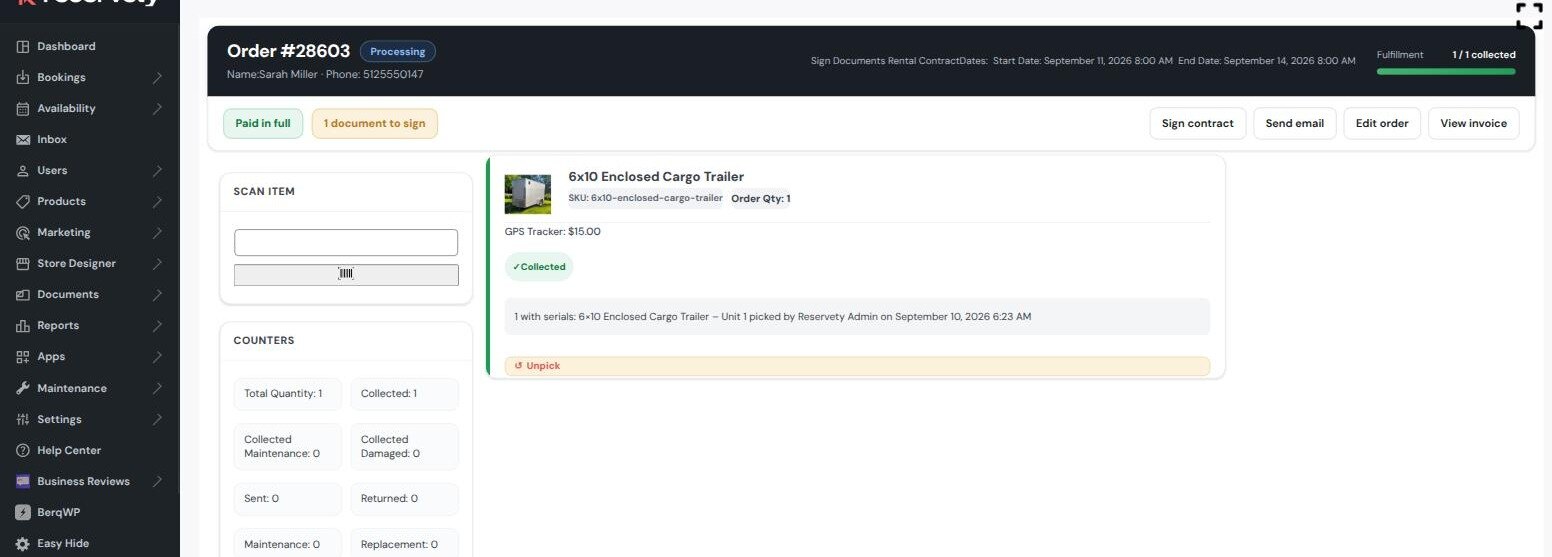
The order is now Sent, and the form on the screen has changed with it. The rental contract is gone and the handover checklist has taken its place, because that is the form that belongs to this moment. Whoever is holding the trailer is never presented with the wrong one.
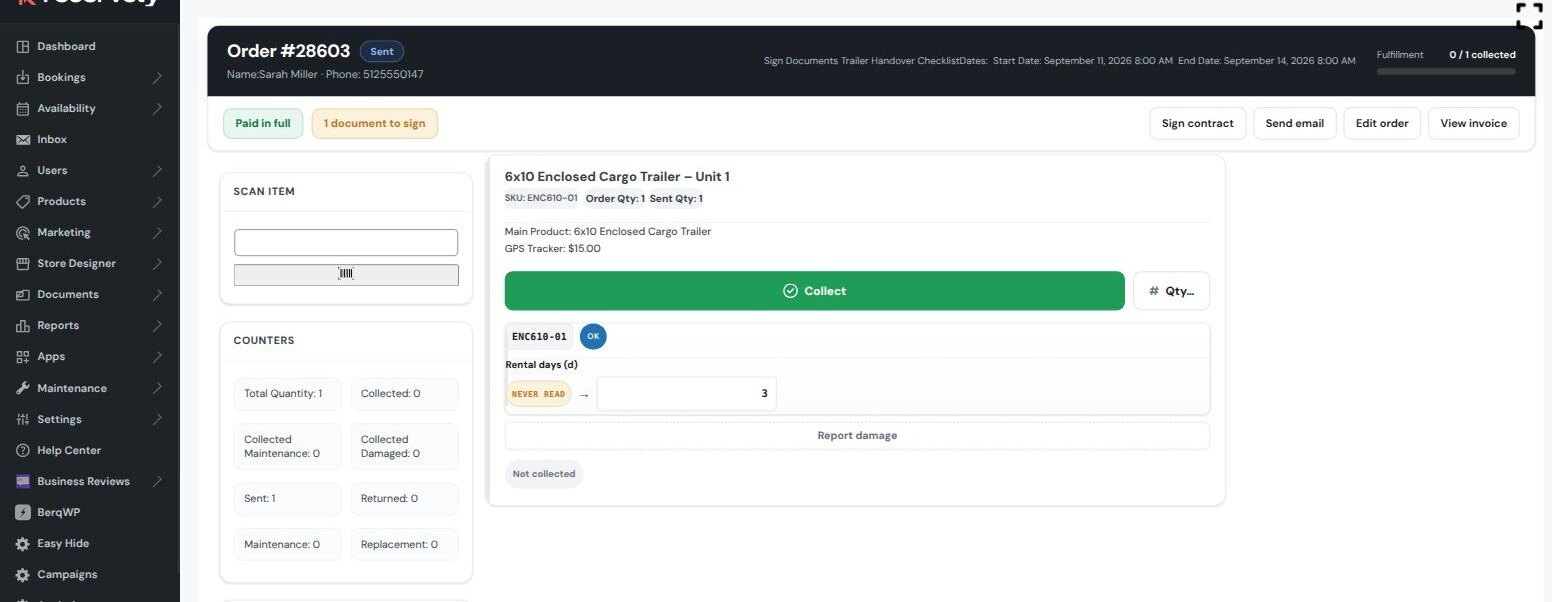
The same screen, turned around. This is where the yard finds out what state its fleet is in.
The desk does not do arithmetic and does not run a second errand. The usage reading is already suggested from the length of the hire, and accepting it is part of taking the trailer back. One action, two facts recorded.
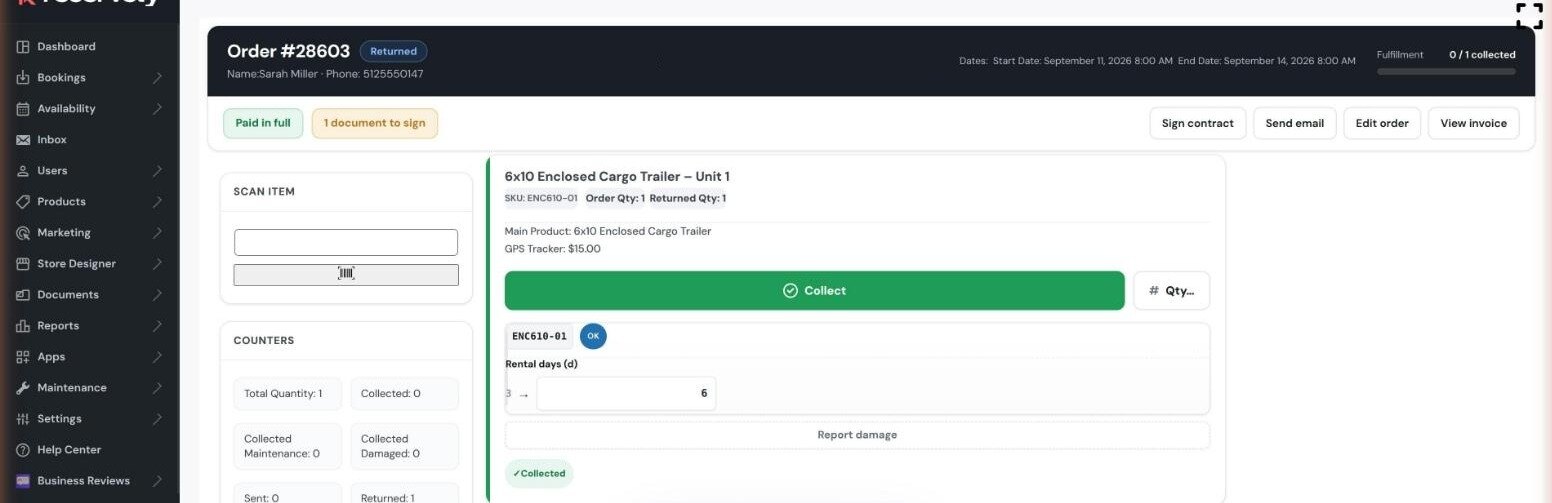
This yard inspects an enclosed trailer every three rental days and safety-checks it once a year. The unit that just came back has done exactly three, so it changes its own status at the counter — no overnight job, no one remembering to look.
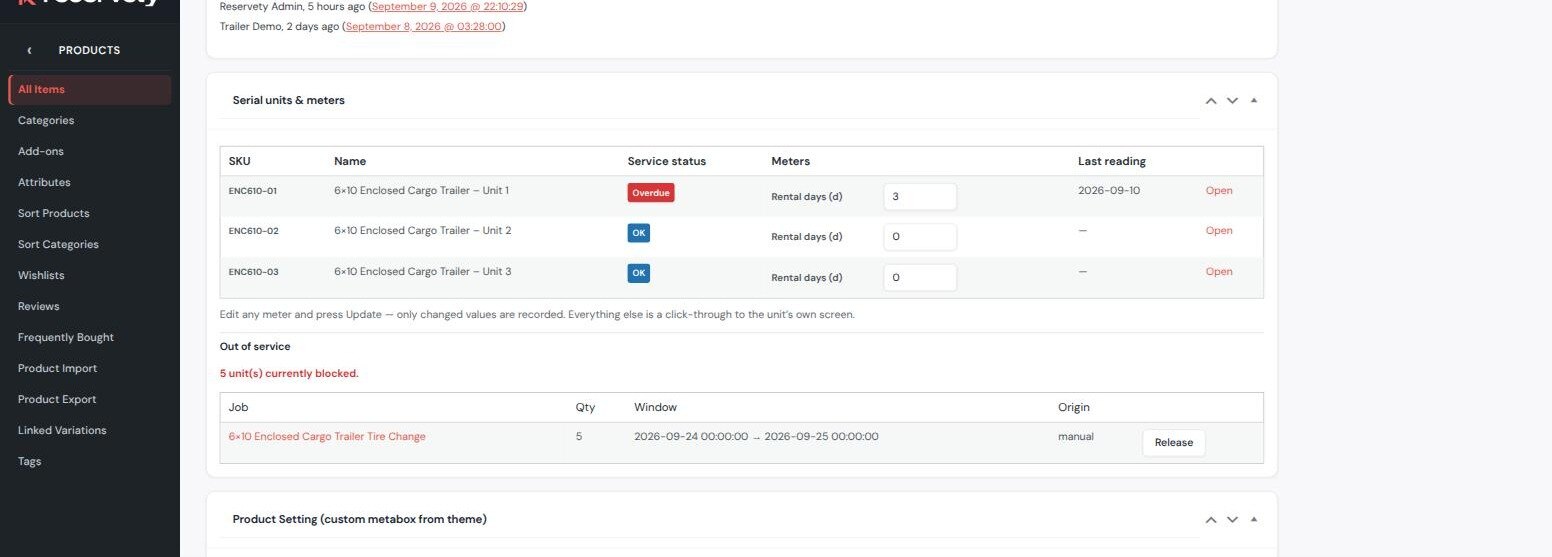
Why this is the part that matters. A booking system that stops at the order can tell you a trailer was hired. It cannot tell you which one, how hard it has been worked, or that it is now due a check before it goes out again. Here the hire, the unit, the wear and the workshop are the same record, so the yard finds out at the counter rather than on the hard shoulder.
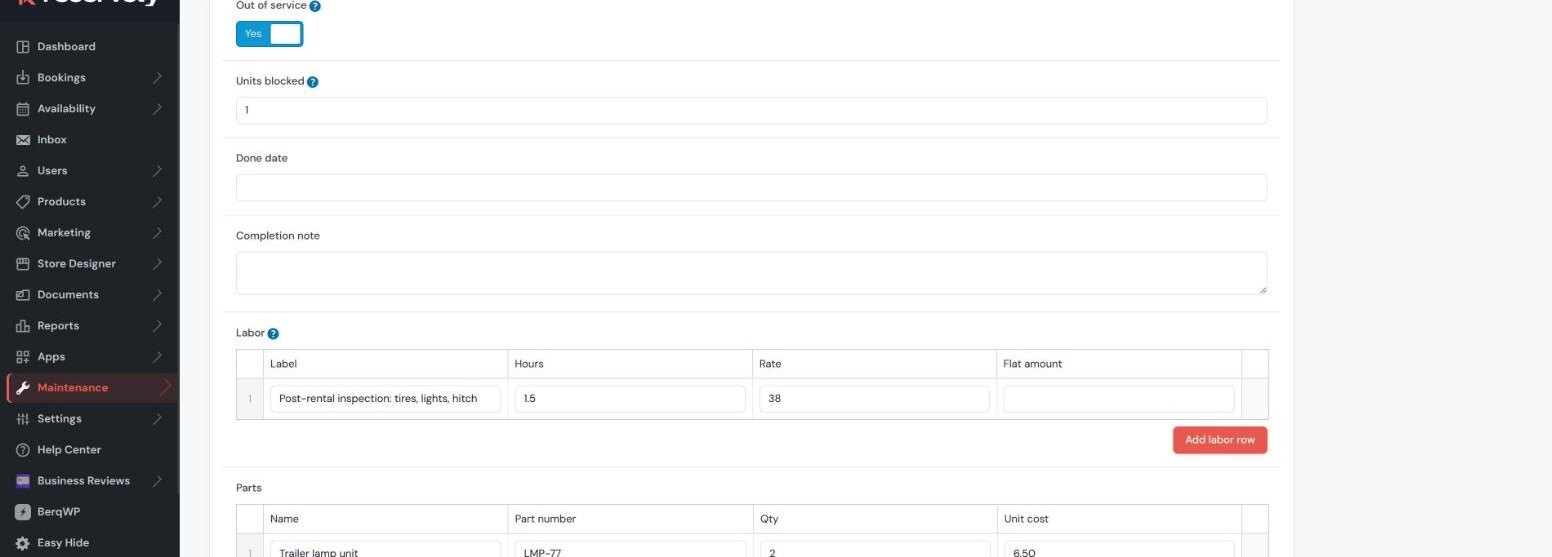
The trailer flagged an inspection. Somebody has to do it, and it has to cost something.
The job is raised straight off the due list, so it already knows which trailer it is for and which rule sent it. The mechanic’s labour prices itself from his own hourly rate. While the job is open the trailer cannot be sold, and closing it puts the trailer back in the fleet and sets the next inspection three rental days out.
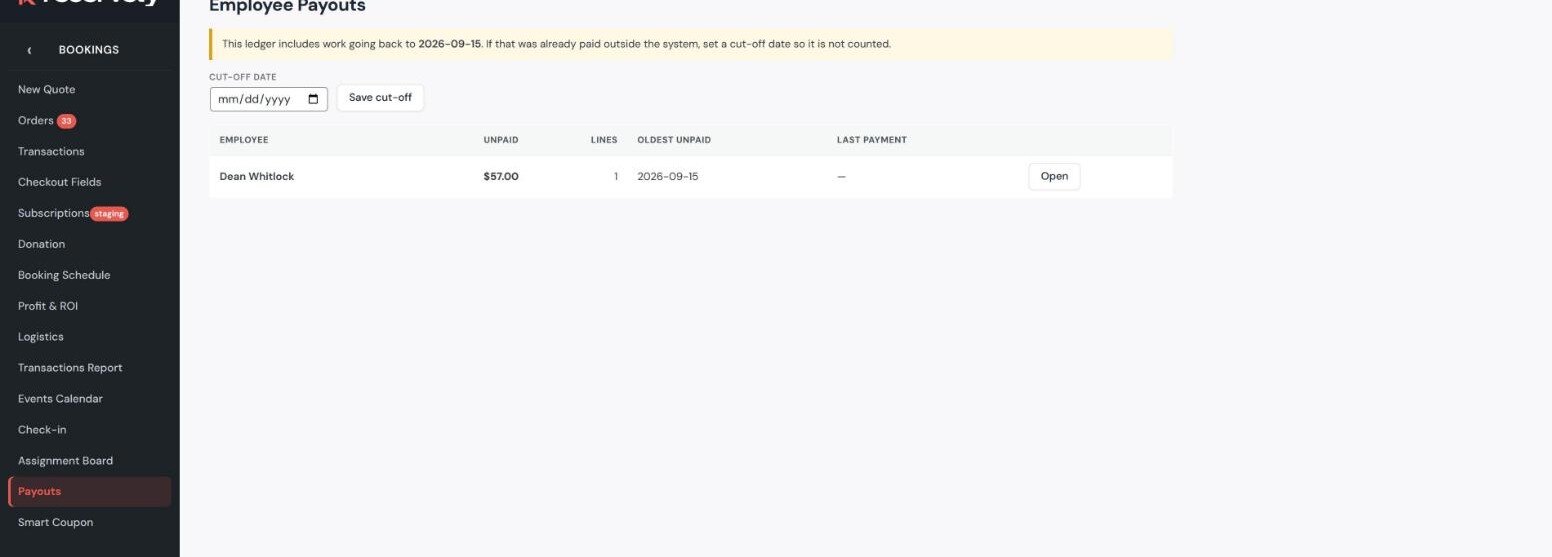
Three separate questions: what is owed to staff, what this asset earned, and whether the customer gets their deposit back.
The payout ledger derives from work that already happened, so the inspection labour is there the moment the job is saved. Every line points back at the job that produced it, and recording the payment freezes it — a line cannot be paid twice, and a mistake is reversed by voiding the batch rather than deleting it.
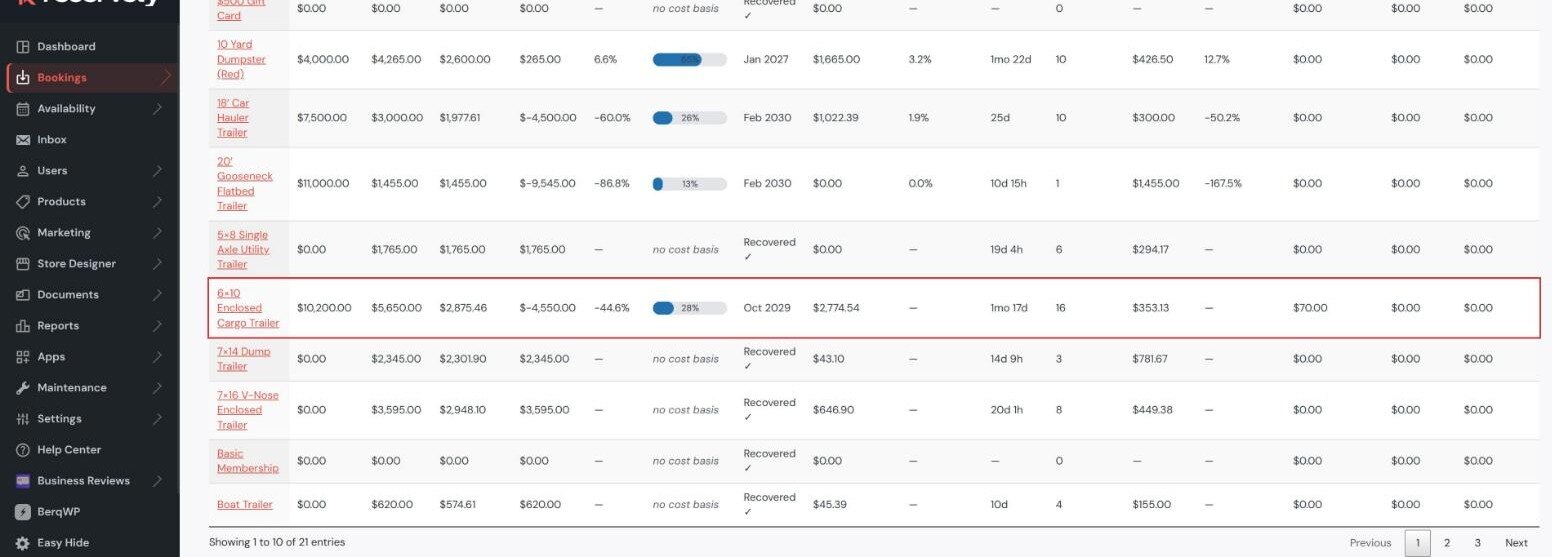
The profit report measures each asset against what the yard actually spent on it. The purchase prices of all three units roll up to the product, and this morning’s workshop bill lands against the same line. A manager sees a fleet, not three fragments.
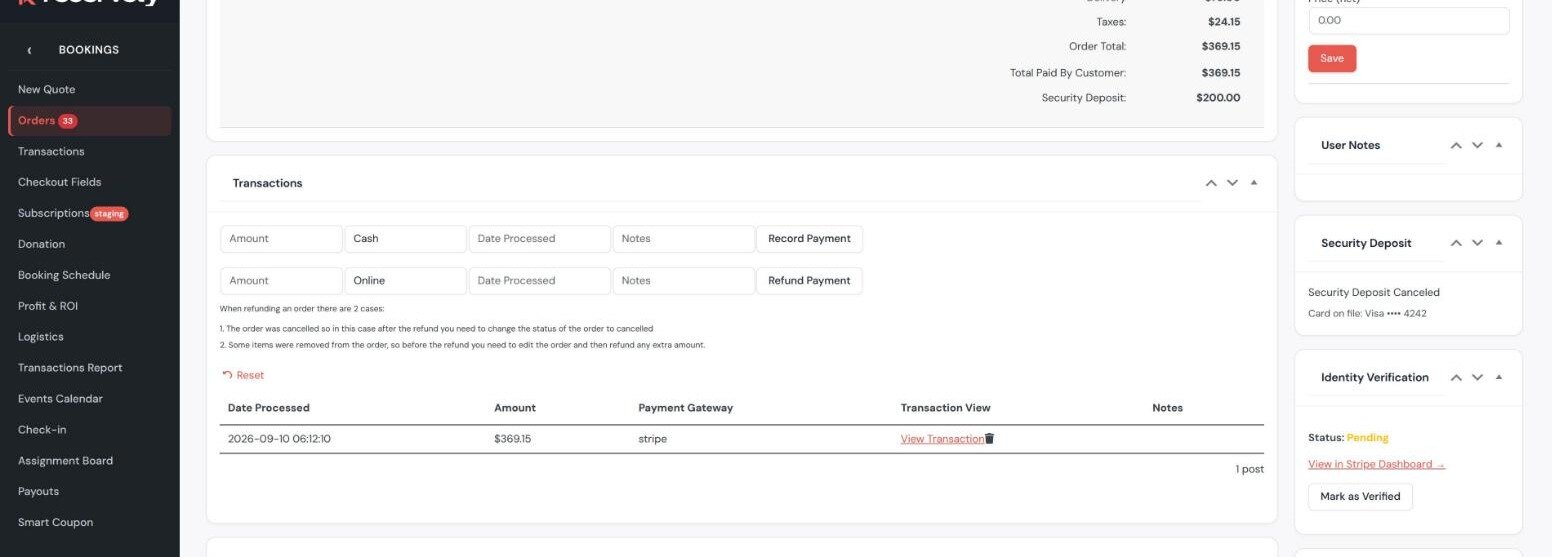
The trailer came back needing routine maintenance, not repair. So the hold is released rather than captured and she is charged nothing beyond the hire. Had there been damage, the same panel takes any part of the $200 against the card that has been on file since the day she paid.
| Money in this run | Where it went |
|---|---|
| $369.15 | Charged to the customer — three day hire, tracker, delivery |
| $200.00 | Held on her card at payment, released at completion |
| $57.00 | Owed to the mechanic, on his payout the moment the job was saved |
| $13.00 | Parts, a cost to the business |
| $70.00 | Total workshop cost, recorded against a fleet that cost $10,200 |
Three days and delivery to Austin. $369.15 paid, $200 held against the card.
Friday morning it is top of the dispatch list, with the address on it.
ENC610-01 leaves the yard. The line records the unit, who picked it and when; the handover checklist is signed.
Monday it comes in. Taking it back records the trailer and its three rental days in the same action.
Three rental days is an inspection. That unit goes overdue. The other two do not.
An hour and a half and two lamp units, $70. The trailer returns to the sellable fleet, next check due at six.
$57 of labour reaches the mechanic’s payout without anyone compiling a timesheet.
Deposit released. Nothing extra charged, nothing left to chase.
Captured live on the Trailer Rentals demo. Order 28603, unit ENC610-01. Screenshots are of the running system, unretouched.
Reservety handles your website, bookings, inventory, and payments — so you can focus on growing your business.