
How to Install Tents on Concrete without Causing Too Much Damage.
Installing tents on concrete grounds is one of the primary challenges that tent rental companies face.
Installing tents on concrete grounds is one of the primary challenges that tent rental companies face.
Because it is difficult to drive stakes into hard ground like concrete.
Even if you hammer them down there, you will still left with a repair job that you must do after the disassembly.
Otherwise, someone’s nice concrete will have nasty scars and holes.
What is the first step?
Impose additional fees for installing tents on difficult grounds. It will save you time and surely relax your nerves while doing the job.
Tent rental companies must get clear information about the installation spots before the booking.
It is easier to obtain that information with Reservety, as it enables tent rental companies to add questionnaires and selection choices to the online booking process.
How to impose site-based installation fees?
Reservety adds a selection box to a tent rental website that allows customers to choose whether they need installation service.
If they do, you require them to select the installation ground type from the drop-down menu.
After the selections, the installation service will be automatically quoted thanks to Reservety’s algorithms.
If customers are happy with the price, it automatically applies the installation fees to the total during checkout.
What are the next steps?
Since you know where to install the tents, you can now prepare your team and tools for the installation date.
Keep in mind that there is more than one method of installing tents on concrete grounds, and each has advantages and disadvantages.
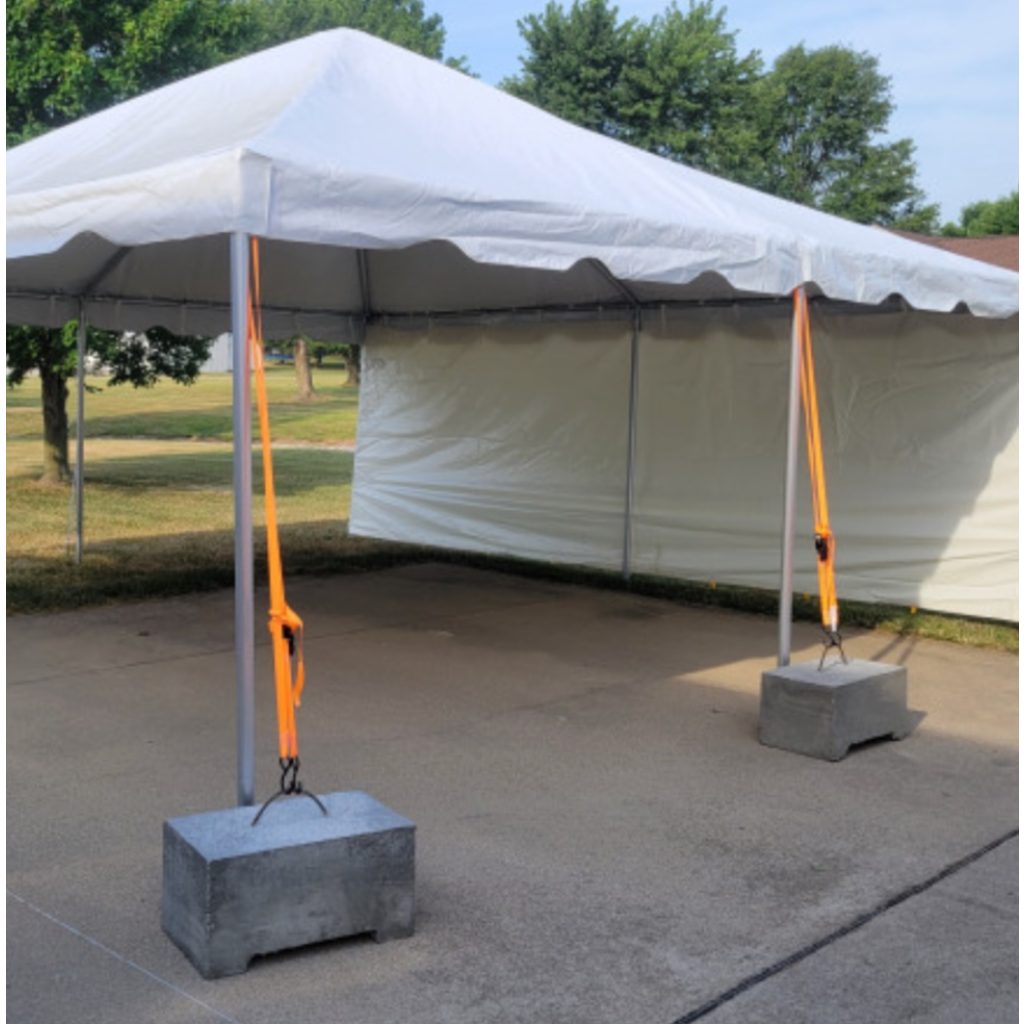
Concrete Blocks.
This method involves multiple concrete blocks that are heavy enough to hold the tents in steady shape.
You can acquire those blocks from shops or create them yourself.
Advantages
- Cheaper to acquire
- Long-lasting
- Heavy enough to keep the tents secure
Disadvantages
- Heavy to transport
- May require teamwork
The following images demonstrate how the tents look after the installation using blocks.
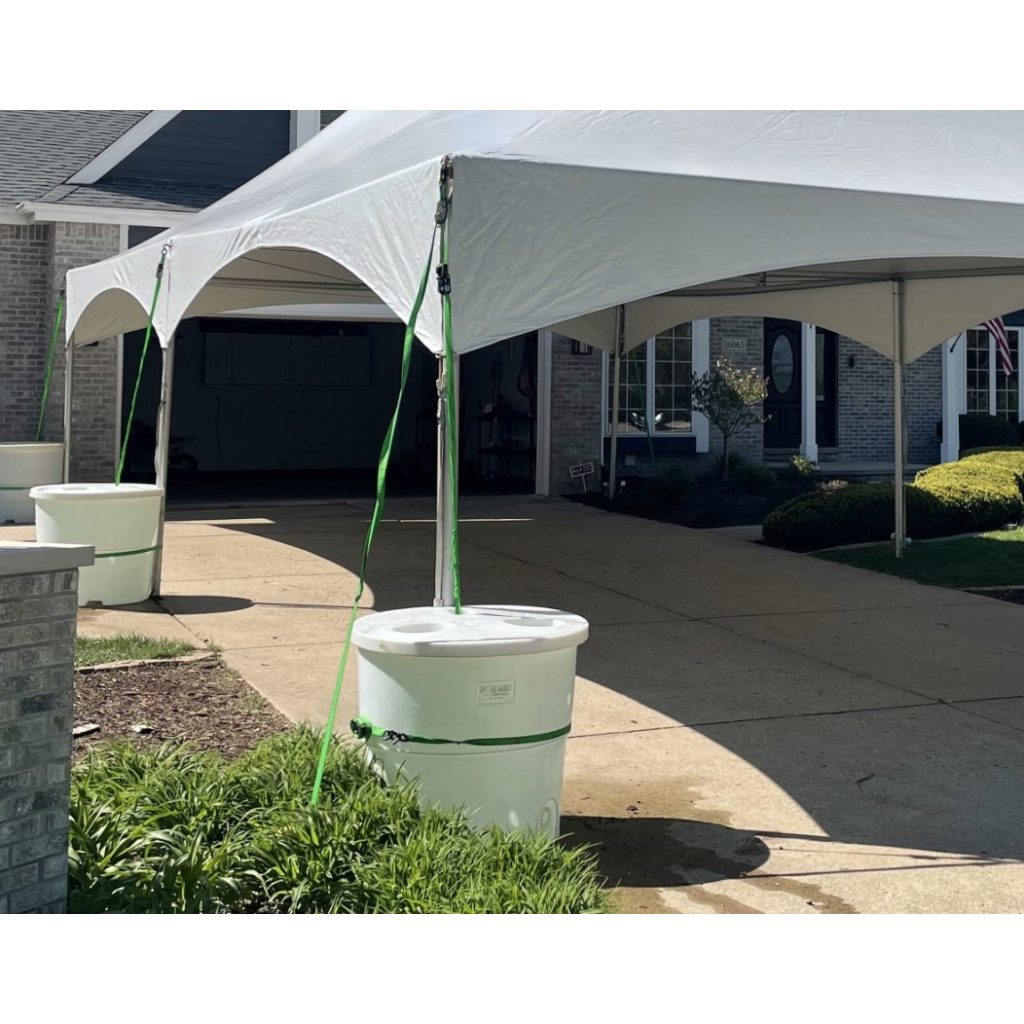
Water Barrels.
Interestingly, you can anchor your tents with water barrels. Installers bring several barrels and position them in every corner of the tent to keep the frames tight.
Advantages
- Cheaper to acquire
- Lighter to transport (assuming you will transport them empty and fill them up on the installation site)
- Durable
Disadvantages
- May not look professional unless you cover them to give an aesthetic look.
- Requires water to fill up at the installation site
- Disassembly may be challenging as you must empty those barrels after the event.
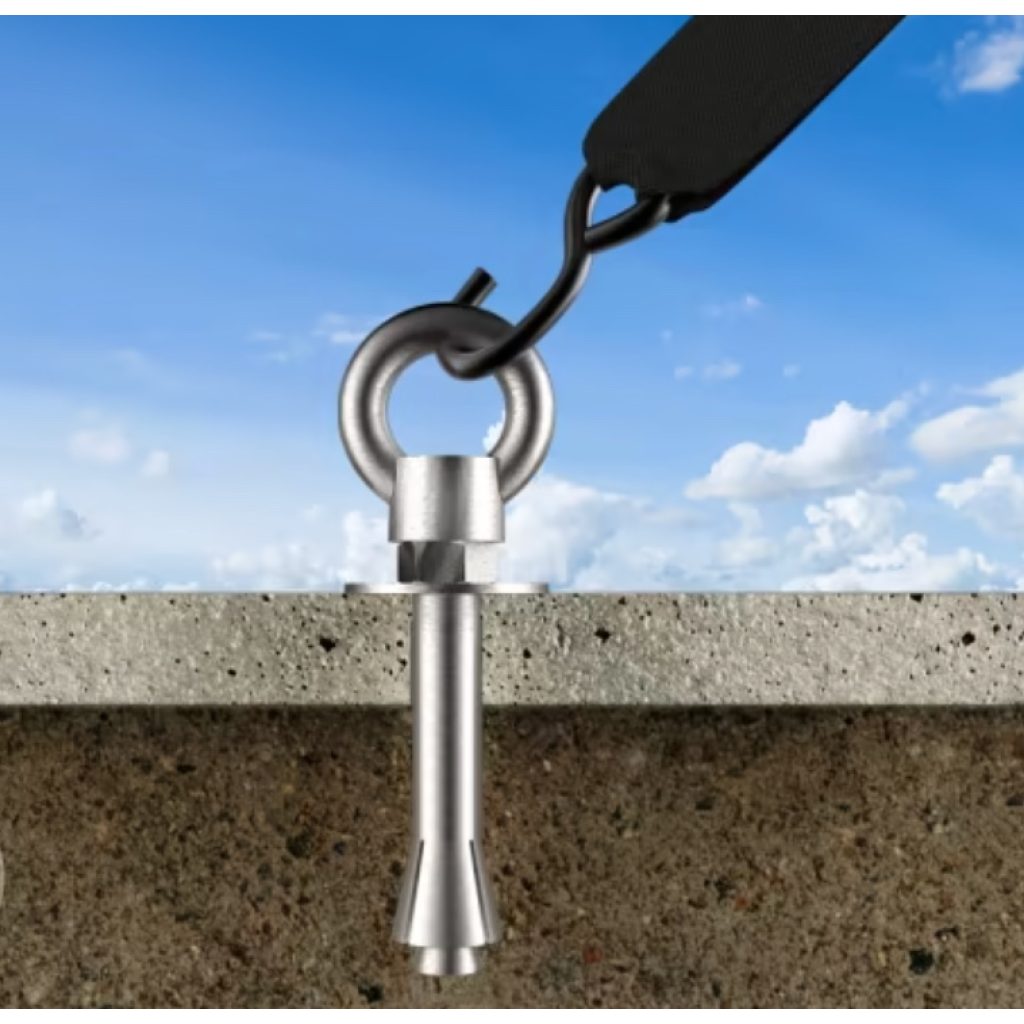
Drills and Bolts.
Yes, it is difficult to hammer the stakes into the concrete. Even if you manage to do so, concrete may fracture or holes will be bigger than intended.
You can avoid such unfavorable aftereffects by gently drilling the concrete to drive bolts.
Advantages
- Does not require heavy lifting contrary to blocks and water barrels
- Creates even-sized holes which can be easily covered with special plugs.
- Drilled holes can be used for future installations.
- Cheaper
Disadvantages
- May not be allowed in all places
- Risk of fracturing concrete slabs
- May require special skills.
- Need heavy-duty drills which may be costly.
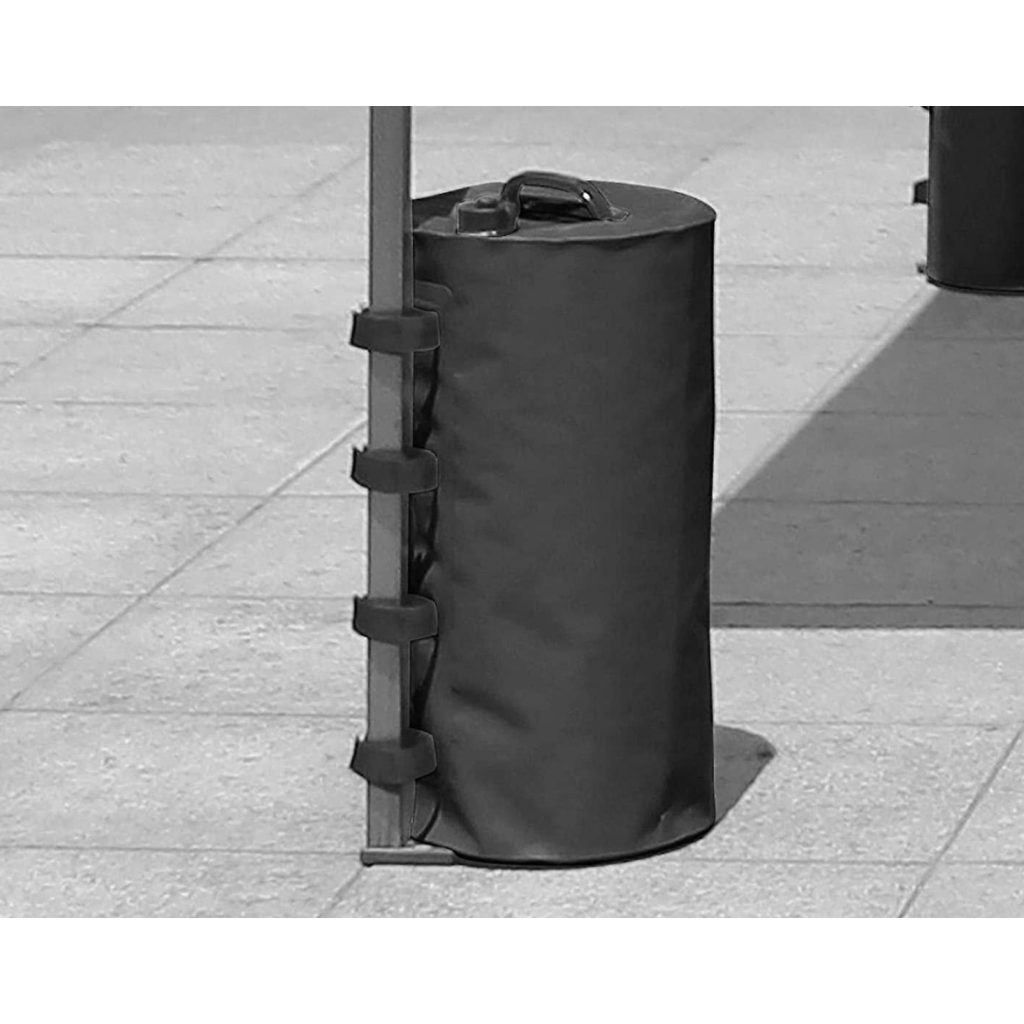
Sandbags.
Like water barrels and concrete blocks, sandbags are another cost-efficient way of anchoring your tents on concrete grounds.
The installation process is similar to that of other weight-based methods. Installers put sandbags to the bottom of each tent leg.
Advantages
- Cheap to acquire
- Durable
- Can be used on uneven grounds
Disadvantages
- Aesthetically not attractive
- Require additional cover for a better appearance
- Heavier to transport.
- Not suitable for rainy days
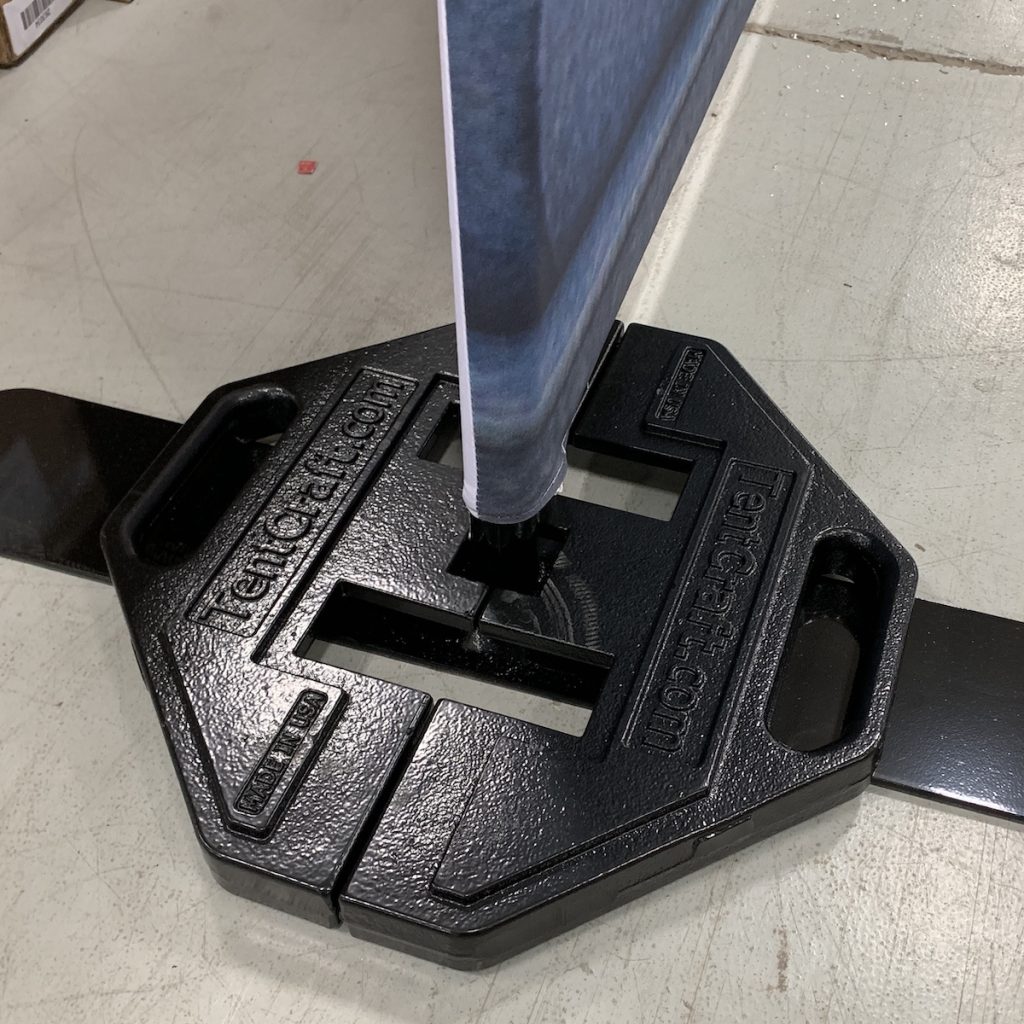
Footplates
Given the need for weights for tents, some companies started developing footplates. One of those companies is TentCraft.
They developed special cast iron plates that easily attach to the tent legs. Since they consist of two parts, they are lighter to carry and easier to attach and detach.
Advantages
- Perfect aesthetic look
- Easier to transport and store
- No need for installation hacks
Disadvantages
- Higher price
- May not fit for all types of tent legs.

Weight plates
If specially designed footplates do not match your tents, you can use regular weight plates you find in gyms.
Heavier plates are better or you can stack several to get the required weight.
Advantages
- Easily accessible
- Easier to transport and store
- Can be used for multiple purposes
- Compact size
- Long-lasting.
Disadvantages
- Not known disadvantages.
How much weight is required?
It depends on size, material, and the wind speed.
For example, the bigger the tent, the more weight is needed. Similarly, if the wind speed is higher, you need to add more weight.
Manufacturer’s guidelines are the best place to find the weight requirements. Thus, read the user’s manual that comes with the tent. But we can’t say all companies provide this information.
Some sources claim that 370 lbs (168 kg.) is required to hold down the 10 x 20 tents. Assuming it has 6 legs, you have to put 60 lbs (27 kg.) weight on each leg.
10 x 10 tents usually require 200 lbs. (90 kg.), which needs to be evenly distributed across all tent legs. Yet again, those are just general numbers. More weight may be required depending on the material and the wind speed. The rule of thumb is that it is better to be safe than sorry.
Potential Hazards.
Although weights can securely hold down your tents, they may create risks to guests walking around them. People can tip over them, or cut themselves if the weights with sharp edges are used. Therefore, we recommend considering weights or other life hacks that are safe for people who come close to tents.
Conclusion
Let’s sum up everything.
Firstly, we mentioned that installing tents on concrete or other hard ground can be challenging as it is difficult to hammer the stakes in those places without damaging the ground.
In other words, not many companies or individuals are willing to damage their front yard or parking when alternatives are available.
As mentioned, there are several methods, which include, using weights such as concrete blocks, sandbags, water barrels, footplates, and weight plates. Each method has its cons and pros.
Start Your Rental Business the Right Way
Reservety handles your website, bookings, inventory, and payments — so you can focus on growing your business.