
Google searches for "wedding tent rental" peak in June, May and January, based on Google Trends over the last 12 months. Two of those months sit right inside the season you already plan around. The third one doesn't. Below we put the search peaks next to our season data and add the census figure on online booking. Then we turn it into a checklist of six things to have ready before each peak, with the reason for every item. Short version: the demand shows up on Google whether or not your booking page is ready for it.
Searches and the season agree on May and June, and split on January and September
Our season data for party and event rental marks May, June and September as peak months. The Google Trends peaks for "wedding tent rental" are June, May and January. Put them side by side and they line up on May and June.
They split at the edges. January shows up as a search peak but not as a peak season month. September is a peak season month but not one of the search peaks. We won't guess at the reasons behind either gap. The practical read is simple: people type "wedding tent rental" into Google in January, outside the peak months. When they do, your prices and open dates should already be there to answer them.
| Month | Listed as a search peak for "wedding tent rental" | Peak month in our season data |
|---|---|---|
| January | Yes | No |
| May | Yes | Yes |
| June | Yes | Yes |
| September | No | Yes |
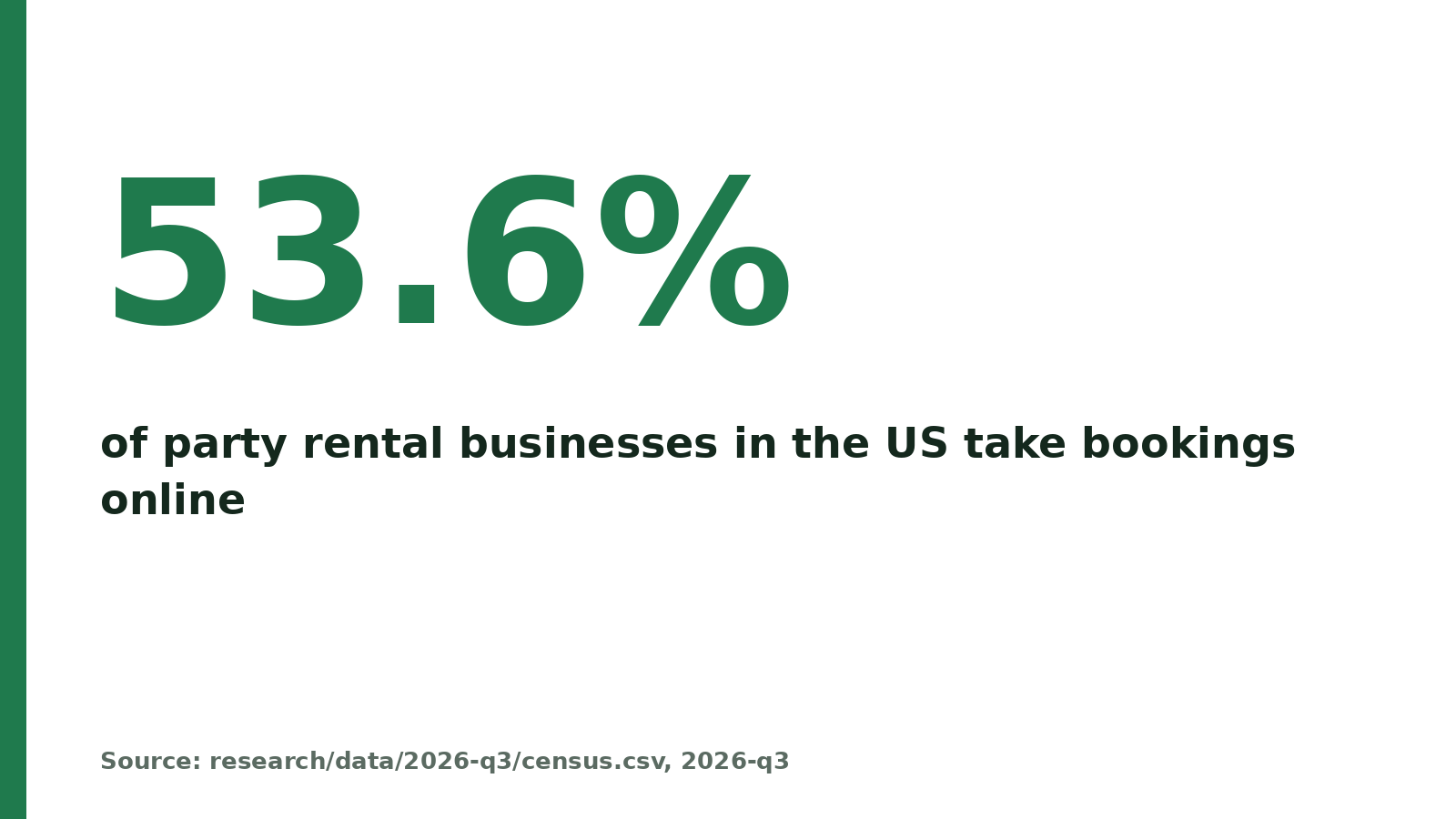
53.6% of US party rental businesses take bookings online
That figure comes from our 2026 Q3 census of party rental businesses in the US: 3,000 sampled, weighted by locations. Just over half. The rest, per the same census, don't take bookings online.
That split matters most at a search peak. If a searcher can see your tent sizes, your prices and your open dates, and pay a deposit without picking up the phone, you're in the 53.6%. If they have to call, text and wait, the booking depends on you answering in time. Owners tell us, in their words: "I'm losing bookings because people can't book after hours."
| Measure | Value | Period |
|---|---|---|
| Party rental businesses in the US that take bookings online | 53.6% | 2026 Q3 |
| Businesses sampled | 3,000 | 2026 Q3 |
Checklist item 1: get tent prices and open dates online before January
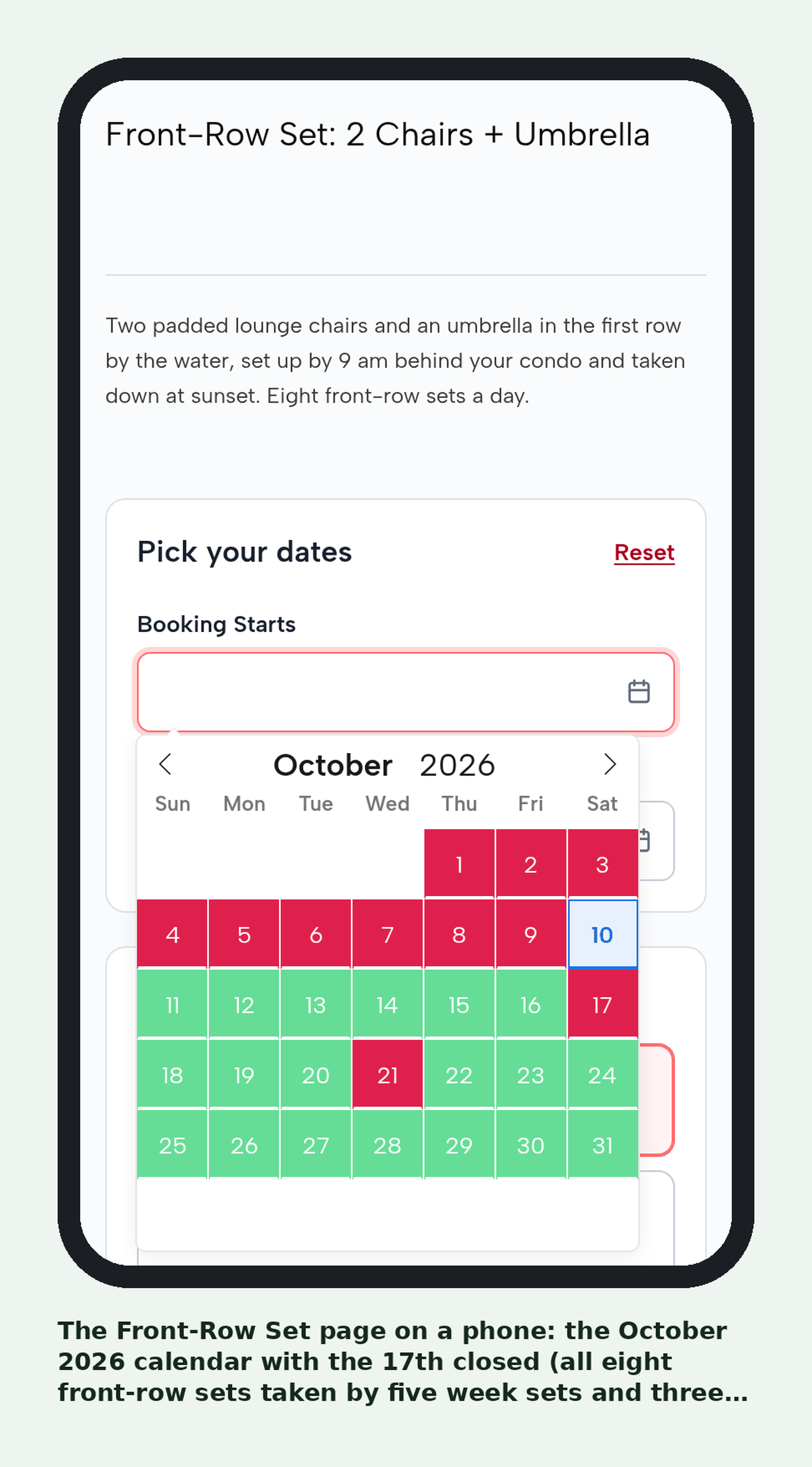
Reason: January is one of the three search peaks, and it sits outside the peak season months. So you want this done before the phones get busy, not during.
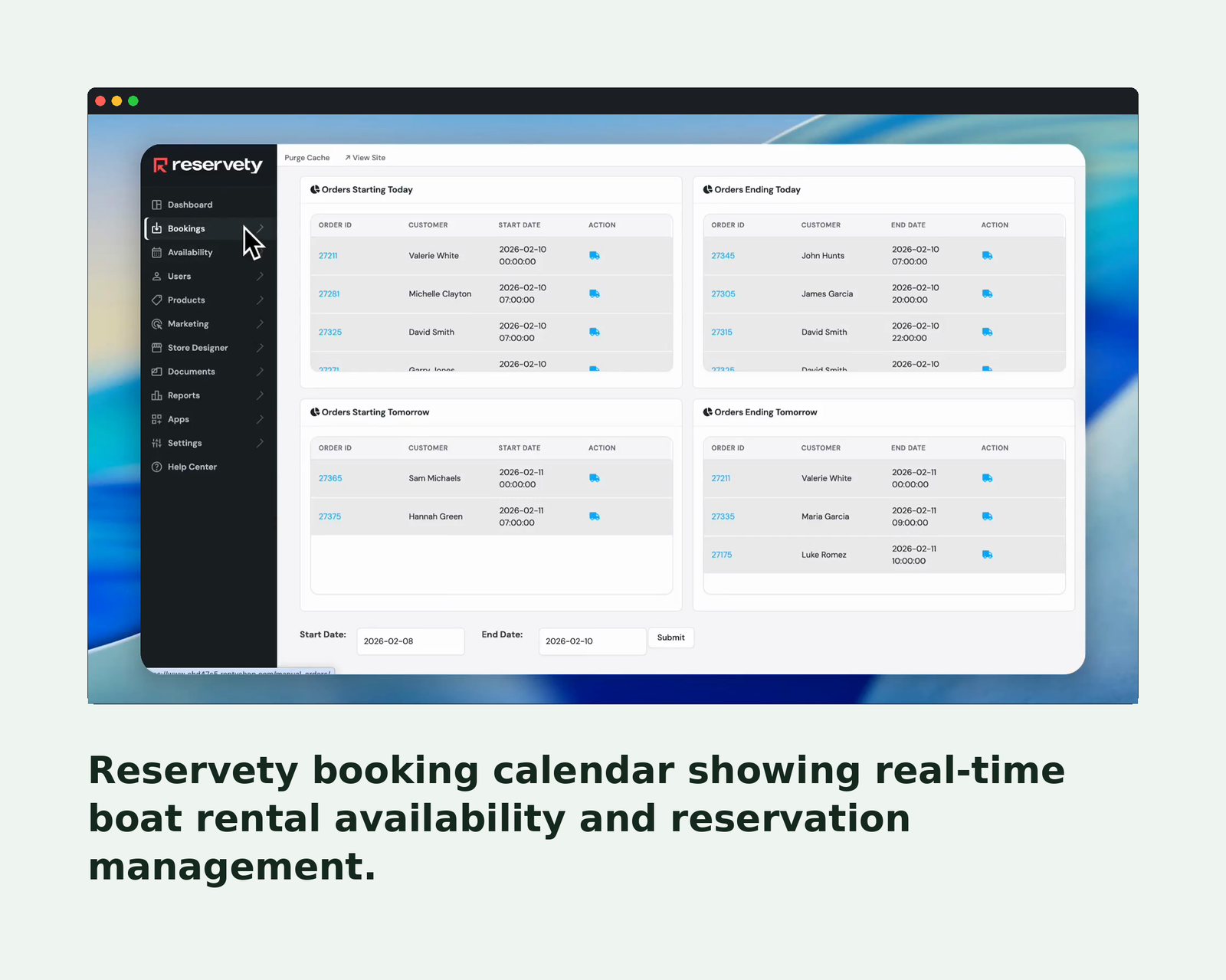
What "online" means here: every tent size listed with a price, a live availability calendar, and a checkout that takes a deposit. A customer should be able to pick a date, see what's free and book it at any hour. On Reservety that's the default setup. Your calendar, availability and pricing all live in one system, and the website shows exactly what's free.
Checklist item 2: let delivery zones price the drive, not you
Reason: tent quotes are delivery quotes. Owners tell us about "10+ minutes per quote calculating delivery fees by hand", and one put it bluntly: "I spend all day on the phone giving quotes."
Set up delivery zones once. The customer enters an address, the delivery fee is calculated by distance, and the total shows up before they pay. You stop doing math in the truck between drop-offs. Your quote is the same at 10 at night as it is at noon.
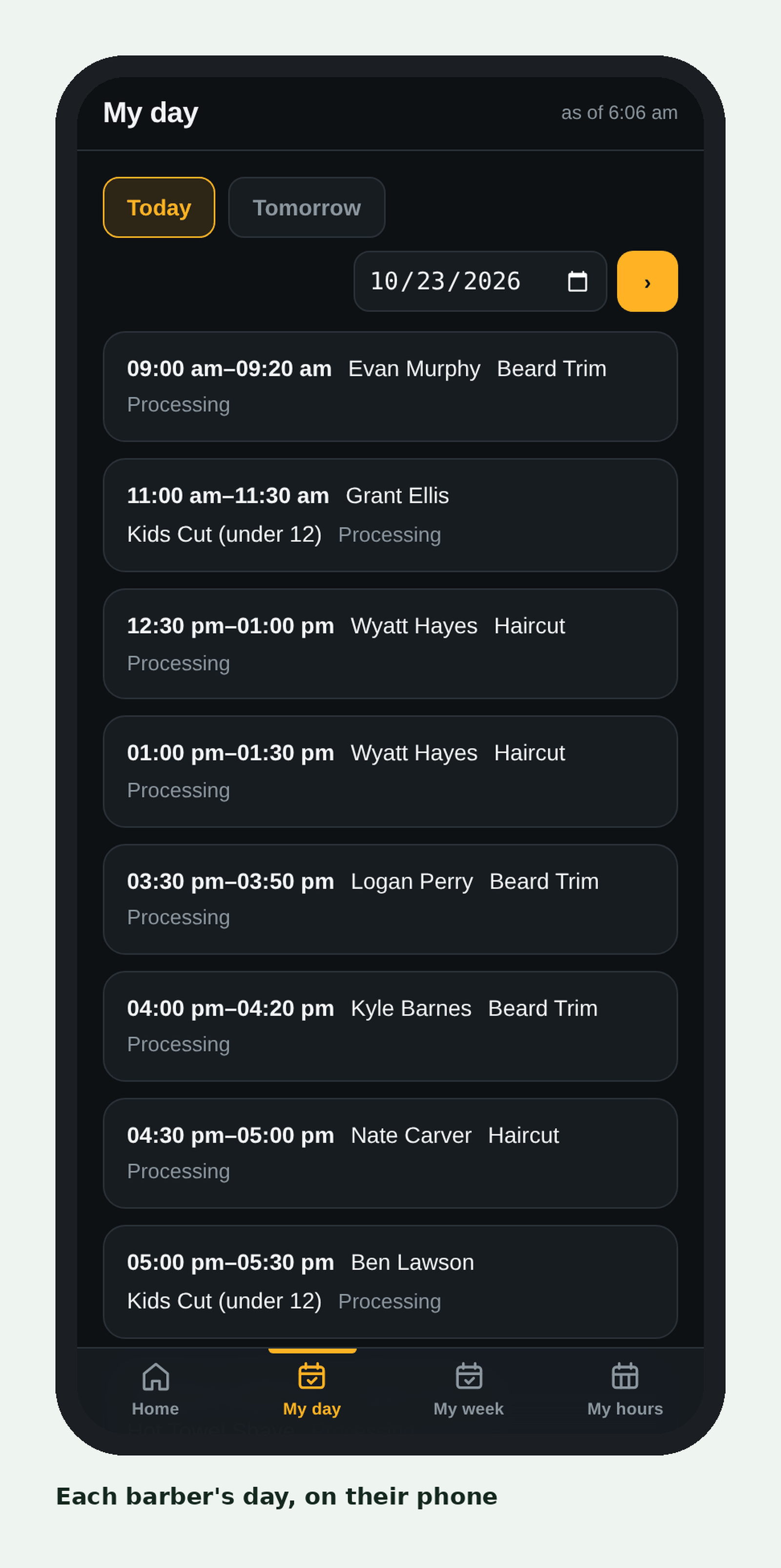
Checklist item 3: one calendar, with buffer time, so a tent can't be booked twice
Reason: when May and June stack up, a double booking costs you a tent, a phone call and a customer. Owners tell us: "I keep double-booking and having to call customers to cancel." Others say: "I'm managing everything through texts and it's a mess."
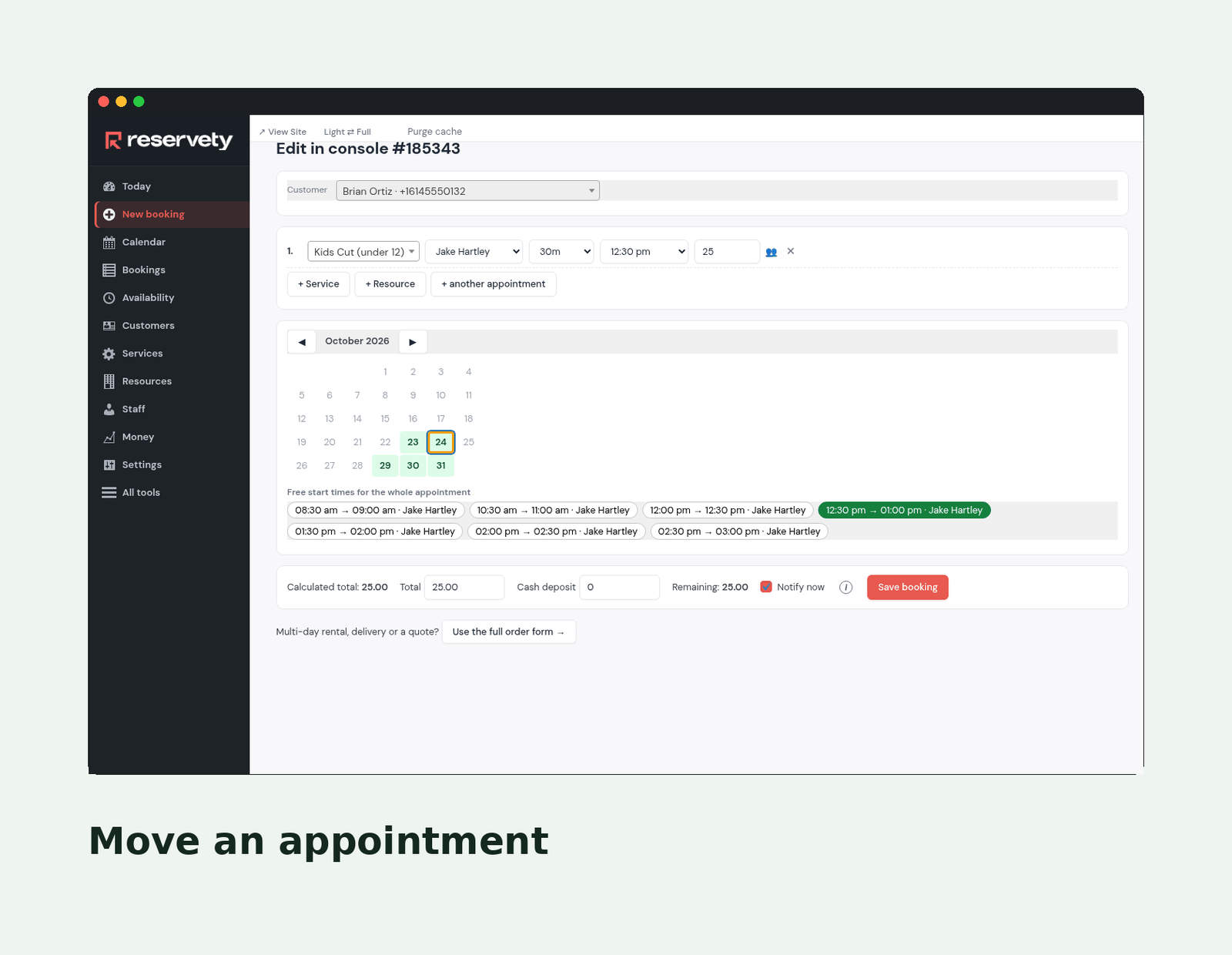
The fix is one calendar that every booking goes through, whether it comes in online or over the phone. Add buffer time so each tent gets an automatic gap after a rental for teardown, cleaning and prep before it can go out again. You set the gap per item, so the calendar never offers a slot your crew can't make.
Checklist item 4: collect deposits, waivers and ID at checkout
Reason: paperwork eats peak season. Owners describe "hours a week chasing invoices and paper waivers" and "anxiety about theft and liability without ID verification and digital waivers."
Move all of it into the booking itself. The customer signs a digital waiver, pays the deposit and verifies their ID before the booking is confirmed. ID verification is $0.30 on Reservety. Know the difference you're charging for, too: a security deposit is held against damage and returned, while a damage waiver is a fee the customer pays up front. Spell out which one you use on the tent page so nobody's surprised on the morning after the wedding.
Checklist item 5: keep the calendar honest through September
Reason: September is a peak month in our season data even though it isn't one of the search peaks. That means you can't treat the end of June as the end of the rush.
Before summer ends, check that every tent's availability is accurate into the fall. Block dates you can't staff. Update prices if they change for the shoulder months. A calendar that's right in September is worth as much as one that's right in June.
Checklist item 6: hand the website to someone who'll build it for you
Reason: the five items above only work if the website is live and correct. Owners tell us "I need a website but I'm not a tech person" and "I'm great at running my fleet but terrible at tech."
That's the job we do. With our Concierge Setup, you send us your Launch Kit with your logo, inventory list and business details, and we build it for you. A custom-built website is part of every plan. Pricing is flat and monthly, with zero commission on your bookings.
As of October 27, 2026, our showcase lists 104 client sites. On Capterra, Reservety holds a 4.9 rating from 36 reviews, checked October 11, 2026.
| Plan | Who it is for | Price |
|---|---|---|
| Starter | Rental businesses that want a custom-built website, online bookings and zero commission at our lower flat price | $59/month |
| Professional | Rental businesses that want the same flat, zero-commission pricing and custom-built website on our higher plan | $99/month |
Questions owners ask
When do people search for wedding tent rentals?
Google searches for "wedding tent rental" peak in June, May and January, based on Google Trends over the last 12 months.
How many party rental businesses take bookings online?
53.6% of party rental businesses in the US take bookings online, according to our 2026 Q3 census of 3,000 sampled businesses.
What does Reservety cost for a tent rental business?
Starter is $59 a month and Professional is $99 a month. Both are flat monthly pricing with zero commission, and a custom-built website is part of every plan.
How this was made. Search peaks come from Google Trends via DataForSEO for the query "wedding tent rental", covering the last 12 months and pulled on November 3, 2026. The online booking share comes from our 2026 Q3 census of party rental businesses in the US: 3,000 sampled, measuring the share that can book online, weighted by locations. Peak season months (May, June, September) come from our season data for party and event rental. Owner quotes are what owners told us in their own words; they are not statistics. Plan prices were checked November 2, 2026, client sites October 27, 2026, and the Capterra rating October 11, 2026. Data checked on 2026-11-03.