
A workshop sells time, not trailers. Three mechanics, a handful of slots a day, and a customer who may or may not care which pair of hands does the work. This is what happens between choosing an hour and paying the person who worked it.
Renting a trailer and booking a mechanic look like the same problem. They are not. A trailer is a thing you either have or you do not. An hour of a named person’s time is a different kind of stock: it runs out per person as well as per slot, and customers often have a preference about whose hour they get.
What follows is a two-hour repair appointment, photographed as it is.
A repair slot is a window of time with a price on it. The first two decisions are which day, and which hour of it.
The customer is offered the hours the bench can actually start a job, not a blank calendar to guess at.
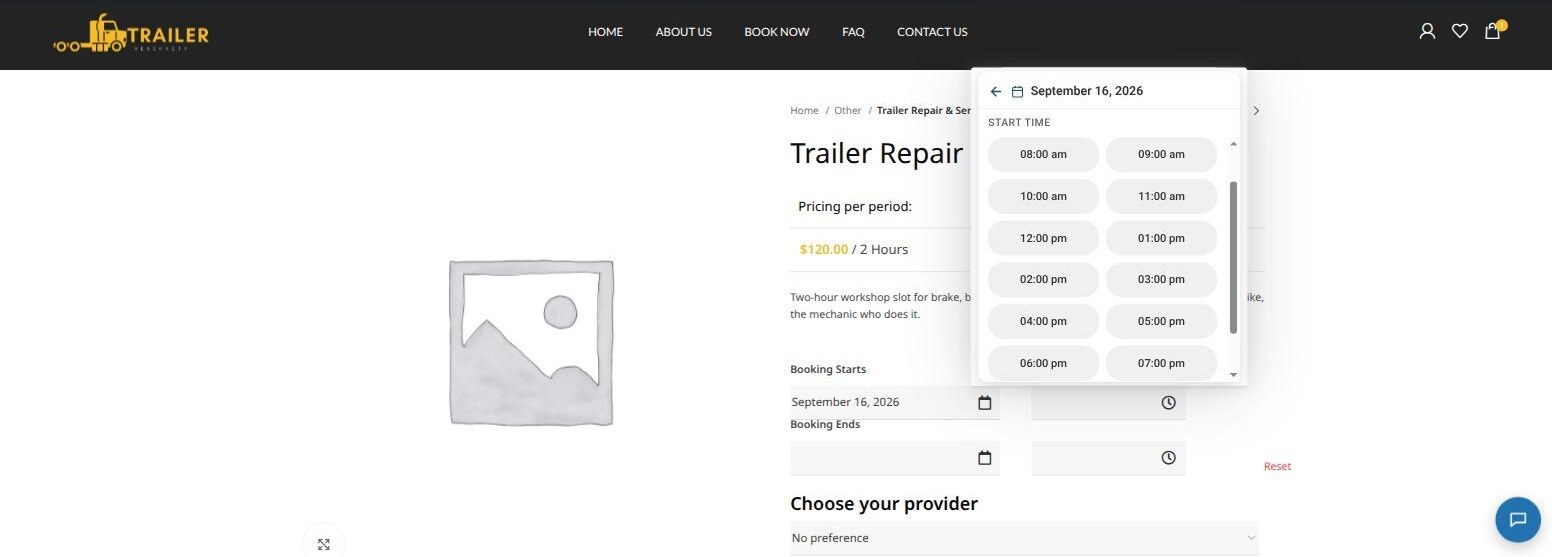
This is the part that makes it an appointment rather than a rental. The list of mechanics is the shop’s actual roster, so it cannot drift out of date, and it opens on No preference for the customers who genuinely do not mind.
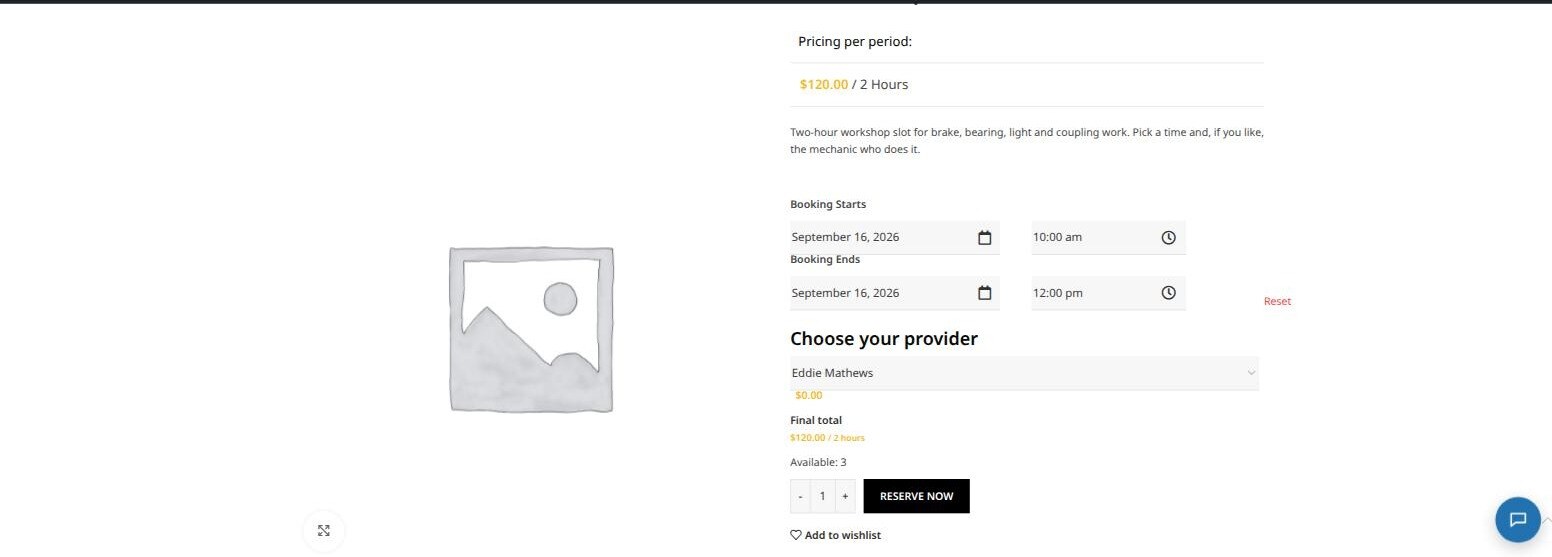
The choice is not a note typed onto the order for someone to read later. It becomes a line of its own underneath the service, and that line is what holds the person’s hour.
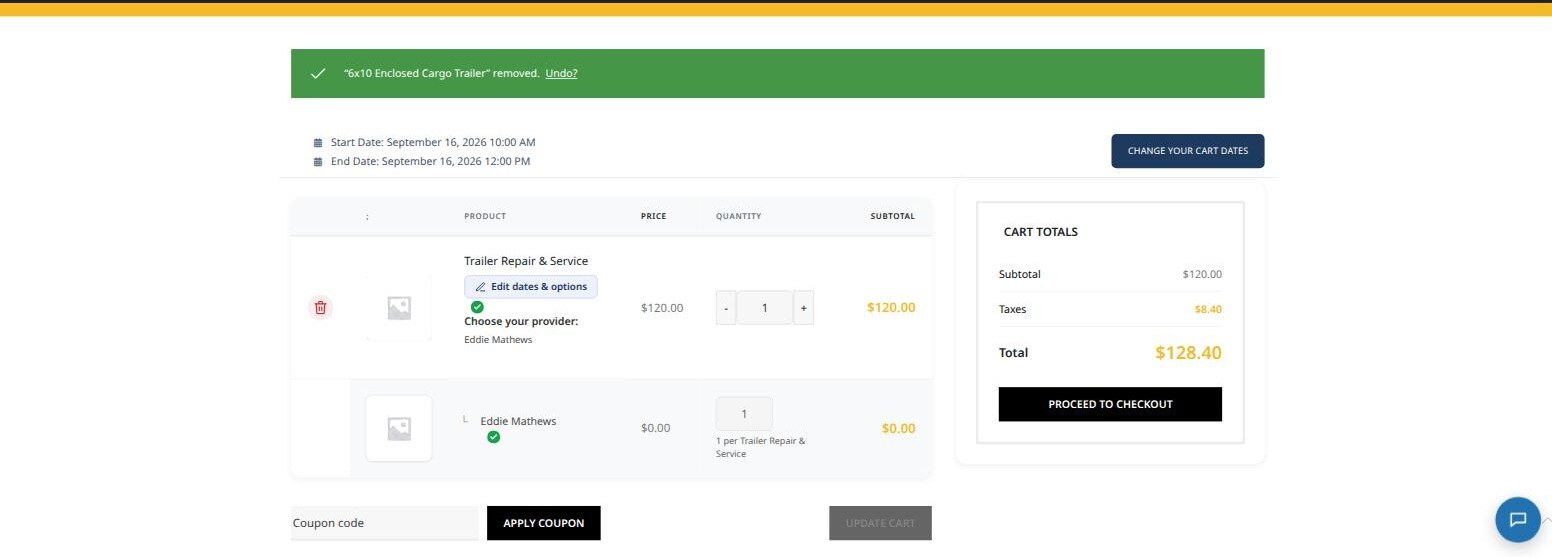
The number most systems show you is not the number that stops you overselling.
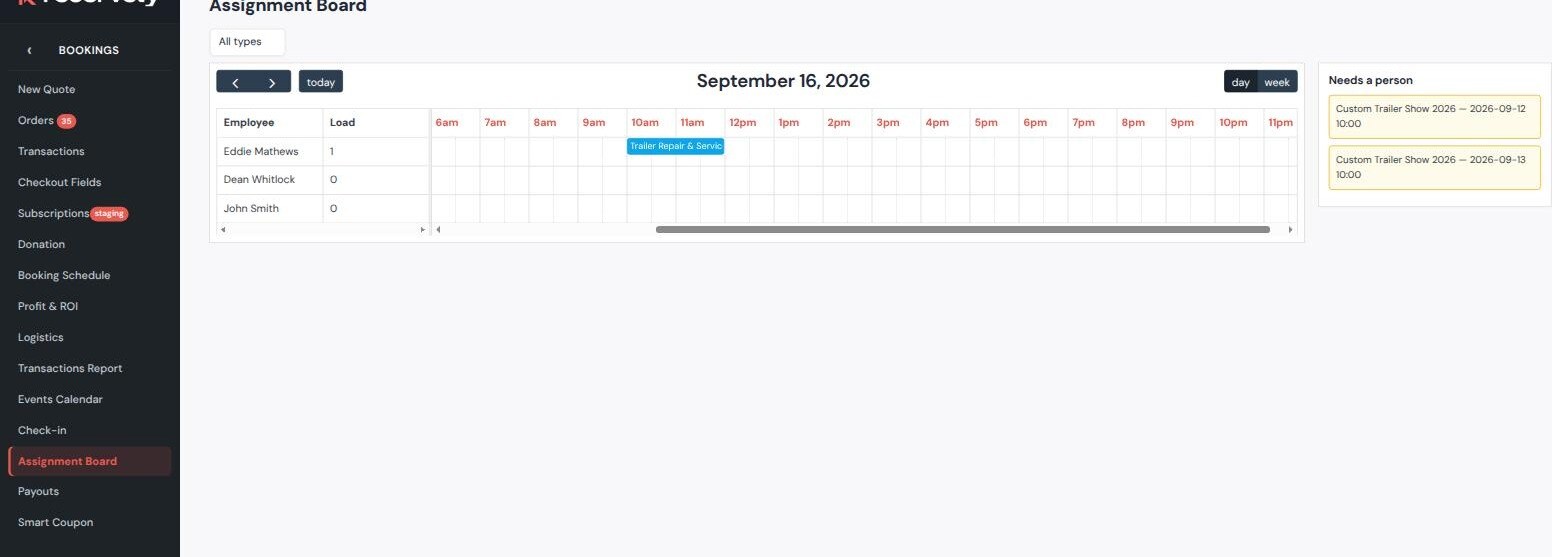
After that booking the workshop still has room at ten o’clock. Eddie personally does not. Both facts sit on the order together, because a shop that confuses them either sells a mechanic twice or turns away work it could have taken.
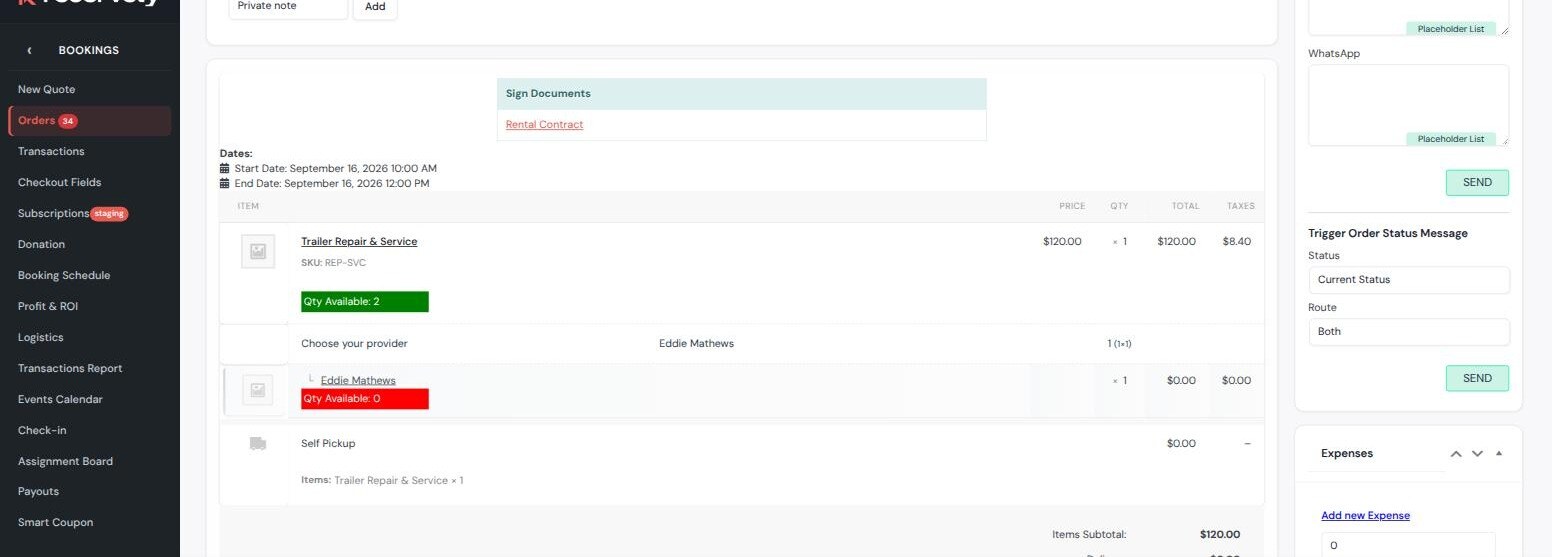
Why both numbers. Holding shop capacity and personal capacity apart is what makes “no preference” safe. Those customers can be dropped into whichever mechanic still has the hour free, which fills the gaps left by everyone who asked for a particular person by name.
A booking is not finished when it is paid. It has to land on somebody’s day, and somebody has to be paid for it.
The board is one row per mechanic against the clock. The appointment appears on the right row at the right hour, named for the work, and the day’s unstaffed jobs wait in a tray beside it until someone takes them.
The person on the bench does not go back to a desk to close the job off. The appointment is on their phone in the staff app, where it is marked showed up or no-show and the customer’s number is a tap away.
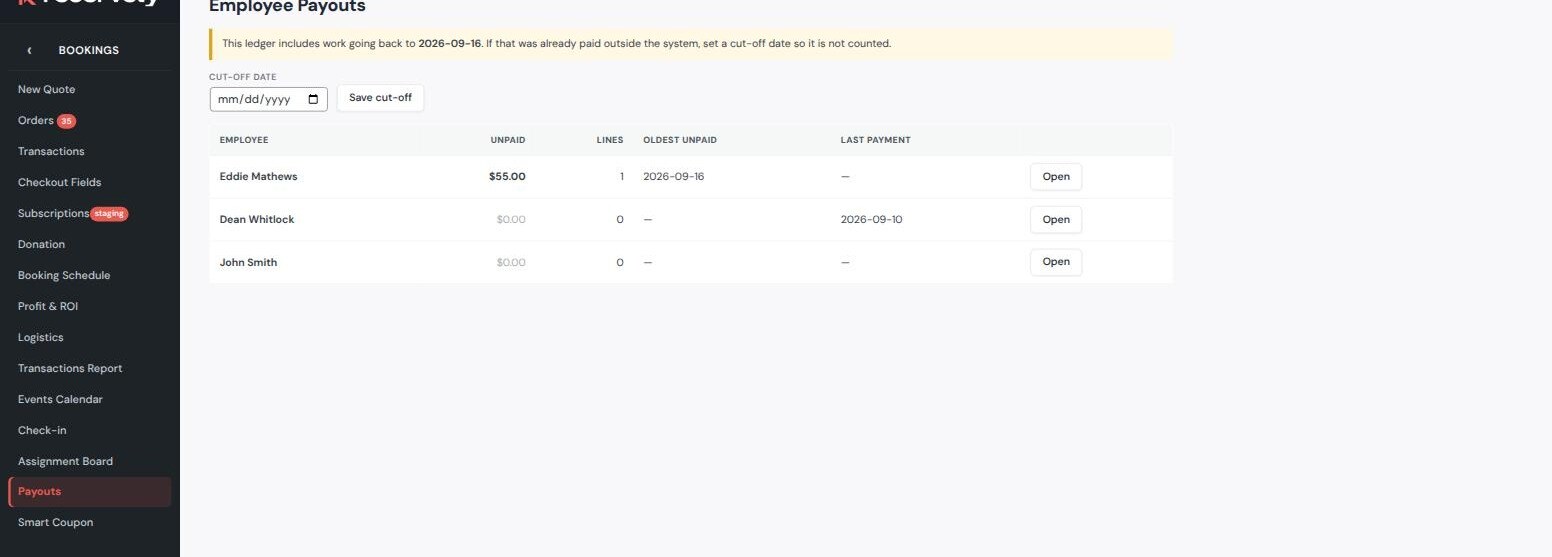
Booking a named mechanic is work that person is owed for. The flat amount the shop pays for an appointment turns into a payout line the moment the appointment exists, with no timesheet in between and no month-end reconstruction of who did what.
Screenshots are of the running system, unretouched.
Reservety handles your website, bookings, inventory, and payments — so you can focus on growing your business.