
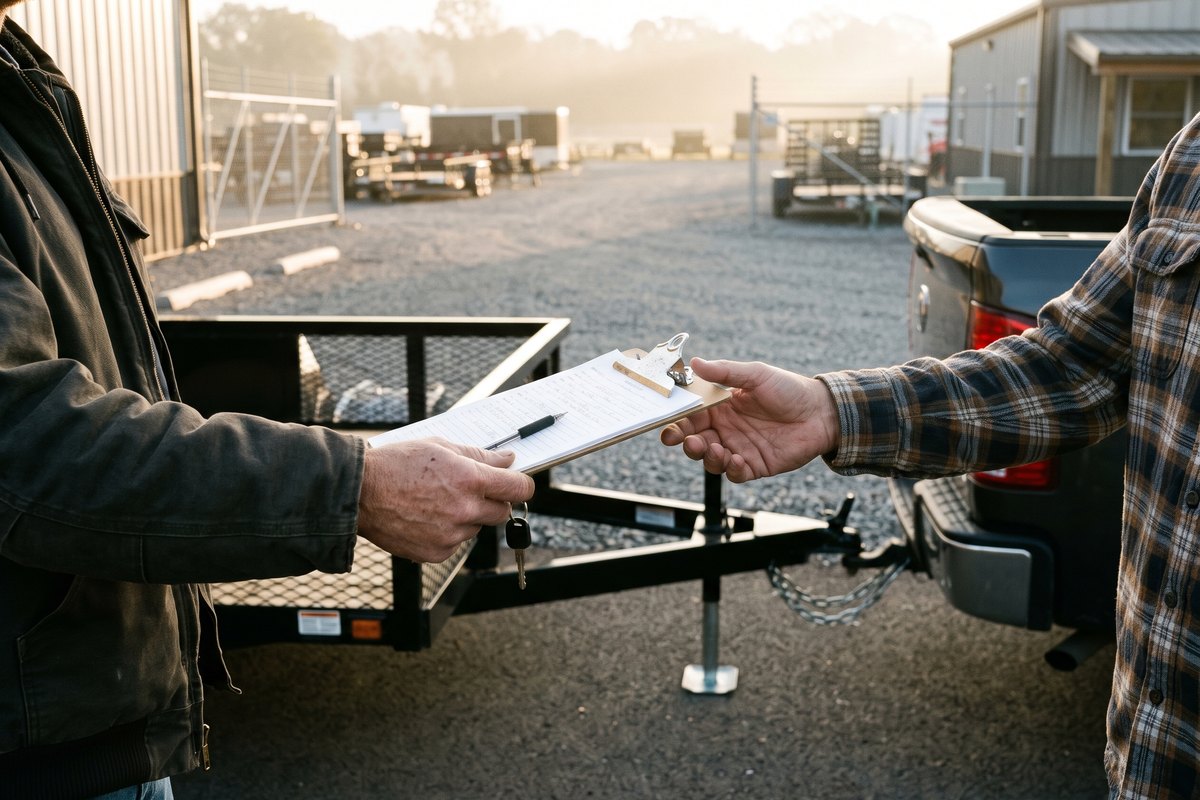
It's 7 a.m., the enclosed trailer is on the customer's hitch ball, and while you cross the safety chains they ask whether their car insurance covers it. You say probably. Then you drive off wondering what that means if they jackknife on the highway or back your ramp gate into a pole. The rental agreement is a paper copy in your truck, the deposit lives in a text thread, and the waiver never got signed. Before the spring rush, let's settle the question underneath it: when a customer tows your utility, enclosed, dump or flatbed trailer, whose insurance pays, what your business should carry, what it costs and what states ask for.
Short answer. A customer's personal auto policy usually covers liability while they tow your trailer, not damage to the trailer itself: one standard form caps a non-owned trailer at $1,500 and excludes property rented to the driver. So you insure the fleet: general liability plus physical damage, which LogRock puts at about $1,000 to $4,000 a year for dump trailer rentals.
Does the renter's auto policy cover your trailer? Liability yes, damage usually not
Start with what the customer brings. Progressive says a customer's auto policy covers liability while the trailer is being pulled, but not damage to the trailer or what's inside it. That's from an archived copy of its page, so check the live wording. The North Carolina Department of Insurance says the standard personal auto policy covers the policyholder and family while using any automobile or trailer, owned or not. That's the liability side, and it travels with the driver.
Damage to your trailer is where it thins out. An industry standard ISO personal auto form, published by the Virginia State Corporation Commission (2005 edition), limits physical damage to a non-owned trailer to $1,500. Newer editions may differ, so ask the renter to check their own policy. The liability part of that same form excludes damage to property rented to, or in the care of, the insured, so it won't pay for the trailer itself.
Carriers word it differently. American Family covers liability for someone else's trailer while it's attached to a vehicle the customer owns and insures there; damage cover has to be bought separately, and trailers used in business aren't eligible (February 2024). State Farm says that in some situations a vehicle's insurance may not automatically extend to the trailer (December 2024). U-Haul tells its renters that in most cases a personal auto policy doesn't cover its trailers, and that a customer who declines its waiver is responsible for all damage regardless of fault. Keep in mind U-Haul sells that waiver.
The takeaway: the renter's policy is a liability backstop at best. It is not a plan for a bent axle on your flatbed.
Your own auto or garage policy may stop at the rental counter
The second surprise sits on your side of the deal. The ISO garage policy form counts a trailer as an auto and excludes a covered auto leased or rented to others (2001 edition, with exceptions). One AAA Oklahoma personal auto form excludes use of a trailer while it is leased or rented to others.
Those are specific forms, not every policy in every state. So pull out your own policy and read the exclusions, or ask your agent to point to the exact line that covers a trailer while a customer has it. If the answer is a pause, you need cover written for rentals.
What a rental business buys: liability for the business, damage on each trailer
Specialist rental programs bundle the two pieces the renter's policy leaves out. Here's what two of them say on their own pages; we're quoting them, not vouching for them, and the details are good questions for any agent.
MBA Insurance also says a renter may be able to buy an addendum that extends coverage from the operator's policy, and its optional supplemental liability goes up to $500,000 with $100,000 per person inside it. That page names RV owners or dealers, so ask whether it applies to your trailers.
Notice the paperwork: MBA wants a signed rental agreement on every rental. If yours is still a clipboard form, our free trailer rental agreement template is a quick fix.
| MBA Insurance | TrailerGuard | |
|---|---|---|
| Trailer types | Utility, enclosed, dump, flatbed | Utility, enclosed, dump, flatbed |
| Trailer age | 20 years or newer, clean title | Not stated on the page |
| Renter age | At least 25 in most states | 18 or more |
| What it covers | Excess liability for the business, physical damage on the trailer | Liability and physical damage, in force while the customer has the trailer |
| Paperwork | Signed rental agreement | Not stated on the page |
| Price | Monthly premium per trailer; no price shown | No prices shown |
What it costs: about $1,000 to $4,000 a year in the one rental estimate we found
No insurer publishes a rental-trailer rate, so every figure here is an estimate. LogRock (February 2026) puts a business that rents dump trailers to customers who tow them at about $1,000 to $4,000 a year for general liability plus trailer physical damage. That's the only figure in this table priced for rental.
The rest are reference points. Insureon's small-business customers across all industries pay a median of $45 a month for general liability, $48 for inland marine and $245 for commercial auto (2026). For utility trailers that aren't rented out, UCCU, a Utah credit union, estimates $200 to $800 or more a year, and Insuranks quotes $800 a year for $1 million of liability.
Use the non-rental numbers as a floor, not a budget. Get a quote per trailer, then divide the yearly premium by the weekends each unit actually goes out. That's the insurance line in your rental price.
| Source | What it prices | Figure | Rental? |
|---|---|---|---|
| LogRock, February 2026 | General liability plus trailer physical damage, dump trailers towed by customers | About $1,000 to $4,000 a year | Yes |
| Insureon, 2026 | General liability, all industries, median | $45 a month | No |
| Insureon, 2026 | Inland marine, all industries, median | $48 a month | No |
| Insureon, 2026 | Commercial auto, all industries, median | $245 a month | No |
| UCCU | Utility trailer, general | $200 to $800 or more a year | No |
| Insuranks | Utility trailer, $1 million liability | $800 a year | No |
What the states ask: hard limits in a few places, gaps in the wording elsewhere
State rules mostly speak about rental vehicles, and trailers fit in at the edges. Here's what the statutes and motor vehicle pages say, and where they leave you guessing.
One federal rule sits on top. The Graves Amendment shields a rental owner that wasn't negligent from liability for a renter's crash, but it doesn't protect a company from its own negligence. That's why a documented check of lights, chains and coupler at pickup is worth doing every single time. None of this is legal advice; confirm your state's rule with your agent.
| State | What the rule says | Does it reach trailer rental? |
|---|---|---|
| North Carolina | Unlawful to rent motor vehicles to the public without liability insurance covering owner and renter: at least $50,000 per person, $100,000 per accident, $50,000 property damage (General Statutes 20-281) | Its definition of motor vehicle includes pulled vehicles (20-4.01), but no source we found applies it to trailer rental in so many words |
| Texas | Trailers up to 10,000 pounds GVWR count as rental vehicles under the license for rental companies that sell coverage to renters (Insurance Code 4055) | It governs selling coverage, not carrying it |
| Florida | Short-term lessor liability of $100,000 per person, $300,000 per accident, $50,000 property damage (2025 figures, section 324.021) | Its vehicle definition includes trailers |
| New York | Insurance required for commercial trailers, not for non-commercial ones (New York DMV) | The page doesn't say whether a rental fleet counts as commercial |
| Massachusetts | Insurance on all trailer registrations, usually met by the tow vehicle's policy | The page doesn't say whether a rental fleet counts as commercial |
Theft is a claim too, so check who is towing before the trailer leaves
There's a specific knot in your stomach when a dump trailer rolls off the lot behind a truck you've never seen, with a half-signed paper waiver on the clipboard and no ID on file. The California Highway Patrol recorded 7,331 trailer thefts in 2025, down from 8,751 in 2024, and 4,450 recoveries.
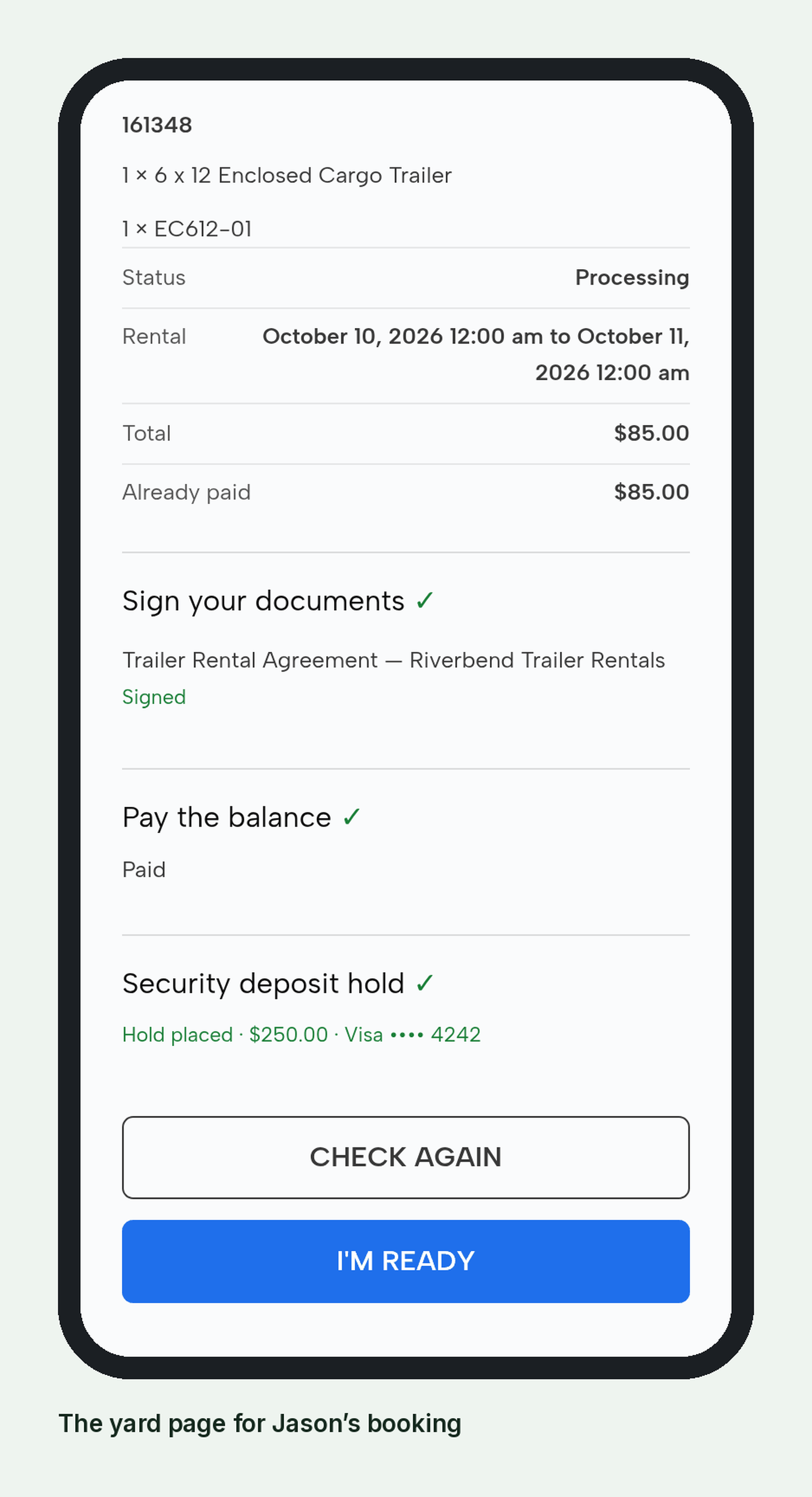
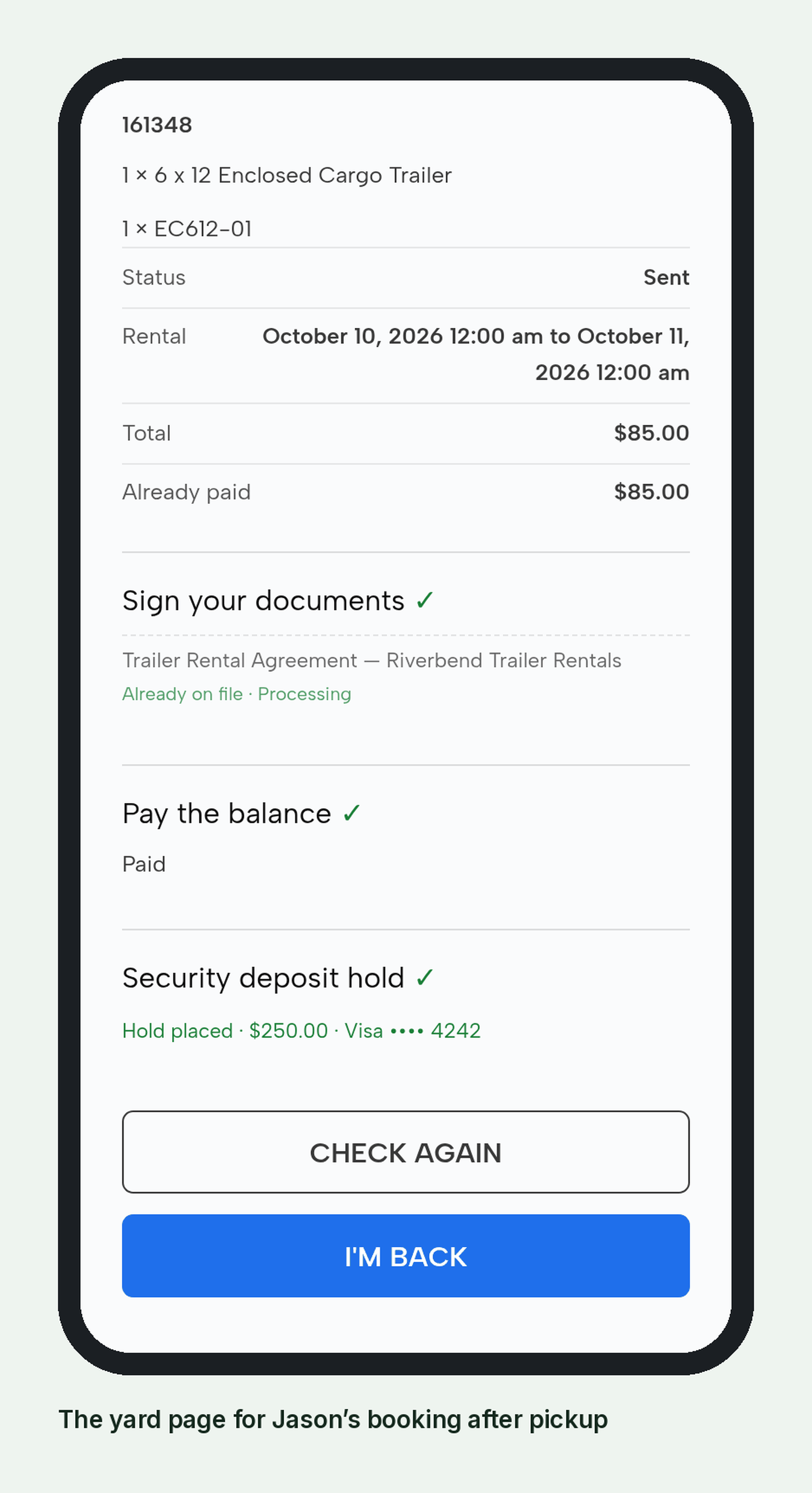
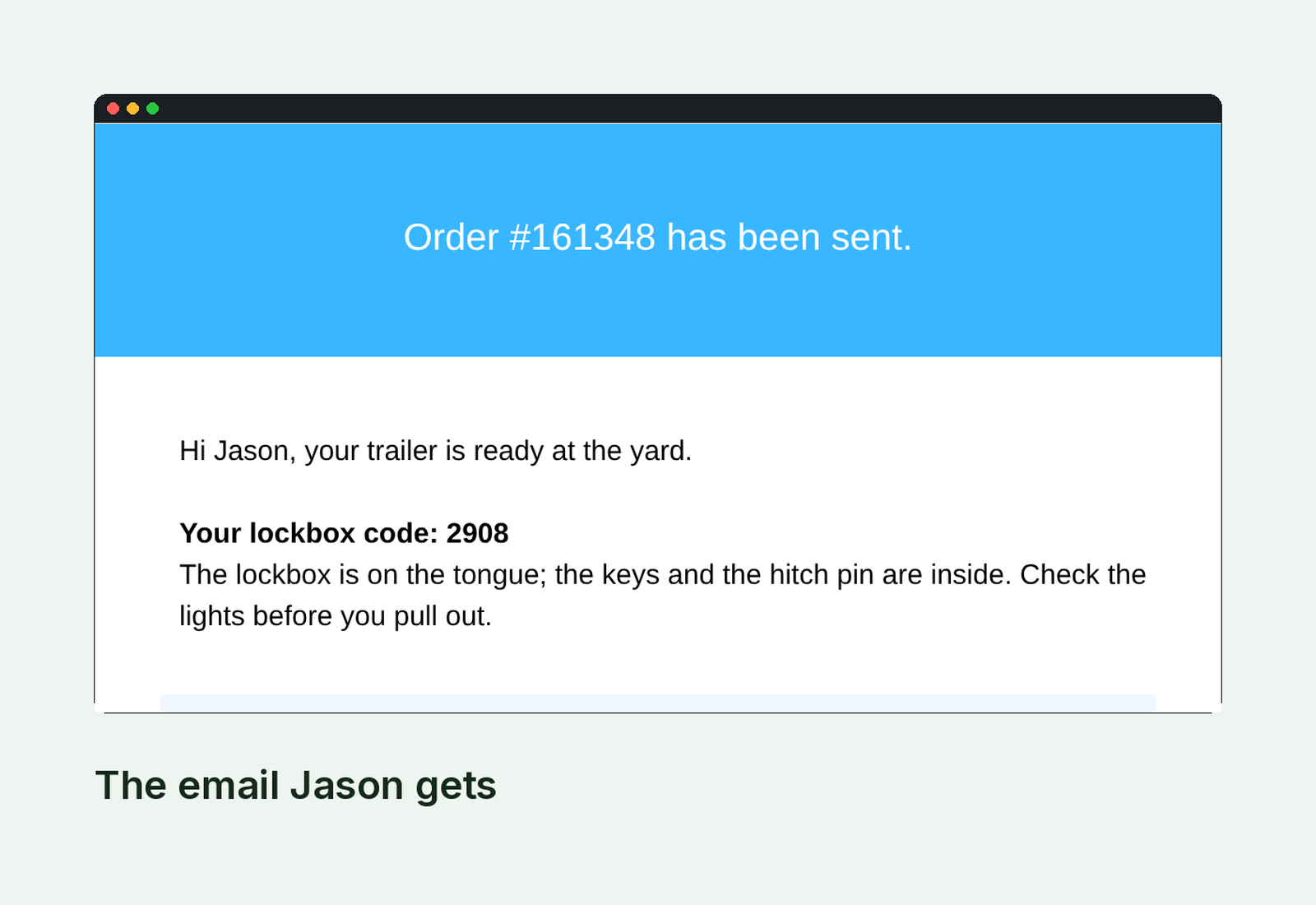
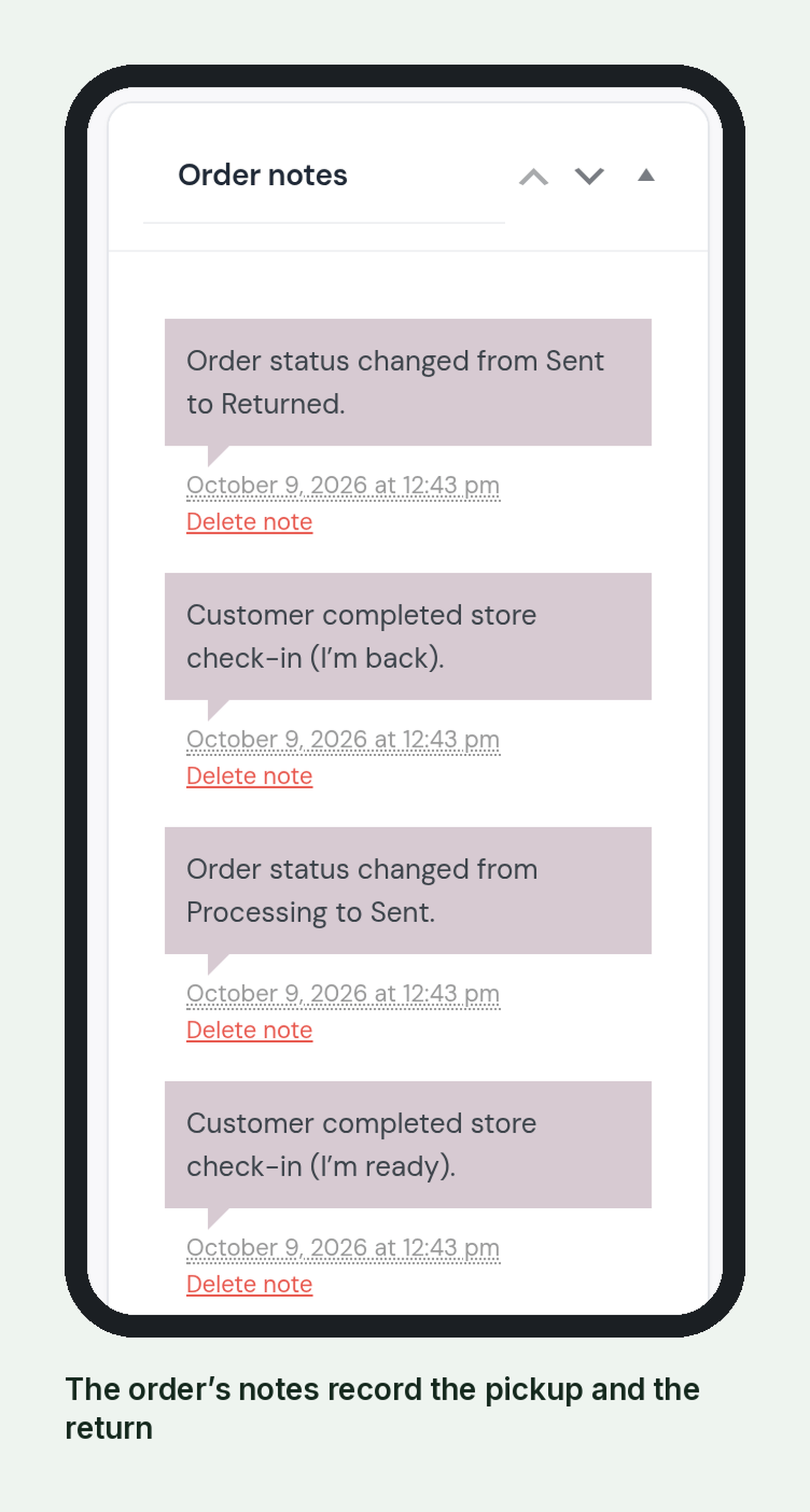
Insurance pays after the fact. The booking is where you prevent the claim. On Reservety, the customer signs the waiver and rental agreement with an e-signature during booking, and it's stored with that booking. The deposit is an upfront payment taken at checkout, and the security deposit is a card hold placed at pickup, so you're not chasing either at the door. On the Professional plan, identity checks cost $0.30 per check, and smart-lock codes go out with the booking. For the trailer once it's on the road, see our guide to tracking rental trailers with GPS.
That paper trail also answers the insurer's first questions: who rented it, what they signed and when.
What Reservety costs: flat monthly plans, zero commission
Every plan includes a custom-designed booking website with hosting, real-time availability per trailer on one calendar, digital waivers and online payments. You send us the Launch Kit (logo, inventory, prices, service area; messy spreadsheets and PDFs are fine) and our Concierge Setup gets you live in 3–5 business days, or 24–48 hours on Professional. As of November 2026, we've built 103 client websites that are live today.
| Plan | Who it is for | Price |
|---|---|---|
| Starter | A trailer rental business that wants online bookings, digital waivers and deposits on its own custom website | $59 a month, flat, zero commission |
| Professional | A fleet that also wants ID verification at $0.30 per check, smart-lock codes, point of sale, QuickBooks sync and crew scheduling, live in 24–48 hours | $99 a month, flat, zero commission |
Questions owners ask
What insurance covers rental trailers?
The renter's personal auto policy usually covers liability while towing, but not damage to your trailer. A rental business typically carries liability for the business plus physical damage on each trailer, often through a rental program that stays in force while the customer has the trailer.
How much does a $1 million liability policy cost for a trailer?
Insuranks quotes $800 a year for $1 million of liability on a utility trailer that isn't rented out. For a rental business, LogRock estimates about $1,000 to $4,000 a year for general liability plus physical damage on dump trailers. Get a quote for your own fleet.
Does my customer's car insurance pay if they damage my trailer?
Often not, or not much. One standard ISO form caps damage to a non-owned trailer at $1,500 and excludes property rented to the driver from liability. Ask the renter to check their policy, and don't count on it.
Do I need a signed rental agreement for coverage?
MBA Insurance's trailer rental program asks for a signed rental agreement, and it's good practice everywhere. On Reservety, customers sign the agreement and waiver online during booking, and the signed copy stays with the booking.
How this was made. We checked every source on November 25, 2026, some of them through archived copies because the live page blocked automated access: insurer and program pages (Progressive, American Family, State Farm, U-Haul, MBA Insurance, TrailerGuard), the ISO personal auto and garage forms as published by the Virginia State Corporation Commission, a AAA Oklahoma policy form, state statutes and motor vehicle pages, and 2025 theft figures from the California Highway Patrol. Cost figures are third-party estimates from LogRock, Insureon, UCCU and Insuranks; no insurer publishes a rental-trailer rate. Policy forms change by edition and state, so use this as a map for the conversation with your agent, not as legal advice. Data checked November 25, 2026.
Sources
- Progressive
- North Carolina Department of Insurance
- ISO personal auto form PP 00 01 01 05, Virginia State Corporation Commission
- American Family Insurance
- State Farm
- U-Haul
- MBA Insurance
- MBA Insurance
- TrailerGuard
- ISO garage form CA 00 05 10 01, Virginia State Corporation Commission
- AAA Oklahoma personal auto form, Oklahoma Insurance Department
- LogRock, February 2026
- Insureon, 2026
- UCCU and Insuranks
- North Carolina General Statutes 20-281
- Texas Insurance Code chapter 4055
- Florida Statutes 324.021 and 49 U.S.C. 30106
- New York DMV; Massachusetts RMV
- California Highway Patrol, 2025
- Arkansas Department of Public Safety, 2025