
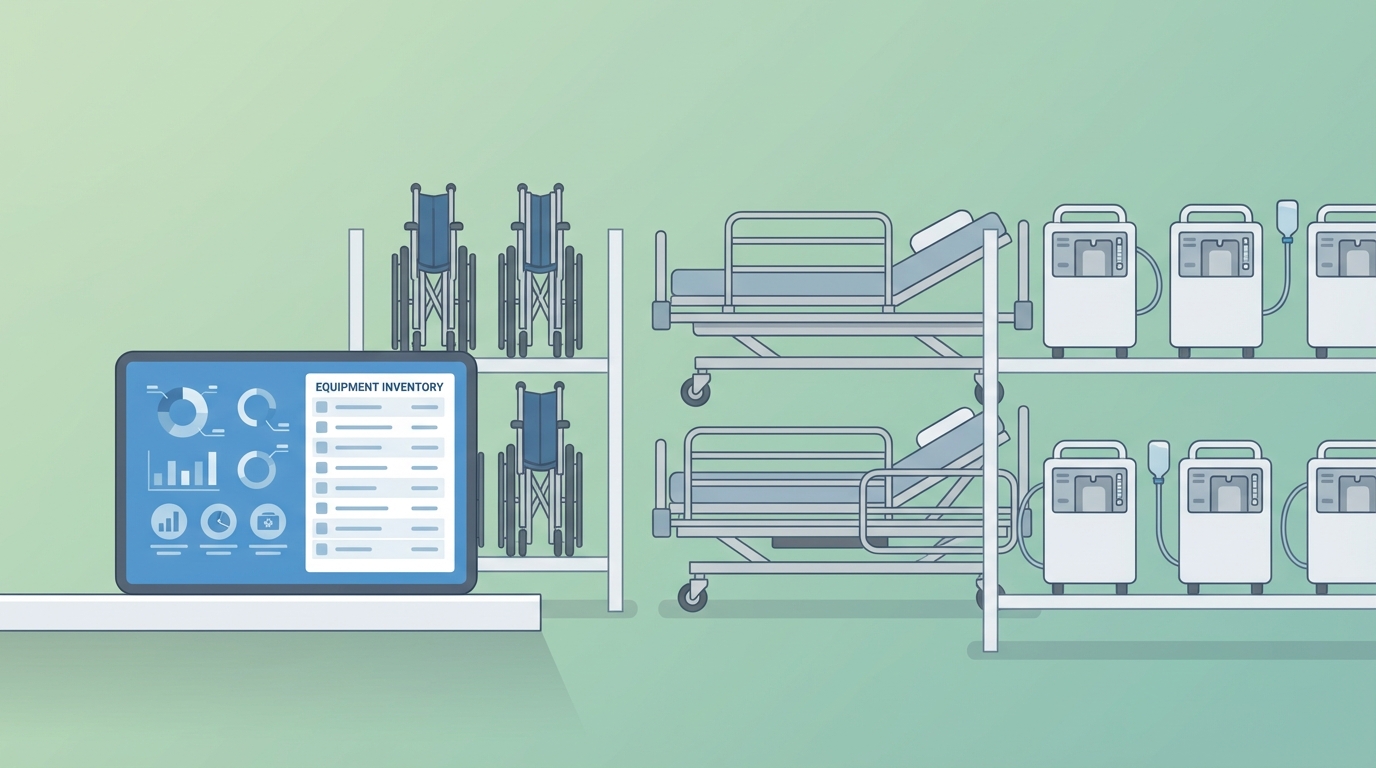
Medical equipment rental software manages inventory tracking, maintenance scheduling, compliance documentation, delivery logistics, and billing for businesses that rent wheelchairs, hospital beds, oxygen concentrators, CPAP machines, and other durable medical equipment. The best platforms handle insurance billing, sanitization records, and regulatory compliance alongside standard rental operations.
Medical equipment rental sits at the intersection of healthcare regulation and rental logistics. A wheelchair rental shop needs the same booking and inventory tools as any other rental business, but also needs to track sanitization between patients, maintain compliance documentation for health inspectors, and sometimes process insurance claims alongside direct payments. The software you choose determines whether compliance tracking is built into every workflow or bolted on as an afterthought.
We evaluated each platform from the perspective of an independent DME provider or mobility equipment rental shop managing 20-500 serialized assets. The comparison covers purpose-built medical equipment platforms, general rental tools that adapt well to medical use cases, and enterprise systems designed for large HME operations.
Quick Comparison Table
| Software | Starting Price | Best For | Key Strength |
|---|---|---|---|
| Reservety | $59/mo | Independent DME shops going online | Concierge website build, zero commission |
| Booqable | $29/mo | General rental | Clean UI, quick setup |
| Wynne Systems (RentalResult) | Custom | Large DME providers | Supply chain + asset management |
| WellSky (CareTend) | Custom | Home medical equipment providers | Insurance billing, end-to-end HME workflow |
| STAEDEAN | Custom | High-tech medical equipment | Dynamics 365-based, AI-enabled compliance |
| Windward System Five | Custom | Medical supply stores | POS integration, inventory + invoicing |
| ARM Software | Custom | DME billing and compliance | Automated rental management, visibility |
| RUX Software | Custom | Medical equipment rentals | Serialized tracking, sanitization compliance |
| RentMy | Free* | Flexible rental marketplace | Real-time booking, SMS reminders |
| Flex Rental Solutions (Flex GTS) | Custom | Hospital asset management | Cleaning schedules, calibration tracking |
*RentMy free tier charges 9.9% transaction fee. Growth plan is $199/mo + 2.9%.
1. Reservety
Reservety is built for independent DME providers and mobility equipment rental shops that need a professional online booking presence without spending months on development. The concierge team builds your complete rental website during the 14-day free trial - your equipment catalog with photos, availability calendars, online payments, and rental agreements are all configured for you.
Flat pricing at $59 or $99 per month with zero commission keeps costs predictable regardless of volume. A busy month with 80 wheelchair and hospital bed rentals costs you the same as a quiet week with three. Commission-based platforms would take a meaningful cut of every transaction, and those fees add up fast on high-value medical equipment rentals that often run $200-$500 per month.
The platform handles daily, weekly, and monthly pricing with automatic calculations. Different equipment categories - wheelchairs, hospital beds, oxygen concentrators, knee scooters - each carry their own rates and availability rules. Delivery and pickup scheduling handles the logistics of getting equipment to patients. Security deposit holds through Stripe protect against damage without requiring cash at the door.
2. Booqable
Booqable starts at $29/month and works as a general-purpose rental platform with a clean, modern interface. Add your medical equipment as products, set pricing rules for different rental durations, and embed the booking widget on your existing website or use Booqable's hosted storefront. Setup takes hours rather than weeks.
The platform handles bookings and payments well but lacks medical-specific compliance features. There is no built-in sanitization tracking, no maintenance scheduling tied to individual serial numbers, and no insurance billing integration. Online bookings cost an additional $24/month as an add-on. For a small mobility equipment shop that handles compliance documentation separately, Booqable covers the reservation and payment workflow at a low price point. Businesses dealing with insurance claims or regulatory audits will need supplementary systems.
3. Wynne Systems (RentalResult)
Wynne Systems offers RentalResult, an enterprise-grade rental management platform with custom pricing based on fleet size and operational complexity. The system integrates supply chain management, asset tracking, and service delivery into a single platform. Field service app integration allows technicians to manage deliveries, pickups, and equipment servicing from mobile devices.
For large DME providers managing hundreds or thousands of serialized assets across multiple warehouses, RentalResult provides the operational depth that lighter tools cannot match. Asset lifecycle tracking follows each piece of equipment from procurement through retirement. Maintenance workflows ensure preventive servicing happens on schedule. The enterprise pricing and implementation timeline put this out of reach for smaller operations, but established providers with complex logistics find the investment justified by operational efficiency gains.
4. WellSky (CareTend)
WellSky's CareTend platform is purpose-built for home medical equipment providers with custom pricing. The system covers the entire HME workflow from order intake and insurance verification through delivery, patient setup, and recurring billing. Insurance billing support handles Medicare, Medicaid, and private payer claims directly from the platform.
CareTend stands apart from general rental software because it understands the healthcare billing workflow. Intake staff verify insurance eligibility before dispatching equipment. Delivery technicians document patient setup with signatures and photos. Billing runs automatically based on rental periods and payer rules. For HME providers where insurance reimbursement represents a significant portion of revenue, CareTend eliminates the gap between rental operations and claims processing. Businesses that primarily handle direct-pay patients may find the healthcare-specific features add unnecessary complexity.
5. STAEDEAN
STAEDEAN offers a cloud-based, AI-enabled rental management platform built on Microsoft Dynamics 365 with custom pricing. The platform specializes in high-tech and medical equipment where compliance documentation, calibration records, and maintenance history are non-negotiable requirements.
The Dynamics 365 foundation means STAEDEAN integrates natively with Microsoft's business application ecosystem - finance, supply chain, customer service, and field service modules all share the same data layer. For organizations already running Dynamics 365, adding rental management avoids the integration headaches of connecting a standalone rental platform. The AI capabilities focus on predictive maintenance and demand forecasting. Smaller operations without existing Microsoft infrastructure will find the platform overbuilt for their needs.
Your medical equipment rental website, built for you
Reservety's concierge team sets up your complete booking site during the free trial. Equipment catalog, availability calendars, payments, and delivery scheduling included.
Start Free Trial6. Windward System Five
Windward System Five provides rental and inventory management for medical supply stores with custom pricing. The platform combines point-of-sale, inventory tracking, rental order management, and invoicing in a system designed for retail environments that also handle equipment rentals.
For businesses that operate a medical supply storefront alongside an equipment rental operation, System Five manages both workflows from one system. A customer can purchase consumable supplies and rent a wheelchair in the same transaction. Inventory tracks serialized rental assets separately from consumable stock. The POS integration handles in-store transactions while the rental module manages ongoing agreements and returns. Businesses focused purely on rentals without a retail component may find the POS-centric design adds steps to their workflow.
7. ARM Software
ARM Software (Automated Rental Management) provides DME-focused rental management with custom pricing. The platform aims to improve operational visibility and minimize complexity across the rental lifecycle - from order intake and equipment assignment through delivery, billing, and pickup.
ARM's billing and compliance features target the specific challenges of medical equipment rental. Recurring billing runs automatically based on rental agreement terms. Compliance documentation ties to individual assets so inspection-ready records are always accessible. Equipment assignment considers availability, patient location, and delivery routes to optimize dispatching. For DME providers managing 100+ active rentals with regular billing cycles, the automation reduces manual work that scales poorly with growth.
8. RUX Software
RUX Software is purpose-built for medical equipment rentals with custom pricing. The platform emphasizes serialized asset tracking, sanitization compliance, and asset lifecycle management - the operational requirements that distinguish medical equipment rental from general rental businesses.
Every piece of equipment carries a complete history: who rented it, when it was returned, sanitization records, maintenance performed, and current condition. Sanitization compliance workflows ensure equipment is cleaned and documented between patients before it returns to available inventory. Asset lifecycle tracking flags equipment approaching end-of-useful-life based on age, rental cycles, or maintenance history. For businesses where health department audits are a regular occurrence, RUX keeps compliance documentation organized and audit-ready without manual record-keeping.
9. RentMy
RentMy offers a free tier at $0/month plus a 9.9% transaction fee on each booking. The Growth plan runs $199/month with a reduced 2.9% transaction fee. The platform provides real-time booking, payment processing, and SMS reminders for any rental category. It is not medical-specific but flexible enough to handle equipment rental workflows.
The free tier makes RentMy accessible for testing online bookings without a monthly commitment, though the 9.9% fee erodes margins quickly on higher-value medical equipment rentals. A $400/month hospital bed rental generates $39.60 in platform fees on the free tier versus $11.60 on the Growth plan. For businesses renting fewer than five items per month, the free tier costs less than a subscription. Once volume increases, the Growth plan or a flat-rate alternative becomes significantly cheaper per transaction. RentMy lacks compliance tracking, sanitization workflows, and insurance billing - all must be managed separately.
10. Flex Rental Solutions (Flex GTS)
Flex Rental Solutions offers Flex GTS (Global Tracking System) for hospital and medical facility asset management with custom pricing. The platform tracks equipment location within facilities, manages cleaning and calibration schedules, and monitors asset utilization across departments.
Flex GTS targets the internal equipment management needs of hospitals and large medical facilities rather than customer-facing rental operations. Equipment moves between departments, storage areas, and cleaning stations with location tracking at each step. Calibration schedules ensure diagnostic and therapeutic equipment meets accuracy requirements. Cleaning workflows document sanitization between patients. For facilities managing their own equipment pools internally, Flex GTS provides the operational visibility that spreadsheets and whiteboards cannot. Independent rental businesses serving external customers will find the platform oriented toward a different use case.
What to Look for in Medical Equipment Rental Software
Medical equipment rental carries regulatory and operational requirements that general rental software does not address. Evaluate these features based on how your equipment rental business actually operates:
- Sanitization and cleaning compliance tracking - Every piece of equipment must be cleaned and documented between patients. The software should enforce sanitization workflows so no asset returns to available inventory without a completed cleaning record, and those records should be accessible during health inspections.
- Serialized asset tracking with maintenance history - Medical equipment requires individual tracking by serial number. Each unit needs a complete history covering maintenance performed, parts replaced, rental cycles completed, and current condition. Batch tracking by product type is not sufficient for compliance.
- Delivery and pickup logistics - Patients need equipment delivered to their homes, and returns must be scheduled around their availability. Route optimization, delivery scheduling with time windows, and driver assignment reduce logistics costs on high-volume operations.
- Insurance and billing integration - If your business processes Medicare, Medicaid, or private insurance claims, the software should handle eligibility verification, claim submission, and payment posting. Businesses doing direct-pay only need standard payment processing instead.
- Patient and customer management with rental history - Repeat patients are common in medical equipment rental. The system should track rental history, equipment preferences, delivery addresses, and any special requirements so returning patients can be served efficiently.
- Regulatory documentation and audit trails - Health departments and accreditation bodies require documented proof of compliance. The software should maintain audit trails for equipment handling, sanitization, maintenance, and patient interactions that can be pulled into reports on demand.