
The bike rental industry is experiencing remarkable growth, with the global market projected to expand from $7.6 billion in 2025 to $30.8 billion by 2034. To start a bike rental business, you need to secure $15,000 to $60,000 in startup capital, choose a high-traffic location near tourist areas or urban centers, purchase a fleet of 10 to 30 bikes, obtain proper licensing and insurance, and implement bicycle rental software to manage bookings and payments efficiently. This guide walks you through every step of launching your bike rental operation.
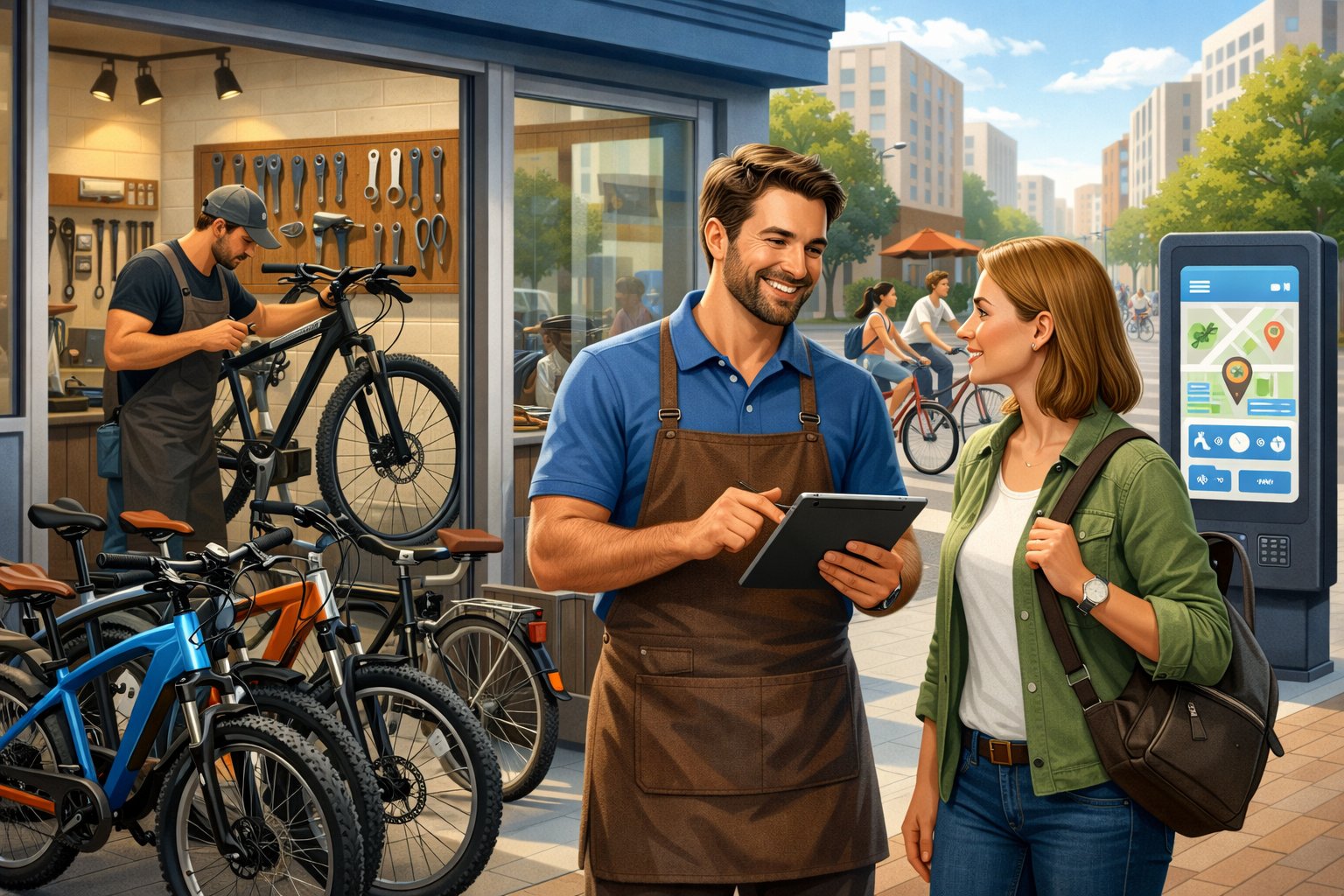
You'll learn how to conduct market research to identify the best location, understand the legal requirements for operating a bike rental business, and build a fleet that matches your target customers' needs. The right combination of bike types, pricing strategy, and operational systems will determine your success - regardless of whether you focus on tourists, commuters, or recreational riders.
From calculating your initial investment with a startup cost calculator to setting competitive rates using a rental pricing calculator, this guide provides the specific numbers and actionable steps you need. You'll discover how to choose between city cruisers, mountain bikes, and e-bikes, manage maintenance schedules, protect your business with proper insurance, and scale your operations for long-term profitability.
Understanding the Bike Rental Industry
The bike rental market is valued at $7.6 billion in 2025 and projects growth to $30.8 billion by 2034. Profit margins typically range between 40-50%, with daily rental rates averaging $30 to $75 depending on your location and bike quality.
Market Trends and Profit Potential
The global bike rental market is expanding at a 16.83% annual growth rate, driven by increased interest in eco-friendly transportation and outdoor recreation. Your bike rental business profit depends heavily on location and operational efficiency.
Peak season utilization rates reach 85-95% in high-demand areas. Tourist destinations and urban centers generate the highest returns.
Key profit factors include:
- Initial investment: $15,000-$60,000 for startup costs
- Average profit margins: 40-50% after expenses
- Daily rental rates: $30-$75 per bike
- Break-even timeline: 12-18 months with proper planning
You can estimate your potential returns using a startup cost calculator before launching. The bike rental business profit increases significantly when you optimize pricing and maintain high utilization rates during busy periods.
Types of Bike Rental Business Models
Your business model determines how you operate and generate revenue. Traditional hourly or daily rentals remain the most common approach, charging customers based on rental duration.
Subscription-based models work well in urban areas where regular commuters pay monthly fees for unlimited access. Guided tour packages combine bike rentals with curated experiences at premium prices.
Delivery and pickup services add convenience for customers willing to pay extra fees. Some operators focus on corporate partnerships, providing bikes for employee wellness programs or team events.
Multi-day adventure packages cater to tourists exploring scenic routes over several days. You might also consider event-based rentals for festivals, conferences, or races.
Using bicycle rental software like Reservety helps manage different models through a single platform. Your choice depends on your target market and location characteristics.
Seasonal Demand and Target Markets
Seasonal demand significantly impacts bike rental operations and revenue patterns. Spring and summer months generate 70-80% of annual income in most locations.
Primary target markets include:
- Tourists seeking recreational rides in vacation destinations
- Urban commuters looking for short-term transportation
- College students in university towns
- Families wanting outdoor activities together
- Fitness enthusiasts trying different bike types
Weather directly affects rental volume. Coastal areas experience peak demand from May through September. Year-round warm climates maintain steadier business throughout all months.
Understanding seasonal fluctuations helps you plan inventory and staffing. College towns see spikes during fall semester starts and spring breaks. Tourist destinations align with vacation seasons.
You should adjust your fleet size and pricing during off-peak months. A rental pricing calculator helps optimize rates based on demand cycles. Some operators reduce operations or focus on maintenance during slow periods to control costs.
Market Research and Location Selection
Your location can determine whether your bike rental business generates $50,000 annually or $200,000. Understanding local demand patterns and selecting the right spot requires analyzing tourist traffic, existing competition, and cycling infrastructure in your target area.
Analyzing Local Demand and Competition
Start by identifying who will rent your bikes. Tourist-heavy areas typically show 60-70% utilization rates during peak season, while college towns maintain steadier 40-50% year-round demand.
Search "bike rental near me" in your target area to evaluate existing competitors. Visit each location and document their fleet size, pricing, customer reviews, and peak hours. If three established shops already serve a small beach town, you'll face margin pressure. Look for underserved niches like e-bike rentals or premium road bikes.
Key demand indicators to track:
- Monthly tourist arrival numbers from local visitor bureaus
- Bike path miles and trail difficulty ratings
- Seasonal weather patterns and rental windows
- Local events that drive cycling activity
- University enrollment if targeting students
Use startup cost calculator tools to project your initial investment of $15,000-$60,000 against realistic revenue based on competitor pricing and your projected market share.
Choosing a Profitable Bike Rental Location
High-traffic visibility beats low rent every time. A storefront near a beach boardwalk charging $35 per day will outperform a warehouse location at $25 per day despite higher rent costs.
Tourist areas generate the highest revenue per bike. Beach towns, national park entrances, and historic districts attract customers actively seeking bike rentals. These locations support premium pricing but require managing 3-4 month peak seasons.
College towns offer consistent demand with lower seasonality. Students rent bikes for semester-long periods, providing predictable cash flow. Urban centers with bike lanes work well for commuter-focused models.
Location requirements:
- 800-1,200 square feet for fleet storage
- Street-level visibility with parking access
- Proximity to bike paths within 0.5 miles
- Secure overnight storage capabilities
- Zoning approval for commercial bike rentals
Your space needs expand with fleet size. A 25-bike operation requires different square footage than a 75-bike fleet.
Assessing Tourist Areas and Cycling Routes
Map every cycling route within 5 miles of your potential location. Tourist attractions, beaches, parks, or trails create natural demand clusters. Customers want easy access to scenic routes without transporting bikes.
Rate routes by difficulty and length. Flat 5-10 mile coastal paths attract casual riders who rent cruiser bikes. Challenging mountain trails require quality mountain bikes and experienced cyclists. Match your fleet composition to available routes.
Check route safety and maintenance. Well-maintained paths with clear signage encourage longer rental periods and repeat customers. Dangerous or poorly marked routes generate complaints and liability concerns.
Contact local tourism boards for visitor statistics. Areas attracting 100,000+ annual tourists can support multiple rental operations. Smaller markets under 25,000 visitors require careful fleet sizing to avoid oversupply. Bicycle rental software like Reservety helps you track utilization rates across different locations and bike types, letting you optimize your fleet based on actual demand data rather than guesswork.
Business Planning and Legal Foundations
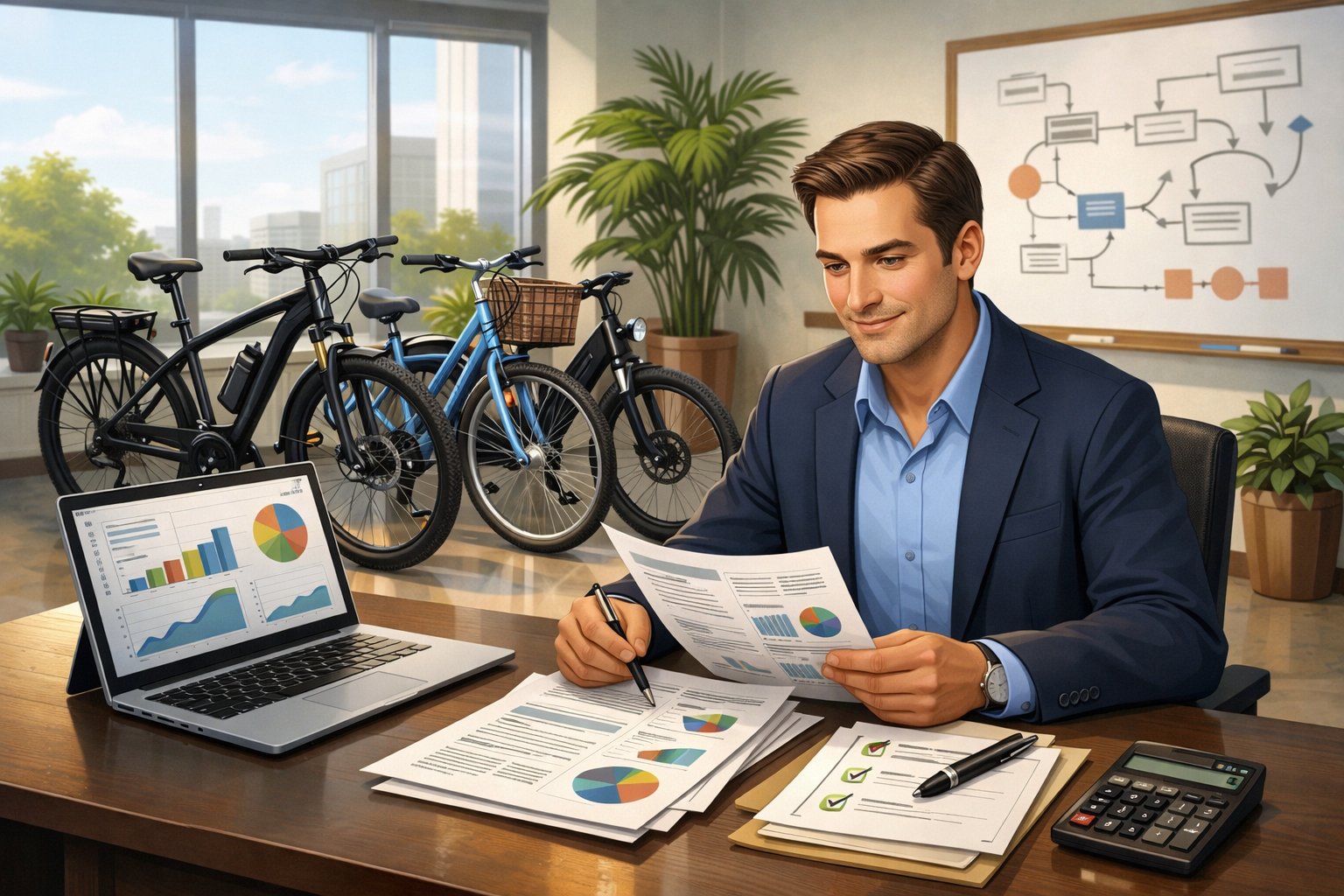
A solid business plan defines your market position and financial trajectory, while proper registration and licensing protect your operation from legal complications. Startup costs typically range from $15,000 to $60,000 depending on fleet size and location.
Creating a Comprehensive Business Plan
Your bike rental business plan serves as the roadmap for your operation and a tool to secure financing. Start by defining your target market - tourists in coastal areas, students in college towns, or urban commuters.
Include specific financial projections based on realistic numbers. A small operation with 20 bikes might generate $50,000 to $80,000 in annual revenue, while a fleet of 75 bikes in a tourist area could reach $200,000 or more. Use a startup cost calculator to determine your initial investment needs across bikes, equipment, and software.
Detail your fleet composition with specific bike types and quantities. You might allocate 40% to cruisers ($300-$500 each), 30% to mountain bikes ($400-$800 each), 20% to e-bikes ($1,200-$2,500 each), and 10% to road bikes ($500-$1,000 each). Your pricing strategy should reflect your market-use a rental pricing calculator to set competitive hourly rates ($8-$15), daily rates ($25-$50), and weekly rates ($100-$200).
Include your operational plan covering maintenance schedules, peak season staffing, and booking management through bicycle rental software like Reservety for handling reservations and payments.
Registering and Structuring Your Business
Choose a business structure that balances liability protection with tax efficiency. Most bike rental operations benefit from LLC formation because it shields your personal assets from business debts while offering pass-through taxation.
Register your business with your state's secretary of state office, which typically costs $50 to $200 depending on location. You'll need to file articles of organization for an LLC or articles of incorporation for a corporation. Apply for an EIN (Employer Identification Number) through the IRS website-it's free and takes about 15 minutes.
Open a dedicated business bank account immediately after obtaining your EIN. This separation between personal and business finances simplifies accounting and strengthens your legal protection. Select a business name that's available in your state and register it as part of your business formation process.
Obtaining Licenses and Permits
Your licensing and permit requirements vary by location but typically include a general business license from your city or county ($50-$400 annually). Contact your local business licensing office to identify specific requirements for your area.
You'll need commercial general liability insurance with coverage between $1 million and $2 million per occurrence. This typically costs $500 to $2,000 annually depending on your fleet size. Some locations require a special vendor permit if you operate in public spaces or parks, which can cost $100 to $1,000 per season.
Check zoning regulations to ensure your chosen location allows commercial bike rental operations. Tourist areas and urban centers often have specific ordinances governing bike rental businesses. Obtain any required sales tax permits from your state's revenue department to collect and remit taxes properly.
Finances and Funding for Your Startup
Starting a bike rental business requires clear financial planning and adequate capital to cover initial expenses and sustain operations until you generate consistent revenue. Most bike rental startups need between $15,000 and $60,000 depending on fleet size, location type, and business model.
Calculating Startup Costs
Your initial investment breaks down into several categories. The largest expense is your bike fleet, where cruiser bikes typically cost $300-$600 each, mountain bikes range from $400-$800, and electric bikes can run $1,500-$3,000 per unit. For a starter fleet of 15-20 bikes with a mix of types, expect to spend $8,000-$15,000.
Equipment and accessories add another $2,000-$5,000 for helmets, locks, maintenance tools, and safety gear. If you're opening a physical rental shop, budget $3,000-$10,000 for signage, furniture, and point-of-sale systems.
Insurance typically costs $1,200-$3,000 annually for general liability and property coverage. Business licenses and permits vary by location but generally range from $200-$1,000. You'll also need bicycle rental software like Reservety to manage bookings and inventory, which runs $50-$200 monthly.
Use a startup cost calculator to map your specific expenses based on your chosen location and fleet composition.
Securing Funding Sources
Most bike rental entrepreneurs use personal savings to launch, keeping full ownership and avoiding debt. If you need additional capital, consider a small business loan from local banks or credit unions, which typically offer $10,000-$50,000 with interest rates of 6-12%.
The Small Business Administration provides SBA microloans up to $50,000 with favorable terms for new businesses. Equipment financing is another option where the bikes themselves serve as collateral, making approval easier for startups.
Family and friends may invest in exchange for equity or structured repayment terms. Some entrepreneurs use crowdfunding platforms to pre-sell rental packages and validate market demand while raising capital. Business incubators and local economic development programs sometimes offer grants or low-interest loans for tourism-related businesses in areas prioritizing sustainable transportation.
Setting Up a Business Bank Account
Open a business bank account immediately after registering your company. This separation protects your personal assets and simplifies tax preparation by creating clear financial records.
Choose a bank that offers low monthly fees, free transactions, and merchant services for processing customer payments. Credit unions often provide better rates and personalized service for small businesses compared to large national banks.
You'll need your business registration documents, Employer Identification Number (EIN), and personal identification to open the account. Many banks now offer online business checking with integrated accounting software connections, making it easier to track your bike rental business profit margins and expenses in real time.
Set up a business credit card linked to this account to build credit history and earn rewards on equipment purchases. Use a rental pricing calculator to project monthly revenue and ensure your pricing covers operating costs while generating profit margins of 15-30%.
Building Your Fleet and Inventory Management
Your fleet represents your largest upfront investment and main revenue driver. The right mix of bike types, proper acquisition strategy, and systematic inventory tracking determine both your operational efficiency and customer satisfaction rates.
Selecting Types of Bikes and Fleet Composition
Start with city cruisers and hybrid bikes for 60-70% of your initial fleet. These bikes suit most casual riders and tourists who prioritize comfort over performance. Add electric bikes for 20-30% of your fleet since they command premium rates of $40-$80 per day compared to $25-$40 for standard bikes.
Include mountain bikes if you operate near trails or rugged terrain, but limit them to 10-15% unless your location specifically caters to adventure riders. A starter fleet of 15-25 bikes typically costs $8,000-$25,000 depending on your e-bike percentage.
Recommended starter fleet for 20 bikes:
- 10 city cruisers ($400-$650 each)
- 4 hybrid bikes ($550-$750 each)
- 5 e-bikes ($1,200-$2,500 each)
- 1 tandem or cargo bike for variety
Your bicycle rental software should track which bike types generate the highest utilization rates during your first season. Adjust your fleet composition based on actual booking data rather than assumptions.
Acquiring E-Bikes, Mountain Bikes, and Accessories
Purchase new city bikes and e-bikes to minimize first-year maintenance costs. Buy certified second-hand mountain bikes from reputable dealers to save 40-50% on bikes that handle rough use anyway.
Essential accessories per bike:
- Helmet (required by law in many locations): $25-$45
- Lock and key: $30-$60
- Front and rear lights: $20-$40
- Bike rack or basket: $35-$75
Budget $100-$150 per bike for complete accessory setup. Specialized e-bikes and hybrid models offer good durability for rental operations. Consider leasing e-bikes if your startup budget falls below $20,000, though this increases long-term costs by 25-35%.
Inventory Tracking and Storage Solutions
Implement digital inventory management from day one using Reservety or similar bike rental software. Manual tracking with spreadsheets becomes unmanageable once you exceed 10 bikes or 5 daily rentals.
Critical tracking data points:
- Bike ID and current status (available, rented, maintenance)
- Maintenance history and next service date
- Damage reports and repair costs
- Utilization rate per bike
- Revenue generated per unit
Store bikes in a secure facility with individual bike racks that prevent damage and allow quick daily inspections. Outdoor storage requires weather-resistant covers and increases maintenance frequency by 30-40%. Use your startup cost calculator to budget $2,000-$5,000 for proper storage infrastructure including racks, security systems, and basic tools.
Operations Management and Customer Experience
Efficient bike rental operations require standardized workflows, preventive maintenance schedules, and legally sound documentation. Your daily systems determine whether customers return or leave negative reviews, while proper maintenance protects your fleet investment of $15,000 to $60,000.
Daily Operations Workflow
Your rental workflow starts when customers arrive at your location or access your bicycle rental software to book online. You need a check-in process that takes under 5 minutes per customer to avoid queues during peak hours.
Begin with identity verification and payment collection. Scan driver's licenses or passports, then process payment through your point-of-sale system or booking software like Reservety that handles reservations, payments, and availability tracking in one platform.
Next, conduct a quick bike orientation. Show customers how to adjust the seat height, use the gears, and operate any locks or accessories. This 2-minute walkthrough prevents 80% of common customer complaints about bike functionality.
Record the bike number, departure time, and expected return time in your system. Take a photo of the bike's condition if you're renting premium models like e-bikes worth $1,800 to $2,500. When customers return, inspect the bike for damage, check the time against your rental pricing calculator rates, and process any additional charges for late returns or damage.
Bike Maintenance and Safety
Establish a maintenance schedule that includes daily, weekly, and monthly checks. Every morning, inspect tire pressure, brake function, chain lubrication, and gear shifting on all bikes before your first rental.
Weekly maintenance should cover deeper inspections: check spoke tension, examine cables for fraying, clean and degrease chains, and test all lights and reflectors. Document each check in a maintenance log with the bike number and date.
Monthly Maintenance Checklist:
- Replace worn brake pads and cables
- True wheels and replace damaged spokes
- Inspect frame for cracks or damage
- Service suspension components on mountain bikes
- Test and charge e-bike batteries to full capacity
- Replace worn tires (typically every 2,000-3,000 miles)
Budget approximately $200 to $400 annually per bike for maintenance costs. E-bikes require higher maintenance budgets of $400 to $600 due to electrical components and battery servicing.
Rental Agreements and Liability Waivers
Your rental agreement must include customer information, rental duration, pricing, and equipment checklist. List every included item: bike, helmet, lock, basket, or GPS device.
The liability waiver protects your business from lawsuits if customers injure themselves or others. In the United States, every customer must sign a release of liability before riding. Your waiver should clearly state that cycling involves inherent risks and that customers assume responsibility for their safety.
Include specific terms about bike return conditions, late fees, and damage charges. For example: "Bikes returned after closing time incur a $50 late fee. Customers are responsible for the full replacement cost of lost or stolen bikes, up to $2,500 for e-bikes."
Digital waivers through rental management software like Reservety allow customers to sign electronically during online booking, speeding up your check-in process. Store signed waivers for at least 3 years to comply with most statute of limitations periods for personal injury claims.
Add clauses about prohibited activities such as riding under the influence, allowing unauthorized riders, or taking bikes beyond designated geographic boundaries. These specific restrictions strengthen your legal protection if incidents occur.
Technology, Software, and Payment Processing
Modern bike rental operations depend on reliable technology to manage inventory, process transactions, and provide seamless customer experiences. Choosing the right software platform and payment solutions will determine how efficiently you can scale your business from day one.
Implementing Bike Rental Software
Selecting the right bicycle rental software is critical for automating your operations. Your software should handle real-time inventory tracking across multiple locations, manage customer reservations, track maintenance schedules, and generate financial reports automatically.
Reservety offers comprehensive bike rental management with features like dynamic pricing, automated availability calendars, and customer databases that store rental history. The platform integrates with your website and allows you to manage your entire fleet from a single dashboard.
Bike rental business software typically costs between $50 to $300 per month for subscription-based platforms. Self-hosted solutions require a one-time license fee ranging from $2,000 to $10,000 but eliminate recurring monthly charges. Factor these costs into your startup cost calculator when budgeting.
Look for software that supports multiple bike types, handles damage waivers, manages security deposits, and sends automated confirmation emails. Mobile accessibility is essential so you can update availability and process rentals from any location.
Online Booking Systems
Your online booking system should make reservations effortless for customers while reducing administrative work. A quality booking interface displays real-time availability, shows high-quality bike images with specifications, and allows customers to select rental duration and add accessories in one streamlined flow.
Implement a booking calendar that prevents double-bookings and automatically blocks out bikes scheduled for maintenance. Your system should send confirmation emails immediately after booking and reminder notifications 24 hours before pickup.
Enable features like instant booking confirmation, flexible cancellation policies, and the ability to modify reservations online. Customers increasingly expect to complete the entire rental process digitally without phone calls or emails. Integration with Google Maps helps customers locate your pickup locations easily.
Consider whether you need a multi-location booking system if you plan to expand beyond one site. Your rental pricing calculator should integrate directly into the booking flow to show accurate rates based on duration and bike type.
Payment Processing Solutions
Secure payment processing builds customer trust and ensures you receive funds without delays. Accept multiple payment methods including credit cards, debit cards, digital wallets like Apple Pay and Google Pay, and potentially cash for walk-in customers.
Payment processors charge between 2.3% to 3.5% per transaction plus $0.10 to $0.30 per transaction. Stripe and Square are popular choices that integrate with most rental software platforms and offer competitive rates. Some bike rental platforms include built-in payment processing to simplify your tech stack.
Set up your system to authorize a security deposit hold on credit cards at the time of rental. This hold typically ranges from $100 to $500 depending on bike value and is released 3-7 days after the bike returns undamaged. Automated deposit management reduces the administrative burden significantly.
Enable pre-payment for online bookings to reduce no-shows, which typically account for 15-20% of reservations without payment requirements. Your payment system should generate itemized receipts automatically and sync transaction data with your accounting software for tax reporting.
Insurance and Risk Management
Bike rental businesses face exposure to customer injuries, property damage, and employee accidents that can result in claims ranging from $5,000 to over $100,000. You need multiple insurance layers to protect both your rental fleet and your business from financial loss.
General Liability and Property Insurance
General liability insurance costs between $400 and $1,100 annually for $1 million in coverage. This policy covers bodily injury when customers fall off bikes, property damage when your equipment hits a parked car, and legal defense costs that can exceed $50,000 even for minor claims.
Your general liability policy handles three critical scenarios: customer injuries on your premises, damage caused by your bikes to third-party property, and advertising injury claims. The standard coverage includes $1 million per occurrence and $2 million aggregate, though high-traffic locations may require $2 million per occurrence.
Commercial property insurance protects your bike fleet, which represents 60-70% of your startup investment. A 50-bike fleet valued at $30,000 needs property coverage for theft, fire, vandalism, and weather damage. Consider a business owner's policy (BOP) that bundles general liability with property insurance at 15-20% lower premiums than separate policies.
Crime insurance adds another protection layer for bike theft, covering replacement costs when rentals aren't returned. You should also factor insurance costs into your rental pricing calculator to maintain profitability.
Worker's Compensation and Compliance
Worker's compensation insurance becomes mandatory when you hire your first employee in most states. Annual premiums range from $500 to $2,500 depending on your payroll size and state requirements. This coverage pays medical expenses and lost wages when employees are injured during bike maintenance, customer service, or delivery operations.
You face penalties of $1,000 to $10,000 per violation for operating without required worker's compensation coverage. The policy covers injuries from repetitive strain during bike repairs, falls while organizing inventory, and accidents during bike transport between locations.
Most states require coverage once you have even one part-time employee. Your bicycle rental software can track employee hours and incidents to help you manage compliance and file claims when necessary. Commercial umbrella insurance adds $1-5 million in additional coverage above your primary policies for $300-1,000 annually, protecting you when claims exceed standard policy limits.
Marketing, Partnerships, and Growth Strategies
Successful marketing combines digital visibility with community relationships and service expansion. Focus on establishing your online presence through Google Business Profile, building partnerships with hotels and tour operators, and creating additional revenue streams through guided tours and customer retention programs.
Building an Online Presence and Google Business Profile
Your Google Business Profile is the most important free marketing tool available. Claim and verify your business listing immediately, then add high-quality photos of your bikes, location, and happy customers. Include your hours, pricing, and contact information.
Update your profile with posts about special offers, new bike additions, or seasonal promotions at least twice per week. Respond to every review within 24 hours, both positive and negative. Businesses that respond to reviews see 35% more clicks to their website.
Create a simple website with online booking capabilities using bicycle rental software like Reservety. Include clear pricing, bike types available, safety information, and customer testimonials. Add a blog with local biking route recommendations and safety tips to improve search rankings.
Post regularly on Instagram and Facebook with scenic photos from popular routes. Use location tags and hashtags like #bikerental, #cityname, and #cyclingtours. Partner with local influencers who can showcase your bikes to their audiences for $50-$200 per post.
Local Partnerships and Loyalty Programs
Partner with hotels, hostels, and Airbnb properties to receive direct referrals. Offer them 10-15% commission on each booking or provide discounted rates for their guests. Leave brochures and business cards at front desks and concierge stations.
Connect with tourism boards, visitor centers, and travel agencies in your area. Many will list your business on their websites and recommend you to tourists at no cost. Attend local tourism meetings and networking events to build these relationships.
Create a loyalty program that rewards repeat customers. Offer every 5th rental at 50% off or provide punch cards for free upgrades after 10 rentals. Collect email addresses and send monthly newsletters with exclusive discounts.
Collaborate with restaurants, cafes, and attractions along popular bike routes. Display their menus at your shop while they promote your rentals to their customers. Cross-promotion increases visibility for both businesses without advertising costs.
Expanding with Bike Tours and Additional Services
Guided bike tours generate 40-60% higher revenue per customer than standard rentals. Launch 2-3 tour options: a 2-hour city highlights tour ($45-$65 per person), a 4-hour scenic route tour ($75-$95), and a sunset or food tour ($85-$110). Tours require minimal additional investment beyond a knowledgeable guide.
Add accessories and upgrades to increase transaction values. Rent helmets ($5), locks ($3), baskets ($7), child seats ($12), and GPS devices ($10) separately. Offer premium e-bike upgrades for $15-$25 more per rental.
Consider seasonal expansions like winter fat bike rentals in snowy areas or stand-up paddleboard rentals in summer. Multi-activity businesses attract diverse customers year-round and reduce seasonal revenue gaps.
Once your fleet and routes are established, a platform like Reservety can handle online bookings, availability tracking, and payments for a flat monthly fee with zero commission.
Package deals with local businesses create higher-value offerings. Bundle bike rentals with winery tours, museum tickets, or restaurant vouchers. These packages typically sell for 20-30% more than individual rentals and appeal to tourists seeking complete experiences.