
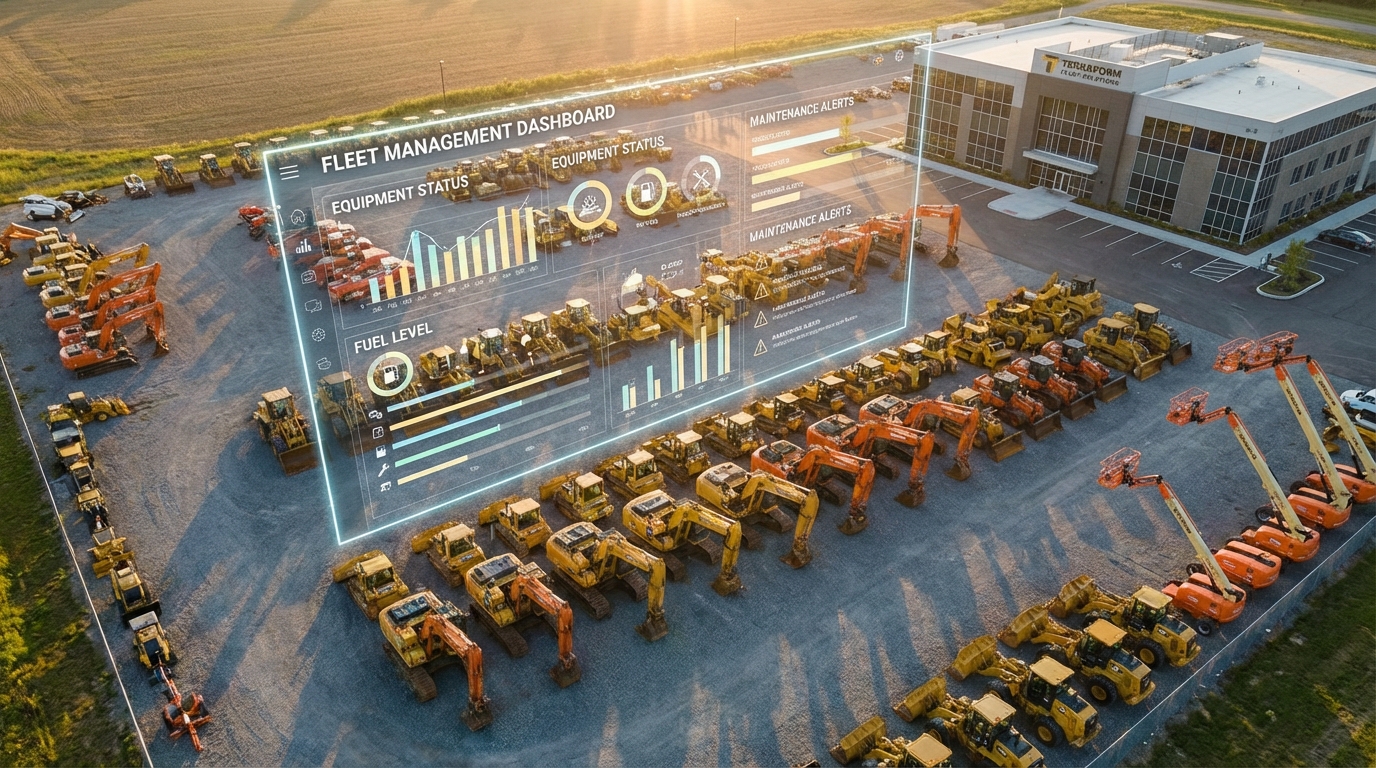
Construction equipment rental software manages the booking, tracking, maintenance, and billing of heavy machinery like excavators, skid steers, boom lifts, and compactors. The best platforms combine fleet utilization dashboards, GPS telematics integrations, and mobile field apps so operators know exactly where every machine is and when it needs service.
Choosing the wrong software costs more than the subscription fee. A platform that cannot track meter hours means missed maintenance intervals. One without delivery logistics means phone-tag with dispatchers. And enterprise tools designed for 500-unit fleets will overwhelm a 20-unit operation with features that go unused.
We tested each platform from the perspective of an independent construction equipment rental company running 15-80 units. Pricing, ease of use, and the features that actually matter for equipment rental operations drove our rankings.
Quick Comparison Table
| Software | Starting Price | Best For | Key Strength |
|---|---|---|---|
| Reservety | $59/mo | Small-mid fleets | Concierge website build, zero commission |
| Quipli | Custom | US independents | Online ordering, modern UX |
| Texada | Custom | Large fleets | Fleet analytics, telematics |
| Point of Rental | Custom | Multi-location ops | Heavy equipment workflows |
| Wynne Systems | Custom | Enterprise | Industry legacy, deep ERP |
| EZRentOut | $89/mo | Asset-heavy businesses | Asset lifecycle tracking |
| Rentrax | $29/mo | Startups | Low entry price |
| Renterra | Custom | Growing companies | Modern interface, fast setup |
| Alert Rental | Custom | Mid-large fleets | Construction-specific modules |
| Booqable | $29/mo | General rental | Simple, clean booking flow |
1. Reservety
Reservety takes a different approach from legacy construction software. Instead of requiring weeks of implementation, the concierge team builds your complete rental website during the free trial, including your equipment catalog, availability calendars, payment processing, and digital contracts. Pricing is flat at $59 or $99 per month with zero commission on bookings.
For construction equipment rental businesses running 15-60 units, this eliminates the two biggest pain points: building an online presence from scratch and paying percentage fees on high-value equipment rentals. A single excavator booking at $1,500/week would cost $75-$120 in commission on percentage-based platforms. Reservety charges nothing beyond the flat monthly fee.
The platform handles daily, weekly, and monthly rental periods with automated pricing tiers, security deposit holds, and delivery zone management. Equipment categories, specifications, and photos are organized into a professional storefront that contractors can browse and book from at any hour.
2. Quipli
Quipli is a US-based platform built specifically for independent equipment rental companies. The software handles online ordering, inventory management, payment processing, and maintenance tracking in a single dashboard. Their pricing is custom per location, which makes it difficult to compare directly but positions them as a mid-market solution.
The standout feature is their online ordering flow. Contractors can browse available equipment, check real-time availability, and complete bookings without calling the yard. For rental companies still processing orders by phone and clipboard, Quipli represents a significant operational upgrade. They also released a maintenance module in 2023 that tracks service history, repair costs, and planned maintenance per unit.
3. Texada Software
Texada targets larger fleet operations with comprehensive rental management, fleet analytics, and telematics integrations. Their platform connects GPS and engine data directly to rental records, giving fleet managers a real-time view of utilization rates, idle time, and location data across hundreds of units.
The depth of analytics separates Texada from simpler tools. Dashboard views show which equipment classes generate the highest revenue per day, which units sit idle most often, and where maintenance costs are trending. This level of insight matters when your fleet value runs into millions. The tradeoff is complexity and a custom pricing model that typically requires a sales consultation.
4. Point of Rental
Point of Rental has been in the rental software space for decades and offers heavy equipment-specific solutions alongside their general rental platform. Their mobile field app lets drivers capture delivery photos, collect signatures, and log equipment conditions on-site, reducing disputes about damage and delivery times.
Multi-location support is a core strength. Companies operating yards in multiple cities can manage transfers between locations, track equipment across sites, and run consolidated reports. The trade-off is that the system is enterprise-priced with implementation timelines that can stretch into months. Best suited for established companies with 50+ units across multiple locations.
Skip the enterprise complexity
Reservety gets your equipment online in days, not months. Flat pricing, zero commission, and a concierge team that builds it for you.
Start Free Trial5. Wynne Systems (RentalMan)
Wynne Systems developed RentalMan, one of the oldest and most established rental management platforms in the construction industry. The software functions as a full ERP system covering contracts, billing, fleet management, purchasing, and financial reporting. Major rental chains have relied on RentalMan for decades.
The depth of functionality is unmatched for enterprise operations. RentalMan handles complex billing scenarios like meter-based charges, fuel surcharges, environmental fees, and tiered rental rates that change based on duration. However, the interface reflects its legacy architecture, and implementation requires dedicated IT resources and significant training investment.
6. EZRentOut
EZRentOut (by EZO) starts at $89/month and focuses on asset lifecycle tracking. Every piece of equipment gets a detailed record covering purchase date, depreciation, maintenance history, certification status, and current location. Barcode and QR code scanning streamline check-in and check-out processes.
The asset-centric approach works well for construction companies that need to track not just rental availability but also compliance documentation, insurance certificates, and inspection records per unit. The platform integrates with QuickBooks and Xero for accounting. It is less construction-specific than Texada or Point of Rental, but the lower price point and strong asset tracking make it viable for mid-size operations.
7. Rentrax
Rentrax starts at $29/month and positions itself as construction-focused rental management software. The platform covers basic inventory management, booking, invoicing, and customer records. For small operations just moving away from spreadsheets, the low entry price removes the financial barrier.
The feature set is lean compared to enterprise tools. You will not find telematics integrations, advanced fleet analytics, or multi-location management at this price point. But if your primary need is getting bookings and invoices out of a paper notebook and into a proper system, Rentrax handles the fundamentals at a price that makes sense for a 10-unit operation.
8. Renterra
Renterra is a newer entrant in the equipment rental software market, positioning itself as a modern alternative to legacy platforms. The interface is clean and contemporary, reflecting current design trends rather than the Windows-era aesthetics of older rental software.
The platform emphasizes speed of setup and ease of use. For companies that have been put off by the 3-6 month implementation timelines quoted by enterprise vendors, Renterra offers a faster path to digital operations. Pricing requires a sales conversation, and as a younger company, the feature depth and integration ecosystem are still developing compared to established competitors.
9. Alert Rental
Alert Rental offers construction-specific modules including fleet management, contract management, and service and maintenance tracking. The platform has been serving the rental industry for over 30 years, building deep functionality around the specific workflows of equipment rental yards.
Service management is where Alert Rental adds particular value. The system tracks preventive maintenance schedules based on meter hours, generates work orders automatically when service intervals are reached, and logs all repair history against individual units. For fleets where a single unplanned breakdown can cost thousands in lost rental revenue, this preventive approach pays for itself. Pricing is custom and positioned for mid to large operations.
10. Booqable
Booqable starts at $29/month and works as a general-purpose rental platform. The booking interface is polished and the setup process is straightforward, making it popular with rental businesses across many categories. For construction equipment companies that also rent smaller tools, event supplies, or other general inventory, Booqable handles the breadth without industry-specific complexity.
The limitation for heavy equipment operators is the lack of construction-specific features. There is no telematics integration, no meter-based billing, and no maintenance scheduling tied to engine hours. Booqable works if your construction equipment rental operation is straightforward - daily/weekly rates, online booking, basic availability tracking - but outgrows its usefulness once you need fleet-level operational controls.
What to Look for in Construction Equipment Rental Software
Construction equipment presents unique challenges that generic rental software often cannot address. If you are writing a construction equipment rental business plan, software costs will be a significant line item. Before committing to a platform, evaluate these capabilities against your actual operations:
- Meter-based billing - Excavators and loaders are often rented with hour meters. Your software should support billing based on actual usage hours in addition to daily, weekly, and monthly rates, including overage charges when hours exceed the agreed limit.
- GPS and telematics integration - Knowing where a $200,000 excavator sits at all times is not optional. The best platforms pull GPS location, engine hours, fuel levels, and diagnostic codes directly into the rental record.
- Maintenance scheduling by hours - Construction equipment requires service at specific hour intervals, not calendar dates. The software should trigger maintenance alerts based on meter readings, not just "every 90 days."
- Delivery and pickup logistics - Hauling a 40,000-pound excavator requires flatbed scheduling, route planning, and on-site delivery confirmation. Software that treats delivery as an afterthought creates operational headaches.
- Damage documentation - Photo-based condition reports at pickup and return, with timestamps and customer signatures, prevent disputes on equipment worth hundreds of thousands of dollars.
- Contract and compliance management - Insurance certificates, operator certifications, lien waivers, and rental agreements need to be tracked per contract, not in a separate filing cabinet.