
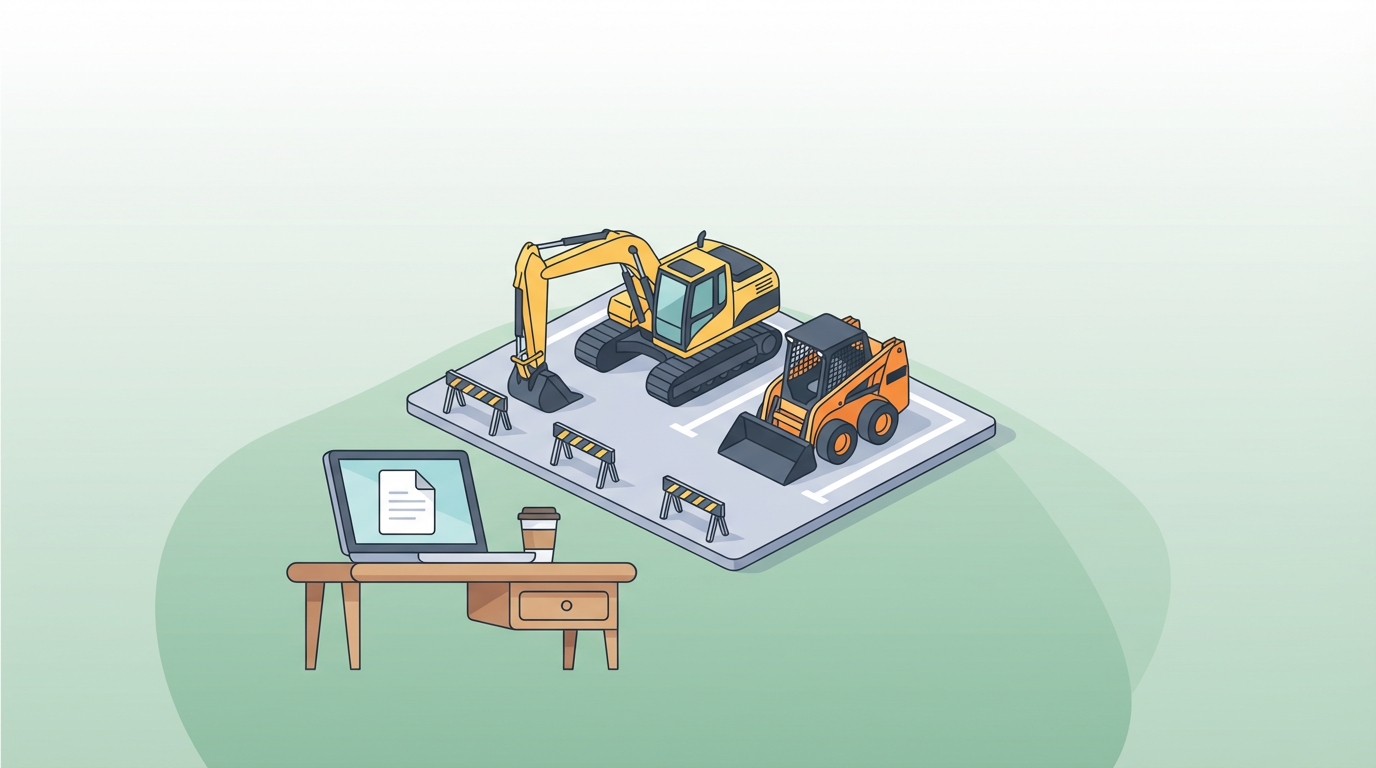
A construction equipment rental business plan details your fleet investment strategy, target contractor market, pricing model, insurance requirements, and growth plan. Construction equipment is capital-intensive - individual machines cost $25K to $200K+ - making a thorough business plan essential for financing and risk management.
Why You Need a Construction Equipment Rental Business Plan
Construction equipment rental is not a business you bootstrap with a credit card. A single mini excavator costs $25,000 to $60,000, and a fleet of six to eight machines can run $200,000 to $500,000 before you factor in a yard, delivery vehicles, and insurance. Lenders, SBA loan officers, and equipment financing companies all require a formal business plan before approving capital.
Beyond financing, the plan forces you to answer critical questions before you commit capital. Which equipment types are most in-demand in your service area? What utilization rate do you need to cover monthly loan payments? How much insurance coverage protects you from a $150,000 liability claim when a rented excavator damages a gas line?
SBA 7(a) loans and equipment financing through companies like Balboa Capital, Channel Partners, and ENGS Commercial Finance are common funding paths. All require a written business plan with financial projections, market analysis, and an owner resume. Without one, your application goes in the reject pile.
Executive Summary
The executive summary is the first section of your plan but the last you write. It condenses everything into one to two pages that a lender or investor can read in five minutes. Cover these elements:
- Business concept - What you rent, to whom, and in what geographic area. Example: "Heavy equipment rentals serving residential and commercial contractors within a 50-mile radius of Austin, TX."
- Market opportunity - Why demand exists. Reference local construction activity, permit data, and the trend of contractors renting instead of owning equipment.
- Revenue model - Daily, weekly, and monthly rental rates. Target utilization rates and projected annual revenue.
- Startup costs - Total capital required, broken down by fleet acquisition, facility, vehicles, and working capital.
- Funding request - How much you need, what form (SBA loan, equipment financing, investor equity), and how funds will be allocated.
- Owner qualifications - Your construction industry experience, equipment knowledge, and business management background.
Market Analysis
Your market analysis identifies who rents construction equipment in your area and how much they spend. The U.S. equipment rental industry generates over $65 billion annually, with construction accounting for the largest share. But national numbers do not fund your business - local demand does.
Target Customer Segments
- Residential contractors - Home builders, remodelers, and excavation companies that need equipment for specific projects but cannot justify owning machines they use intermittently. This is often the largest segment for independent rental yards.
- Commercial builders - General contractors on commercial projects who rent specialty equipment they do not carry in their own fleet. Longer rental durations (weeks to months) with higher total revenue per rental.
- Municipalities and government agencies - Public works departments, water utilities, and road maintenance crews. Slower sales cycle but consistent, repeat business with reliable payment.
- DIY homeowners - Property owners renting mini excavators for landscaping, trenching, or small demolition projects. Lower ticket size but high margin and minimal wear on equipment.
Competitive Landscape
Identify every equipment rental operation within your service radius. Large national chains like United Rentals, Sunbelt Rentals, and Herc Rentals dominate metro markets but often underserve rural and suburban areas. Your competitive advantage as an independent operator typically comes from faster delivery, personal relationships with contractors, more flexible rental terms, and willingness to service smaller jobs that national chains deprioritize.
Research local competitors by visiting their yards, checking their equipment listings, and talking to contractors about what they wish was available. Gaps in the local market - specific equipment types nobody stocks, poor delivery response times, or lack of weekend availability - become your entry points.
Fleet Selection and Equipment Costs
Your fleet is your largest capital expenditure and the core of your revenue engine. Start with the equipment categories that local contractors rent most frequently, then expand as cash flow allows.
| Equipment Type | Purchase Cost (New) | Daily Rate | Weekly Rate | Monthly Rate |
|---|---|---|---|---|
| Mini excavators | $25K - $60K | $250 - $450 | $800 - $1,500 | $2,500 - $5,000 |
| Skid steers | $25K - $50K | $200 - $400 | $650 - $1,200 | $2,000 - $4,000 |
| Backhoe loaders | $50K - $100K | $350 - $600 | $1,100 - $2,000 | $3,500 - $7,000 |
| Aerial lifts | $15K - $50K | $200 - $500 | $600 - $1,500 | $1,800 - $4,500 |
| Compactors | $5K - $15K | $100 - $200 | $350 - $700 | $1,000 - $2,000 |
| Concrete equipment | $2K - $10K | $75 - $200 | $250 - $600 | $800 - $1,800 |
Start with the most in-demand equipment locally. In most markets, mini excavators and skid steers generate the highest rental frequency. A starter fleet of two mini excavators, two skid steers, one backhoe loader, and a mix of smaller items (compactors, concrete saws, plate tampers) provides enough variety to serve general contractors without overextending capital.
Used equipment reduces upfront costs by 30-50%. A three-year-old Bobcat E35 mini excavator with 1,500 hours runs $20,000 to $30,000 versus $45,000 new. The tradeoff is higher maintenance costs and shorter remaining service life. Equipment financing through dealers often covers both new and used machines with terms of 48 to 72 months.
Startup Costs
Total startup investment for a construction equipment rental business ranges from $150,000 to $750,000 depending on fleet size, whether you buy new or used, and your local real estate costs. Here is the breakdown:
- Fleet acquisition: $100,000 - $500,000 - Your largest line item. A small starter fleet of 6-8 machines purchased used runs $100K-$200K. A larger fleet with new equipment pushes toward $500K.
- Yard lease and improvements: $15,000 - $60,000/year - You need 0.5 to 2 acres of fenced, graded land with road access for equipment transport. Industrial zoning required. Budget for gravel, fencing, security cameras, and a small office or container.
- Delivery truck and trailer: $20,000 - $80,000 - A flatbed truck or pickup with a heavy-duty equipment trailer is essential. Most contractors expect delivery and pickup as part of the rental. Used setups start around $20K; a new truck with a 20-ton tilt trailer runs $60K-$80K.
- Insurance: $10,000 - $30,000/year - Inland marine, general liability, commercial auto, and equipment floater policies. Costs vary by fleet value, coverage limits, and claims history.
- Maintenance shop and tools: $5,000 - $20,000 - Basic shop setup for fluid changes, filter replacements, hose repairs, and daily maintenance. Major repairs may still go to a dealer or independent mechanic.
- Working capital: $15,000 - $40,000 - Three to six months of operating expenses to cover payroll, fuel, loan payments, and marketing before revenue stabilizes.
Use our free startup cost calculator to estimate your total investment based on your fleet mix and local costs.
Revenue Projections
Equipment rental revenue depends on two variables: rental rates and utilization rates. Rental rates are set by your local market. Utilization - the percentage of time each machine is actively rented - is what you control through marketing, fleet selection, and operational efficiency.
Typical Rental Rates
Daily rates range from $200 to $800 per machine depending on equipment type and size. Weekly rates are typically 3x the daily rate, and monthly rates run 3-4x the weekly rate. This tiered structure incentivizes longer rentals, which reduce your delivery costs and increase utilization.
Utilization Benchmarks
Industry average utilization for independent equipment rental yards runs 40-55%. National chains with larger fleets and broader marketing reach average 65-70%. As a startup, plan conservatively:
- Year 1: 30-40% utilization as you build contractor relationships and market awareness
- Year 2: 40-50% utilization with repeat customers and referral business
- Year 3: 50-60% utilization with an optimized fleet mix and established reputation
Revenue Example
A fleet of 8 machines with an average monthly rental rate of $3,000 per machine at 45% utilization generates:
8 machines x $3,000/month x 45% utilization = $10,800/month = $129,600/year
At 55% utilization with the same fleet, annual revenue reaches $158,400. Adding two more machines and reaching 50% utilization across 10 units produces $180,000 annually. These numbers scale predictably as you grow the fleet and improve utilization.
Operations Plan
Construction equipment rental operations are logistics-heavy. Your ability to deliver equipment on time, keep machines running, and process rentals efficiently directly impacts utilization and customer retention.
Delivery Logistics
Most contractors expect equipment delivered to the job site and picked up when the rental ends. Define your delivery radius (typically 30-50 miles), set delivery fees by distance zone, and plan routes to batch deliveries and pickups. A single delivery truck can handle 2-3 drops per day with proper scheduling.
Pre-Rental Inspection
Every machine gets inspected before it leaves the yard and again when it returns. Document condition with photos, check fluid levels, verify safety features, and record hour meter readings. This process protects you from damage disputes and catches maintenance issues before they become breakdowns on a job site.
Telematics and GPS
GPS trackers on every machine serve multiple purposes: theft recovery, geofencing to prevent unauthorized use outside the job site, hour meter monitoring for billing accuracy, and maintenance scheduling based on actual usage. Systems like construction equipment rental software integrate telematics data with your booking and billing workflow.
Maintenance Scheduling
Preventive maintenance keeps machines available and extends service life. Track hours on each unit and schedule oil changes, filter replacements, undercarriage inspections, and hydraulic system checks based on manufacturer intervals. Budget 5-10% of equipment value annually for maintenance and repairs.
Insurance and Compliance
Insurance is non-negotiable in construction equipment rental. A single incident - a rented excavator striking a utility line, a crane tip-over, or a stolen $80,000 machine - can exceed your annual revenue. You need multiple coverage types:
- Inland marine insurance - Covers your equipment fleet against damage, theft, and loss whether machines are at your yard, in transit, or on a customer's job site. This is your primary equipment coverage.
- General liability insurance - Protects against third-party bodily injury and property damage claims. Most commercial customers require $1M-$2M in general liability coverage before renting from you.
- Equipment floater policy - Extends coverage to equipment in transit and at temporary locations. Important when machines move between job sites frequently.
- Commercial auto insurance - Covers your delivery trucks and trailers. Required for any vehicle transporting equipment on public roads.
- Workers' compensation - Required in most states if you have employees. Covers workplace injuries during equipment loading, maintenance, and delivery operations.
Annual insurance costs typically run $10,000 to $30,000 for a small fleet, scaling with equipment value and coverage limits. Require customers to sign rental agreements with liability waivers, and consider offering optional damage waiver fees ($15-$50/day) as an additional revenue stream.
Marketing Strategy
Construction equipment rental marketing is relationship-driven. Contractors choose rental providers based on equipment availability, delivery speed, and trust - not flashy advertising. Focus your marketing budget on channels that build direct contractor relationships.
- Contractor relationships - Visit active job sites, attend local contractor association meetings, and introduce yourself to project managers. A personal introduction and a business card outperform any digital ad in this industry. Follow up with a fleet list and rate sheet.
- Google Business Profile - Optimize your listing with equipment photos, service area, hours, and customer reviews. "Equipment rental near me" searches drive high-intent local traffic. Encourage satisfied contractors to leave reviews.
- Equipment directories - List your fleet on platforms like Equipmentshare, BigRentz, and local construction directories. These marketplaces connect you with contractors actively searching for specific equipment types.
- Trade shows and industry events - Local home builder association expos, contractor trade days, and equipment demos put you in front of your target market. Bring rate cards and be ready to book rentals on the spot.
- Online booking website - A professional website with your fleet catalog, real-time availability, and online booking capability lets contractors reserve equipment at 2 AM without calling your office. This convenience becomes a competitive advantage over rental yards that only take phone orders.
Manage your equipment fleet online
Reservety builds your complete equipment rental website with catalog, availability calendars, and online booking. Zero commission, flat monthly pricing.
Start Free TrialFinancial Projections: Year 1 Through Year 3
Year 1
Revenue builds slowly as you establish contractor relationships. With a fleet of 6-8 machines, expect 30-40% utilization and gross revenue of $80,000-$130,000. After loan payments, insurance ($10K-$30K), yard lease ($15K-$30K), fuel and delivery costs ($8K-$15K), maintenance ($5K-$12K), and marketing ($3K-$6K), most operators break even or run a small loss in year one. This is expected and accounted for in your working capital reserve.
Year 2
Repeat customers and referrals push utilization to 40-50%. Revenue climbs to $130,000-$180,000 with the same fleet. If demand supports it, add 2-3 machines in high-demand categories. Operating expenses remain relatively stable since most costs (yard, insurance, loan payments) are fixed. Year two should produce positive cash flow of $15,000-$40,000 after all expenses.
Year 3
A mature fleet of 10-14 machines at 50-60% utilization generates $200,000-$320,000 in annual revenue. Net profit margins in equipment rental typically range from 15-25% once the business is established. At this stage, reinvest profits into fleet expansion, consider adding a second delivery vehicle, and evaluate whether hiring a full-time mechanic is more cost-effective than outsourcing repairs.
Common Mistakes to Avoid
- Buying equipment before understanding local demand - A $90,000 backhoe loader that sits idle 80% of the time destroys your return on investment. Survey contractors and analyze competitor fleets before committing capital to specific equipment types.
- Underestimating insurance costs - New operators often budget $5,000 for insurance and get quotes at $20,000+. Get insurance quotes before finalizing your financial projections, not after.
- Ignoring delivery logistics - Equipment without a delivery system is equipment that does not rent. Contractors will not arrange their own transport. Budget for a truck and trailer from day one.
- Setting rates too low to win business - Undercutting established competitors by 30% signals desperation and attracts price-sensitive customers who will leave the moment someone offers a lower rate. Compete on service, availability, and reliability instead.
- Skipping rental agreements - Every rental needs a signed agreement covering liability, damage responsibility, authorized operators, rental duration, and late return fees. A handshake deal with a contractor you trust will eventually cost you a $15,000 repair bill.
- No maintenance tracking system - Reactive maintenance (fixing machines after they break) costs 3-5x more than preventive maintenance and takes machines out of service during peak rental periods. Track hours and follow manufacturer maintenance schedules from the start.