
You never know what will happen to your business tomorrow or even minutes from now.
You never know what will happen to your business tomorrow or even minutes from now.
A fire may break out in your warehouse, turning valuable equipment into ashes, or weather conditions like storms, tornadoes, or flooding may damage your equipment in the places where they were installed.
Human-induced factors such as neglect, irresponsibility, and clumsiness can damage your assets as well.
Sometimes, your rental equipment can cause damage to others' property and inflict injuries that may require compensation from your end.
For example, angry Joe may get even more furious and probably sue you if he trips over the decorative pieces you installed with good intentions. Or a child, playing on your bounce house, unsuccessfully lands on the ground and injures his wrist. And now, his parents want you to pay for medical expenses.
Of course, you can waive some disputes by creating detailed instructions, displaying warnings, and having customers sign liability waivers. But still, insurance is a better protector. Even if you lose, the insurance will cover the expenses.
We are sorry for bringing up scary examples that may be discouraging for someone planning to start a party rental business. Our intention is not to scare you but to give you the resources so you won’t end up in those scary positions.

1. Select the Right Policy
Not all problems are made equal, nor are insurance policies.
Some policies may cover only damages and injuries caused by your business but not damages caused to your business. That is called Liability Insurance.
Some will cover everything, including damages caused by and to your business. It means your business assets and those who use your equipment are covered in the event of unexpected emergencies.
It is called a Business Owner’s Policy (BOP). We recommend BOP if you want to protect your assets and business from lawsuits because it packages property and liability insurance into a single piece.
We have written about each policy in this post.

2. Know your insurance company.
You will find many insurance companies. Each of them will promise attractive deals. Unfortunately, what you see in the marketing is not the full representation of the company.
Almost all companies present themselves as reliable, affordable, and the best choice. But trust without research will limit your chances of finding the right insurance.
Things you must consider:

3. Make sure the company has a proper license.
A company may have a license, but it does not mean they are licensed to operate everywhere.
For example, each state has its own rules and guidelines in the United States.
Thus, you must check if an insurance company has a valid license to operate in the state you are running your business.
Why license is important?
To determine whether a company is licensed, you can check its status on the States Insurance Department, or visit the National Association of Insurance Commissioners (NAIC).

4. Check the financial strength.
One way to determine whether a specific company is in a position to cover your losses is to check its financial stability.
Do they have enough money to pay for full coverage? Are they backed by bigger insurance companies? Do they pay for claims instantly or do they do it for a long time? Do they have enough customers or reputation to sustain their financial stability?
All these questions are logical to ask yourself. But to answer those, you must have hard data from reliable sources.
Where can you get that information?
You can find their financial statements on their website or request them directly because all insurance companies are required to disclose their financial statements to the public. Usually, you can retrieve that data from the investor relations section of their website.
5. Read the complaint history.
Earlier we mentioned that you can read company reviews online, but some of the reviews there may not be as reliable as the complaints that appear in Better Business Bureau (BBB).
Because the organization takes a systematic approach to processing complaints and ensures the complaints are genuine.
2. For demo purposes, I used Nationwide Insurance and searched the term “Nationwide Insurance BBB” on Google.
The results came up as follows:

3. Search result link will take to the Nationwide’s main BBB account.
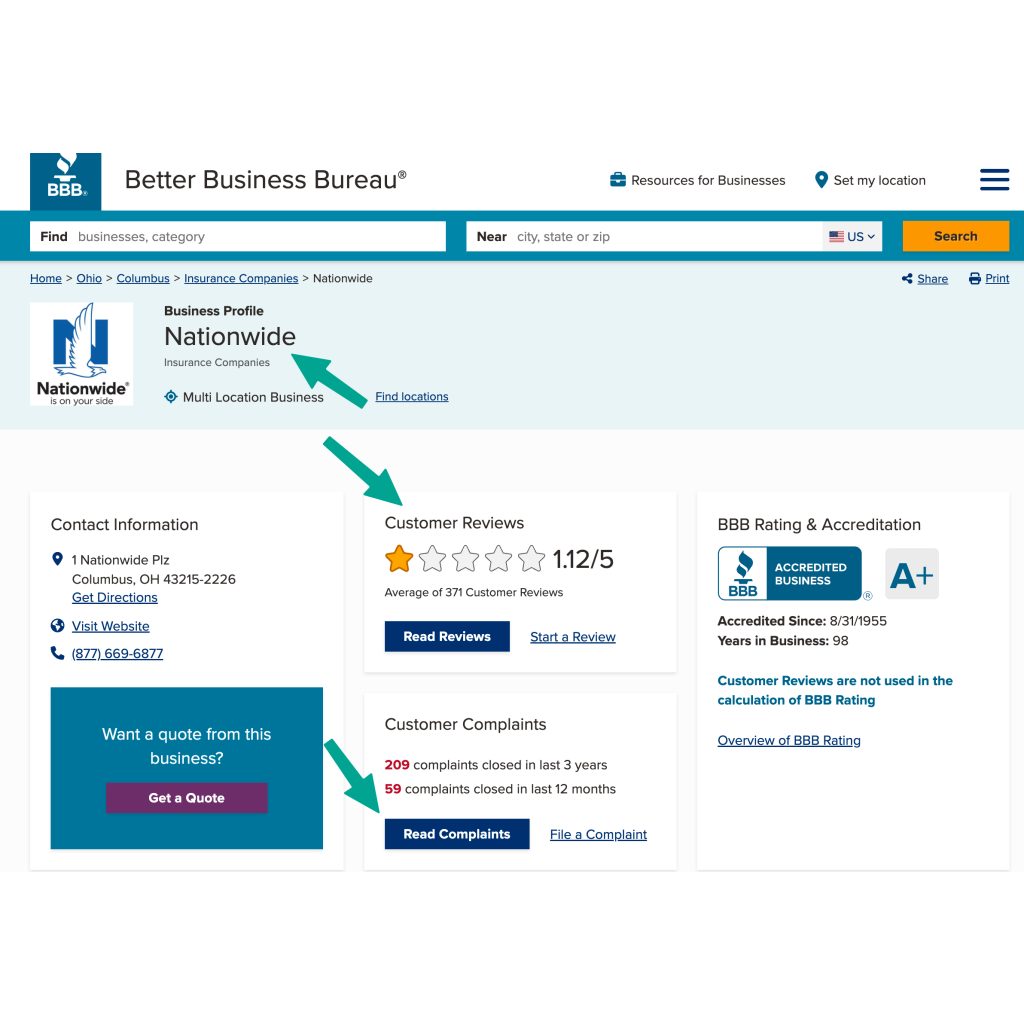
As you can see, when we are in the main BBB account, we can see the overall review rating, plus customer complaints.
Interestingly, the BBB review score is a lot lower than what is displayed on other review sites.
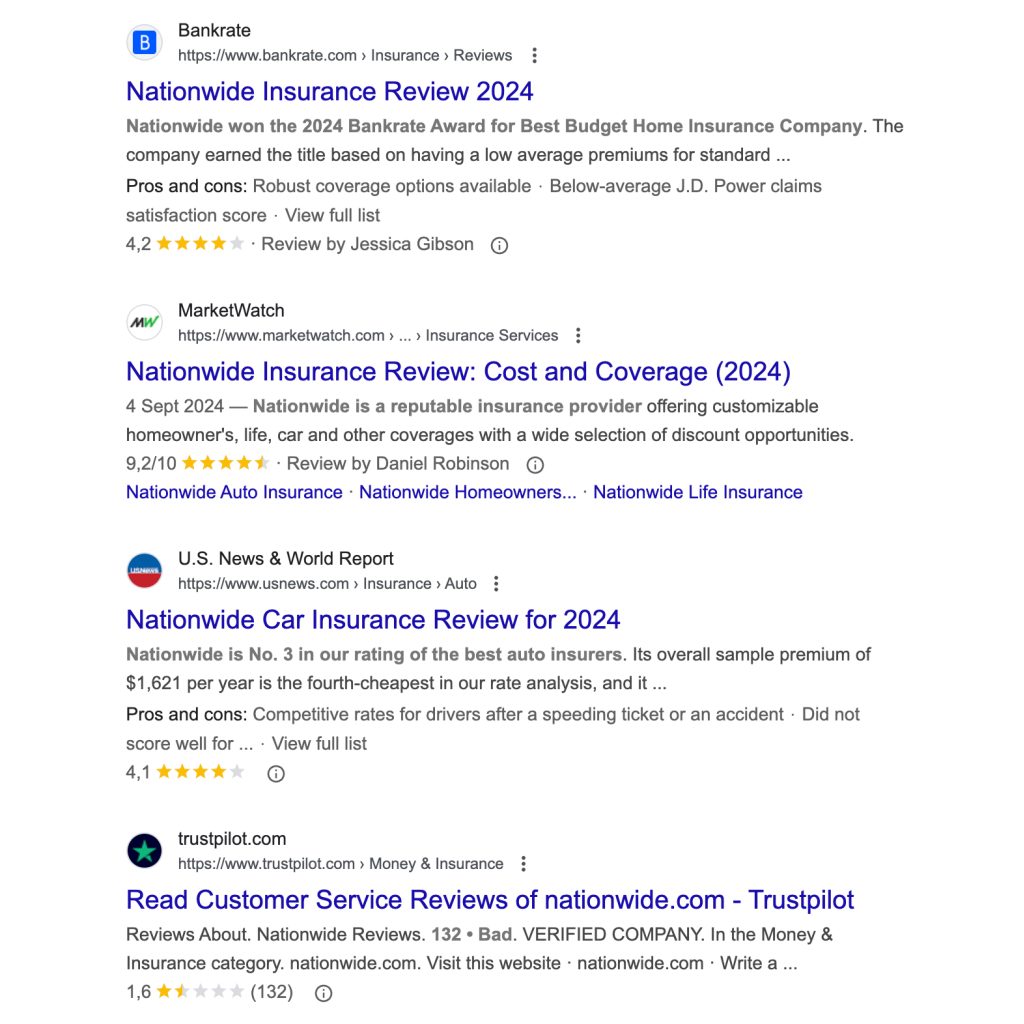
What is the reason for the discrepancies?
It does not mean reviews are completely fake. It simply means that BBB attracts mostly people who had bad experiences with the company.
Thus, people who want to dent to company's reputation come to BBB and complain. It explains why companies' reviews are scored lower than other review sites.
We brought up the BBB example so you can see the company's weaknesses there so that you can make calculated decisions.
4. You can view the complaints by clicking the Read Complaints section.
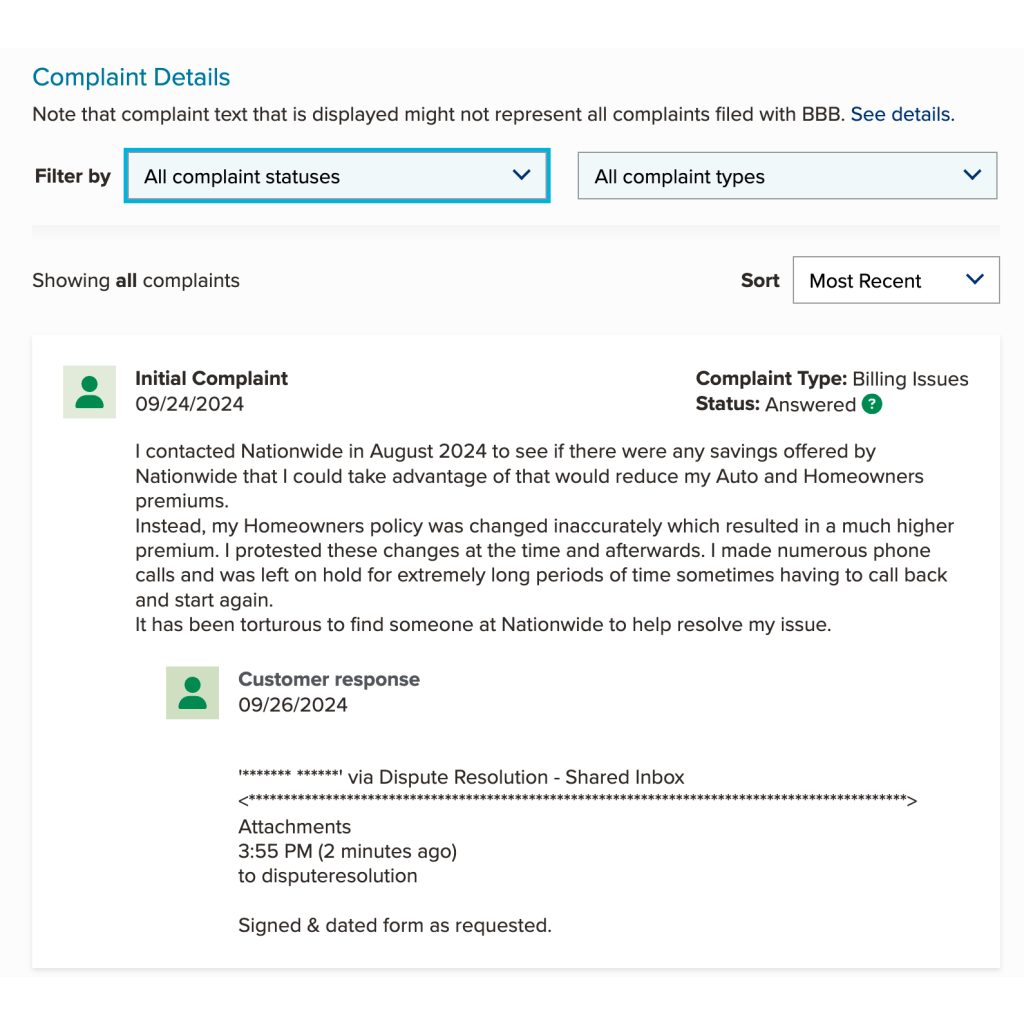
There, you can filter out complaints by special categories such as Billing Issues, Customer Support Issues, Order Issues, etc.

6. Pay attention to claims processes.
Unfortunately, some companies are quick to collect their money, but very slow to pay in the event of claims. We do not want you to deal with any of those unreliable companies. So, check their claim processes.
Before purchasing an insurance policy ask about the length and difficulty of the claims process, usually reputable companies do this part pretty quickly, minimizing the business interruptions and saving you from unnecessary hassles.
7. Compare the prices.
The monthly insurance fee is very important. We could have put it in the first place, however, the price is not a deciding factor in selecting insurance for your rental business.
We already mentioned that business reliability, reviews, years in business, financial strengths, company weaknesses displayed on BBB, and other qualities are more important than price.
The price is something you need to compare after you make sure the company is reliable. Doing it the other way around will not be smart.
There are many insurance comparison sites but we suggest doing it manually. Just find insurance companies that offer rental policies, make a list of the ones that suit your business model and offer greater benefits, and then make sure their rate is fair considering the pros and cons of their company.

8. Read their terms & contracts.
Never sign the document before understanding key points in the contract.
Some companies are pretty good at masking their weaknesses with their primary advantages. Carefully reviewing contacts will help you to weed out bad deals.
Things to look at in the contract:
9. Discuss coverage options
This should appear somewhere on the top of your list. If a company does not cover everything you intended, then it may not fit your best interest.
Earlier we recommended finding an insurance company with a local office as it will help you to discuss the policies they offer. It is always better to talk to an insurance agent face to face-rather than online or on the phone.
During the discussions, you have to outline the things you want to get covered to get confirmation from the agent. If they do not cover your business completely, then you may search for other companies.

10. Check the Company's professionalism.
This tip is more critical than you think. Do not overlook it.
You can tell a company’s attitudes and professionalism just by interacting with them.
Rude customer support, long holds on the line, and low-quality websites, along with other things can be the red flag.
Reservety handles your website, bookings, inventory, and payments — so you can focus on growing your business.