
Two Reservety customers sell memberships. One runs a coworking space in Utah, the other rents motorhomes in Melbourne. They use the same settings and they have built opposite businesses with them. The difference comes down to a single decision, and it is worth understanding before you price anything.
Every membership has to answer four questions. Who counts as a member. What are they allowed to book. How much of it. And — the one most people skip — what happens when they have used it all up.
That last answer is the whole business model. Get it right and the membership sells more than it gives away. Get it wrong and you have either capped your revenue or broken your promise.
A 24/7 coworking space in Springville, Utah. Private sound-controlled offices, booked by the hour.
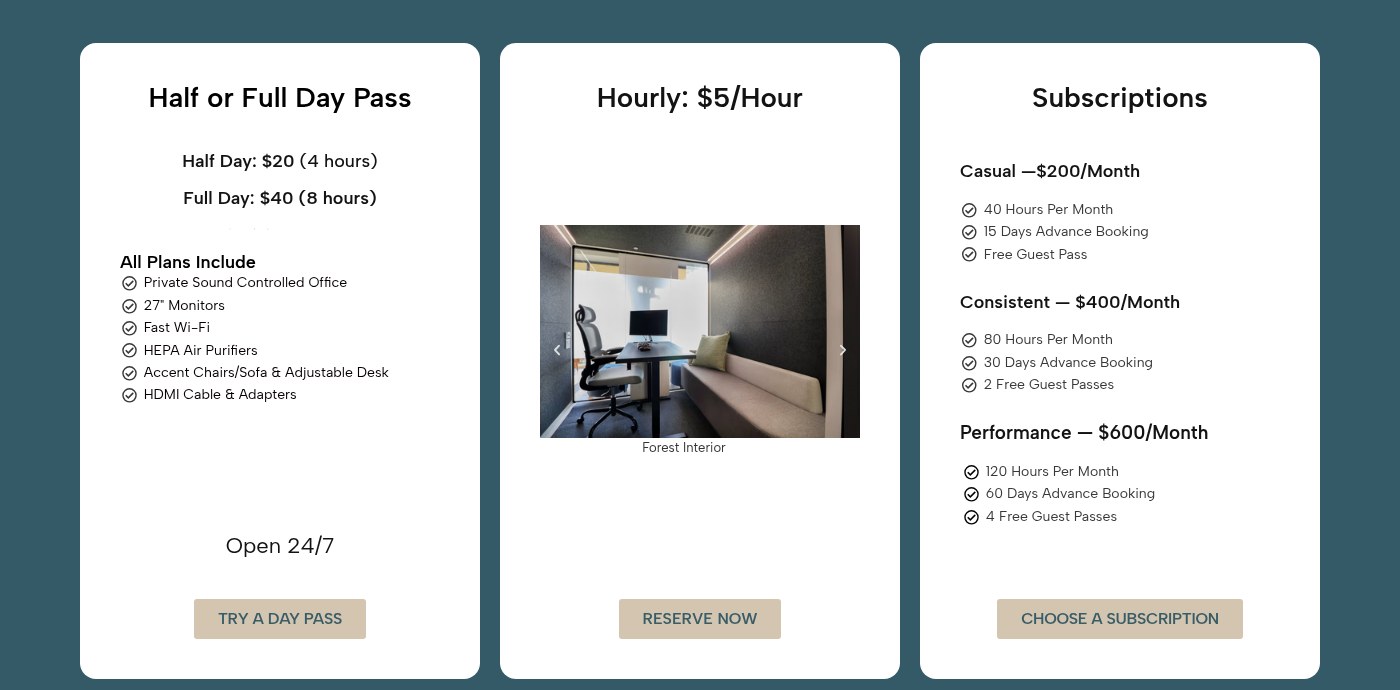
A member who burns through their 120 hours is not locked out. They keep booking and start paying the hourly rate. Someone who is not a member at all can still walk in and buy a $20 half day. The membership is not permission to use the building — it is a cheaper way to use it a lot.
So the price is the enforcement. Nothing is ever greyed out, and every hour over the line is revenue the space would otherwise have turned away.
Each level also moves how far ahead you may book — 15 days on Casual, 30 on Consistent, 60 on Performance — and how many guest passes you get, one, two or four. For a space where the good rooms go first, the booking window is arguably worth more than the hours.
How it runs unstaffed. FocusHub is open 24/7 with nobody on the door. When a booking is paid, a door code is generated and sent to the member by SMS. No keys change hands and nobody drives out to meet anyone at two in the morning. That is not a convenience feature for this business — it is the operating model.
Motorhomes, vans and caravans in Melbourne, delivered to the member’s door. One annual fee.
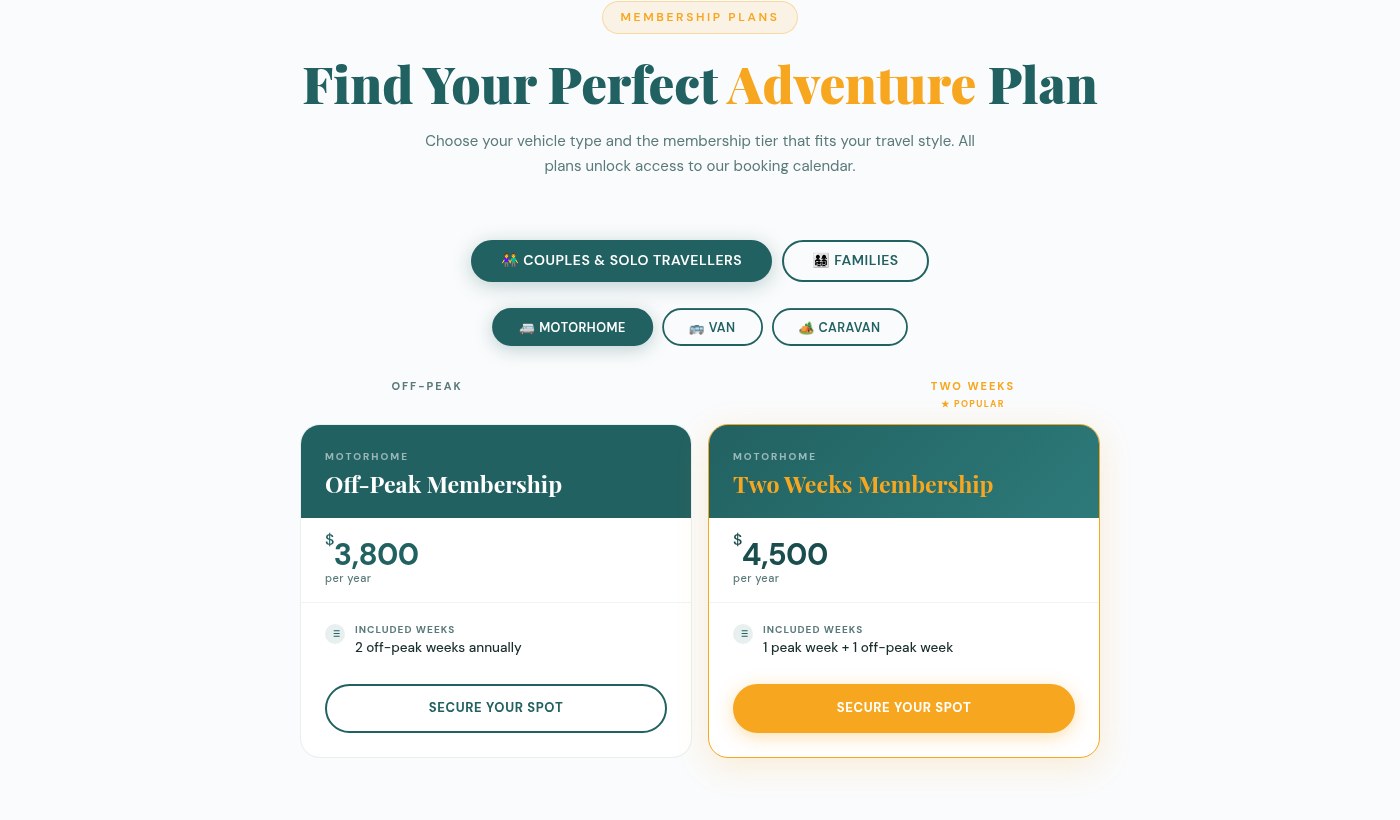
A member with a two-week plan who has taken both weeks does not get offered a third at full price. The dates stop being selectable. The membership is the permission, and the allowance is a quota rather than a discount.
Here the calendar is the enforcement, not the price. That is the right answer for this business: there are only so many vans, and selling an extra week to an existing member is a week not available to someone paying a full annual fee.
The allowance is not simply “two weeks a year”. It is a peak entitlement and an off-peak entitlement, counted separately against named date ranges — school holidays, Christmas, the long weekends. A member who has spent their peak week can still travel in March. Spend the off-peak week too and the year is done.
Same settings. Opposite businesses. It rests on one question.
When a member reaches the end of their allowance, do you want to sell them more, or do you want to stop them? Everything else follows from the answer.
| Membership as a perk | Membership as a permit | |
|---|---|---|
| Over the allowance | Keeps booking, starts paying | Dates stop being selectable |
| Non-members | Can still buy, at full price | Cannot book at all |
| Enforced by | The price | The calendar |
| The membership is | A cheaper way to use it a lot | Permission to use it |
| Right when | Spare capacity is wasted capacity | Capacity is scarce and already sold |
| Live example | FocusHub — empty desks earn nothing | Timeshare Escapes — only so many vans |
A coworking space with an empty room at 3pm has lost that hour forever, so it should sell it to anyone. A motorhome fleet in January has the opposite problem. Neither business is doing it wrong; they are answering the same question about different kinds of stock.
Plans and prices above are taken from each business’s own public website in September 2026, and are theirs to change. Both are Reservety customers, shown with their permission.
Reservety handles your website, bookings, inventory, and payments — so you can focus on growing your business.