
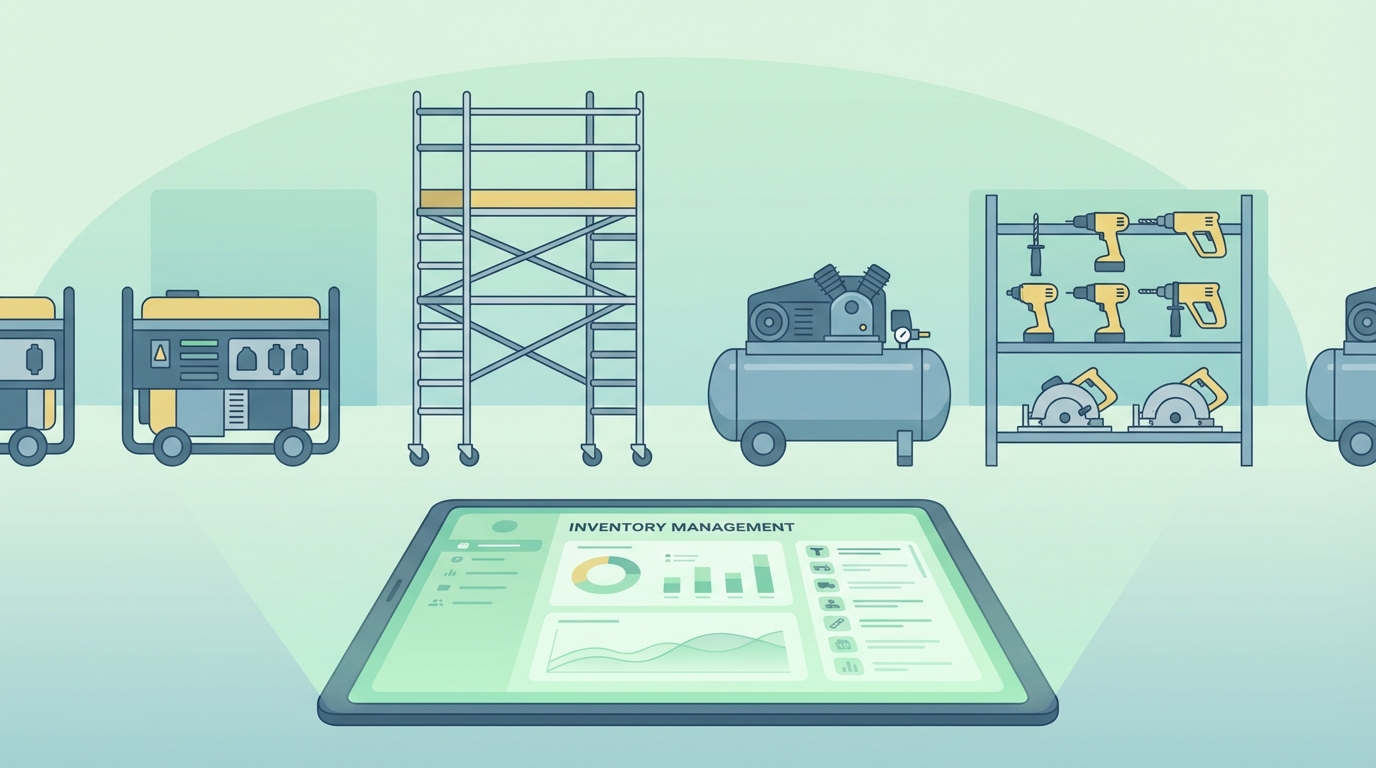
Equipment rental software manages inventory availability, booking calendars, maintenance scheduling, contract generation, and payment processing for businesses that rent tools, machinery, AV gear, construction equipment, and other assets.
Equipment rental covers an enormous range of businesses. A two-person operation renting pressure washers and floor sanders out of a storage unit faces different challenges than a regional construction equipment fleet with 500 assets across three yards. Both need software to track what is available, process reservations, handle payments, and schedule maintenance - but the scale and complexity differ dramatically.
We evaluated each platform from the perspective of a small-to-mid equipment rental business managing 20-500 assets across categories like power tools, construction machinery, AV equipment, and general industrial gear. The comparison covers lightweight booking platforms, mid-market rental management systems, and enterprise-grade ERPs so you can find the right fit for where your business is today.
Quick Comparison Table
| Software | Starting Price | Best For | Key Strength |
|---|---|---|---|
| Reservety | $59/mo | Small-to-mid rentals going online | Concierge website build, zero commission |
| Rentman | $48/mo | AV, event & production gear | Warehouse workflows, crew scheduling |
| HireHop | Free tier | Smaller rental operations | Feature-rich free plan, cloud-based |
| Quipli | Custom | Growing equipment companies | All-in-one bookings, dispatch, maintenance |
| EZRentOut (EZO) | $89/mo | Equipment & IT asset rental | Modern UI, mobile app, rental webstore |
| Booqable | $29/mo | Simple rental operations | Clean interface, quick setup |
| Wynne Systems | Custom (enterprise) | Large heavy equipment fleets | Comprehensive ERP, global operations |
| Texada Software | Custom | Heavy equipment & construction | 35+ years expertise, fleet analytics |
| MCS Rental Software | Custom | Mid-to-large operations | AI-enabled, full workflow digitalization |
| Renterra | Custom | Revenue-focused rental businesses | Maintenance logs, quote sheets, ledger |
1. Reservety
Reservety is built for equipment rental businesses that want a professional booking website without spending weeks figuring out software configuration. The concierge team builds your complete rental site during the 14-day free trial - your equipment catalog with photos, availability calendars, online payments, and rental agreements are all configured for you.
Flat pricing at $59 or $99 per month with zero commission keeps costs predictable regardless of season. A busy month with 80 equipment bookings costs the same as a slow month with 5. Commission-based platforms would take a percentage of every transaction, punishing you for growing your revenue.
The platform handles daily, weekly, and monthly pricing tiers with automatic calculations. Delivery zone pricing lets you charge based on distance or area. Security deposit holds through Stripe protect against equipment damage without requiring cash at pickup. Add-on items like fuel, safety gear, or operator training can be bundled at checkout. For a small-to-mid equipment rental operation that needs to get online quickly and start taking bookings, Reservety removes the technical barrier entirely.
2. Rentman
Rentman starts at $48/month with modular pricing that scales based on the features you need. The platform is strongest for AV, event, and production equipment rental - think lighting rigs, sound systems, staging, and camera packages. Equipment tracking, quote generation, invoicing, warehouse workflows, and crew scheduling are built into a single system.
The warehouse management module is where Rentman differentiates itself. Staff scan items during check-out and check-in, the system tracks which cases and sub-components belong to which order, and packing lists generate automatically. For event production companies managing hundreds of individual items across multiple simultaneous jobs, this level of granularity prevents the "where did that cable kit go?" problem that plagues busy rental operations. Businesses renting simpler equipment categories may find the complexity unnecessary.
3. HireHop
HireHop offers a free tier that makes it accessible for smaller rental operations looking to digitize without upfront cost. The platform is cloud-based and works on any device - desktop, tablet, or phone. Despite the free price point, HireHop packs a surprising amount of functionality including job management, quoting, invoicing, equipment tracking, and basic CRM features.
The free plan covers core rental workflows for businesses just getting started. Paid tiers unlock additional features like API access, custom branding, and advanced reporting. For a new equipment rental business that wants to move beyond spreadsheets without committing to a monthly subscription, HireHop provides a genuine starting point. The trade-off is a less polished interface compared to newer platforms, and some features require manual configuration rather than working out of the box.
4. Quipli
Quipli positions itself as an all-in-one platform for growing equipment rental companies. Pricing is custom-quoted based on fleet size and feature requirements. The platform covers online bookings, inventory management, dispatch, maintenance scheduling, and payment processing in a single dashboard.
The dispatch and delivery management features stand out for equipment rental businesses that deliver heavy items to job sites. Route optimization, driver assignment, and delivery scheduling integrate directly with the booking workflow. Maintenance tracking ensures equipment gets serviced on schedule rather than when something breaks on a customer's job site. The custom pricing model means you need to contact sales for a quote, which makes cost comparison harder than platforms with published rates.
5. EZRentOut (EZO)
EZRentOut starts at $89/month and delivers a modern, polished interface that feels current compared to legacy rental software. The rental webstore launches in minutes - EZO claims five clicks - giving you a customer-facing booking page without building a separate website. A mobile app for field management lets staff check equipment in and out from job sites.
The platform supports equipment rentals, IT asset management, and general rental operations, making it flexible across categories. Barcode and QR code scanning speeds up check-in and check-out. Custom fields let you track equipment-specific data like hours run, fuel levels, or last inspection date. At $89/month for the base plan, EZRentOut sits at a higher price point than some alternatives, and the per-asset pricing on higher tiers can add up quickly for larger fleets.
Your equipment rental website, built for you
Reservety's concierge team sets up your complete booking site during the free trial. Equipment catalog, calendars, payments, and contracts included.
Start Free Trial6. Booqable
Booqable starts at $29/month and works as a general-purpose rental platform with a clean, modern interface. Add your equipment as products, set pricing rules for different durations, and embed the booking widget on your existing website or use Booqable's hosted storefront. Setup is fast and straightforward.
The platform handles bookings and payments well but lacks equipment-specific depth. There is no maintenance scheduling, no barcode scanning on the base plan, and online bookings cost an additional $24/month as an add-on. For a small operation renting a straightforward catalog - party supplies, AV equipment, or tools - Booqable covers the reservation workflow at a low price. Businesses needing maintenance tracking, utilization reporting, or complex contract management will need to supplement Booqable with other tools or choose a more specialized platform.
7. Wynne Systems (RentalMan)
Wynne Systems offers RentalMan, a comprehensive ERP platform built for large heavy equipment rental operations. Pricing is custom-quoted at enterprise level. The system has been trusted by major rental companies since 2010 and supports global operations with multi-currency, multi-language, and multi-location capabilities.
RentalMan covers the full lifecycle of equipment rental at scale: fleet acquisition, depreciation tracking, rate management, contract administration, billing, and disposal. Integration with telematics systems pulls real-time data from GPS-equipped machinery. For a regional or national equipment rental company with hundreds or thousands of assets, Wynne provides the depth and reliability that lighter platforms cannot match. For a small business with 50 items, the implementation cost and complexity make this the wrong fit.
8. Texada Software
Texada Software brings over 35 years of industry expertise to heavy equipment and construction rental. Pricing is custom-quoted. The platform is purpose-built for the workflows that construction and industrial equipment rental companies deal with daily - fleet analytics, contract management, maintenance scheduling, and utilization tracking.
The fleet analytics module helps operators identify underperforming assets, optimize rental rates based on market demand, and make data-driven decisions about fleet composition. Maintenance scheduling ties directly to equipment hours and usage patterns rather than simple calendar intervals. For heavy equipment operators where a single excavator or crane represents a six-figure asset, this level of fleet intelligence justifies the investment. Smaller general-purpose rental businesses will find the feature set over-specialized.
9. MCS Rental Software
MCS Rental Software targets mid-to-large rental operations with an AI-enabled, enterprise-grade platform. Pricing is custom-quoted. The system aims to fully digitalize rental workflows from initial customer inquiry through contract execution, delivery, return, and invoicing.
AI capabilities focus on demand forecasting, pricing optimization, and predictive maintenance - features that become valuable at scale when manual oversight of every asset and contract is no longer practical. The platform supports complex rental scenarios including re-rent management, sub-hire tracking, and multi-depot operations. For growing rental companies that have outgrown basic tools and need a platform that can scale with them, MCS offers a path forward. The enterprise pricing and implementation timeline put it out of reach for smaller operations.
10. Renterra
Renterra is a newer entrant in the equipment rental software space, designed with a focus on revenue growth for rental businesses. Pricing is custom-quoted. The platform covers core rental operations including maintenance logs, quote sheet generation, ledger management, and customer communication.
The revenue-focused approach means Renterra emphasizes features that directly impact the bottom line: automated follow-ups on open quotes, dynamic pricing suggestions, and utilization dashboards that highlight idle equipment. As a newer platform, Renterra is still building out its feature set compared to established competitors. Early adopters may benefit from responsive support and influence over the product roadmap, while risk-averse operators may prefer waiting until the platform matures further.
What to Look for in Equipment Rental Software
Equipment rental has operational requirements that go beyond basic booking and payment processing. If you are putting together an equipment rental business plan, understanding these software needs will help you budget accurately. Evaluate these features based on how your rental operation actually runs day to day:
- Asset tracking with barcodes and QR codes - Every piece of equipment should have a scannable identifier. Staff scan items during check-out, check-in, and transfers between locations. This eliminates manual entry errors and creates an audit trail for every asset movement.
- Maintenance scheduling and service history - Equipment that breaks on a customer's job site damages your reputation and triggers costly emergency repairs. The software should track service intervals by hours, usage cycles, or calendar dates and flag upcoming maintenance before it becomes overdue.
- Utilization reporting - Knowing which equipment sits idle and which stays booked solid drives purchasing and fleet composition decisions. Utilization reports should show revenue per asset, time-on-rent percentages, and seasonal demand patterns.
- Contract and damage waiver management - Rental contracts, damage waivers, and liability agreements need to be generated, signed electronically, and stored with each booking. The system should auto-populate contract terms based on the equipment category and rental duration.
- Multi-location support - Businesses operating from multiple warehouses or yards need to track which assets are at which location. Inter-branch transfers, location-specific pricing, and consolidated reporting across all sites are essential for multi-depot operations.
- QuickBooks and accounting integration - Rental invoices, payments, and deposits need to flow into your accounting system without manual re-entry. Direct integration with QuickBooks, Xero, or your existing accounting platform saves hours of bookkeeping each week.